As electric vehicles continue to grow worldwide, manufacturers face higher expectations for quality, safety, and long-term reliability. Compared with conventional vehicles, EVs contain more electronics, battery systems, sensors, charging interfaces, and lightweight interior materials — all of which must perform well in demanding real-world environments.
From road dust and heavy rain to temperature changes and repeated charging cycles, every component needs to be tested before entering the market.
For EV manufacturers, suppliers, laboratories, and certification bodies, automotive testing is a practical way to reduce product risk, meet regulations, and improve buyer confidence.
Main Automotive Testing Areas for EV Manufacturers
| Test Category | What It Evaluates | Typical EV Applications | Common Standards |
|---|---|---|---|
| Dust Protection Testing | Resistance to dust and particle ingress | Charging ports, battery housings, lamps, connectors | ISO 20653, IEC 60529 |
| Waterproof Testing | Resistance to spray, immersion, pressure wash | Cameras, sensors, lamps, charging sockets | ISO 20653, IPX5K, IPX6K, IPX9K |
| Battery Testing | Safety, durability, electrical performance | Cells, modules, battery packs | UN38.3, IEC 62133 |
| Interior Material Testing | Flame resistance and cabin safety | Seats, carpets, trim panels, insulation | FMVSS 302 |
| Environmental Testing | Heat, cold, humidity, thermal cycling | ECU, displays, BMS, electronics | IEC 60068 |
| Mechanical Testing | Vibration and shock resistance | EV electronics, battery systems, housings | ISO 16750 |
1. Dust Testing for EV Components
Electric vehicles often operate in outdoor and harsh environments. Fine dust can gradually enter connectors, housings, or electrical interfaces, which may lead to unstable performance or premature failure.
This is especially important for:
- Charging sockets
- Battery enclosures
- Headlamps
- Junction boxes
- Wiring connectors
- Exterior sensors
Recommended Equipment
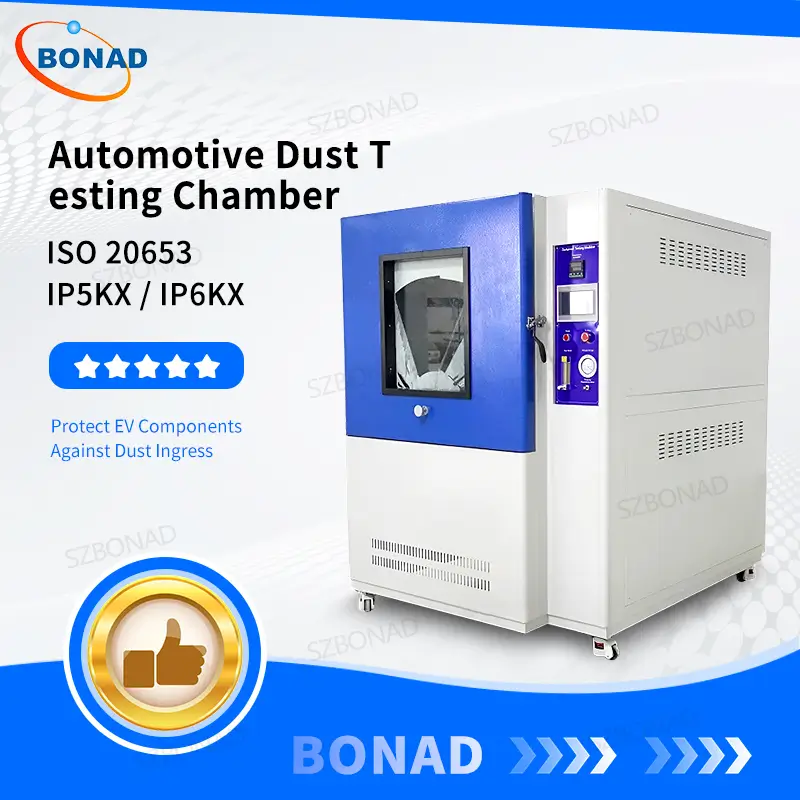
ISO 20653 IP5KX / IP6KX Automotive Dust Chamber
Built for automotive dust protection testing, this chamber helps manufacturers verify whether components can maintain proper sealing performance under dusty conditions.
Key Benefits
- Designed for vehicle component testing
- Supports IP5KX / IP6KX requirements
- Stable dust circulation system
- Suitable for EV electrical parts and housings
2. Waterproof Testing for EV Charging & Exterior Systems
Water resistance is a key requirement for electric vehicles. Exterior electronics must remain reliable during rain, car washing, road splash, and humid climates.
Common tested parts include:
- Charging connectors
- Rear cameras
- Radar sensors
- LED lamps
- Exterior ECUs
- Battery sealing structures
For automotive applications, IPX9K testing is widely requested because it simulates high-pressure hot water spray.
Recommended Equipment
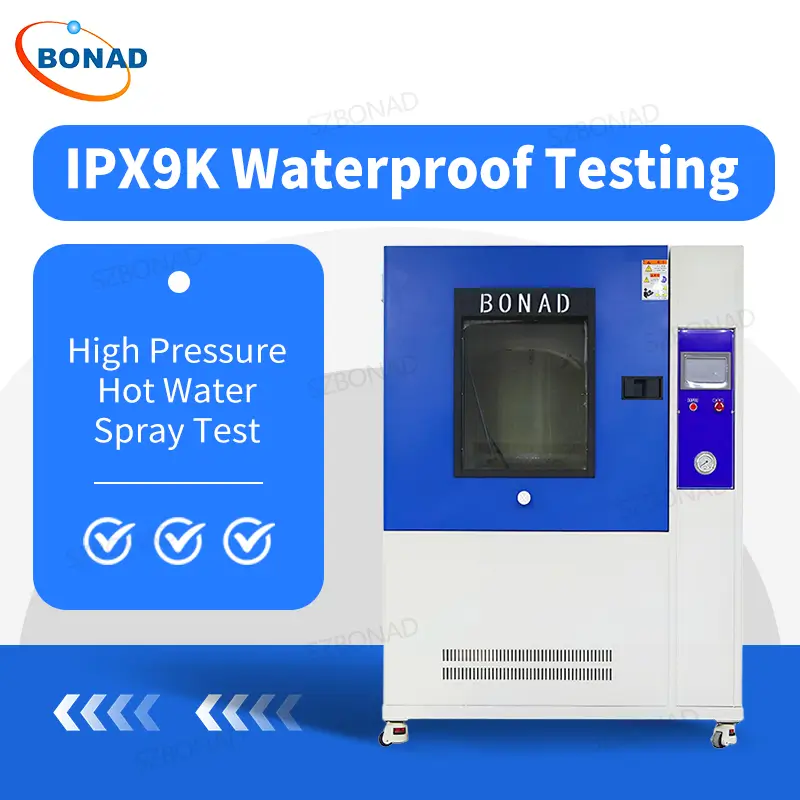
ISO20653 IPX9K High Pressure Waterproof Test Chamber
Why It Matters
- Simulates high-pressure heated water jets
- Suitable for automotive waterproof verification
- Helps validate seals and enclosure durability
- Ideal for EV exterior components
For many OEM projects, IPX9K testing is part of supplier approval requirements.
3. Interior Material Safety Testing
Cabin safety remains an important part of vehicle design. Interior materials should slow flame spread and meet regulatory requirements.
Typical tested materials:
- Seat foam
- Fabrics
- Plastic trim parts
- Floor carpets
- Acoustic insulation materials
Recommended Equipment
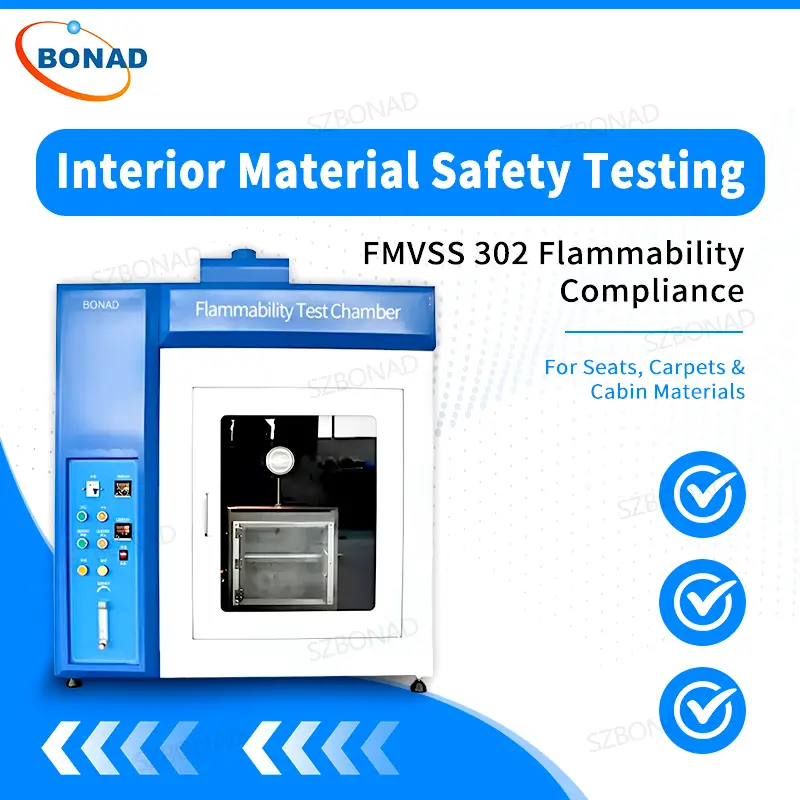
FMVSS 302 Automotive Materials and Interior Flammability Tester
This tester is used to evaluate burn rate performance of automotive interior materials according to FMVSS 302.
Advantages
- Supports international vehicle interior safety testing
- Stable flame control
- Accurate timing and measurement
- Suitable for material suppliers and laboratories
4. Battery Testing: The Core of EV Reliability
The battery system is one of the most valuable and safety-sensitive parts of any electric vehicle. Reliable testing helps manufacturers improve consistency, reduce safety risks, and meet customer requirements.
Important battery tests include:
- Charge / discharge cycling
- Thermal shock testing
- Short circuit testing
- Crush testing
- Vibration testing
- Aging tests
Recommended Product Category
Suitable for:
- Battery cell manufacturers
- Module and pack suppliers
- EV brands
- Energy storage companies
- Independent laboratories
5. Full Vehicle & Component Testing Solutions
Many manufacturers require more than a single chamber or tester. They need complete solutions for vehicle parts, systems, or finished vehicles.
Typical needs include:
- Vehicle waterproof testing
- Durability verification
- Lighting tests
- Electrical safety tests
- Road simulation tests
- Interior compliance testing
Recommended Product Category
Suitable for OEMs, Tier 1 suppliers, R&D centers, and certification labs.
How to Choose EV Test Equipment?
When selecting automotive testing systems, buyers usually focus on four areas:
1. Standards Compliance
Equipment should support ISO, IEC, FMVSS, and customer specifications.
2. Customization Options
Different EV products often require custom chamber sizes, fixtures, or software functions.
3. Automation & Data Recording
Touchscreen control, programmable cycles, and reporting can improve efficiency.
4. Long-Term Support
Installation, calibration, spare parts, and technical service are important for long-term operation.
Why Many EV Manufacturers Work With BONAD?
BONAD provides testing equipment for automotive, battery, electronics, and laboratory industries.
Customers choose BONAD for:
- Practical customization support
- Experience with export projects
- Stable equipment quality
- Compliance-focused solutions
- Responsive technical communication
Whether you need one tester or a complete validation setup, BONAD can help match the right solution to your project.
Conclusion
As EV technology develops, testing standards continue to rise. Manufacturers that invest in proper dust protection, waterproof, battery, and interior safety testing are better positioned to deliver reliable products and win global business.
If your team is expanding EV production or entering new markets, choosing the right automotive testing partner can save time, reduce risk, and improve competitiveness.
FAQ:
What tests are most important for electric vehicles?
Dust, waterproof, battery safety, vibration, thermal cycling, and interior material safety are among the most common priorities.
Is IPX9K necessary for EV products?
For many exterior components, yes. It helps verify resistance to high-pressure hot water and demanding cleaning environments.
Why is battery testing so important?
Battery performance directly affects safety, driving range, durability, and customer satisfaction.
Can testing equipment be customized?
Yes. Many EV manufacturers request custom sizes, fixtures, software, or automation functions.