Textile testing is a critical part of quality assurance for fabrics, garments, footwear materials, upholstery, and technical textiles. It provides measurable data on how a material performs during manufacturing, transport, washing, wear, and long-term use.
For manufacturers, importers, brands, and laboratories, textile testing helps answer practical questions:
- Will the fabric fade after washing?
- Will the surface pill after repeated friction?
- Can the material withstand daily wear?
- Will buttons or snaps detach during use?
- Does the product meet buyer specifications?
- Is production quality consistent from batch to batch?
A professional testing program reduces complaints, supports product development, improves supplier control, and strengthens confidence in finished products.
Why Textile Testing Is Important?
Textiles are exposed to complex real-life conditions:
- Repeated rubbing.
- Washing and drying cycles.
- Perspiration and moisture.
- UV light exposure.
- Stretching and recovery.
- Surface abrasion.
- Mechanical stress on trims and seams.
Without proper testing, products may appear acceptable during production but fail after delivery.
Typical market risks include:
- Color transfer on skin or other garments.
- Excessive shrinkage after laundering.
- Rapid abrasion on seating fabrics.
- Pilling on knitwear.
- Broken seams or weak attachments.
- Returns caused by poor durability.
- Failure to meet retailer standards.
Testing helps detect these risks early, when corrective action is still efficient and affordable.
Main Categories of Textile Testing
1. Physical and Mechanical Testing
Physical testing evaluates fabric structure, strength, and resistance to external forces.
Tensile Strength
Measures the maximum force required to break a fabric or seam under controlled tension.
Used for:
- Workwear.
- Industrial fabrics.
- Woven apparel fabrics.
- Technical textiles.
Tear Strength
Measures resistance to propagation once a cut or damage point begins.
Important for:
- Outdoor fabrics.
- Uniforms.
- Coated textiles.
- Bags and luggage materials.
Bursting Strength
Commonly used for knitted fabrics, nonwovens, and stretch materials where multi-directional force is relevant.
Seam Strength / Seam Slippage
Determines whether stitched constructions can withstand use without failure or yarn displacement.
Fabric Mass per Unit Area (GSM)
Critical for verifying whether delivered fabric matches specification.
Thickness
Useful for coated materials, technical fabrics, carpets, and multilayer constructions.
2. Color Fastness Testing
Color fastness evaluates resistance to fading, staining, or color transfer under expected service conditions.
This is one of the most frequently requested textile test categories worldwide.
Rubbing Fastness
Measures color transfer caused by dry or wet friction.
Relevant for:
- Denim.
- Dark dyed cotton.
- Leather.
- Printed fabrics.
- Shoe lining materials.
Washing Fastness
Assesses color change and staining after laundering cycles.
Perspiration Fastness
Simulates acidic or alkaline sweat exposure.
Important for:
- Sportswear.
- Underwear.
- Workwear.
Light Fastness
Measures resistance to UV fading.
Important for:
- Curtains.
- Outdoor fabrics.
- Automotive interiors.
Water / Sea Water / Chlorinated Water Fastness
Often required for swimwear or outdoor products.
Recommended Equipment:
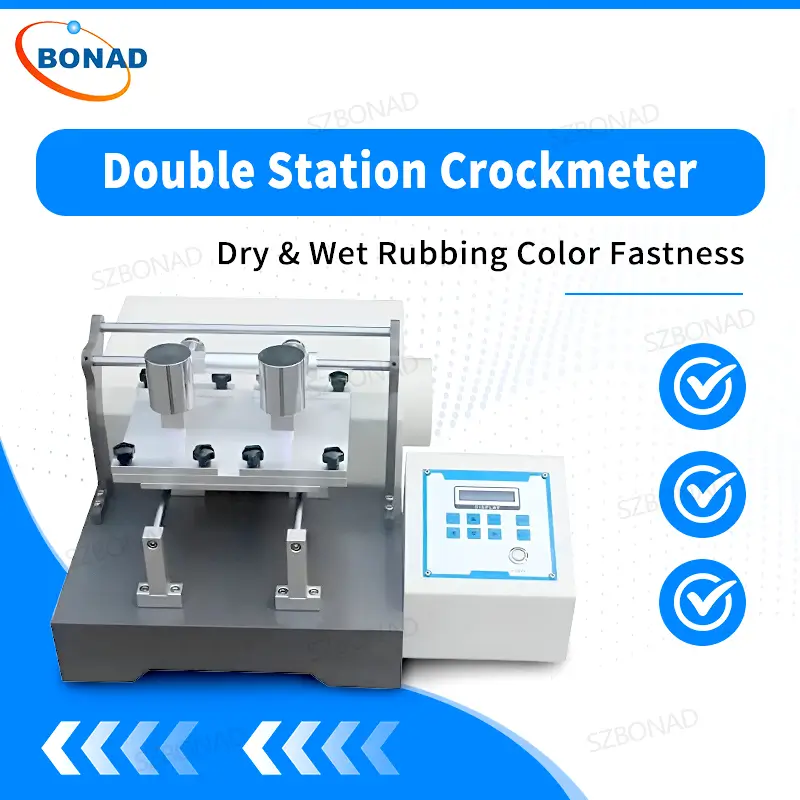
ISO 11640 Double-Station Electric Crockmeter
Used for dry and wet rubbing fastness with controlled pressure and stroke consistency.
Advantages:
- Repeatable results.
- Higher throughput with dual stations.
- Suitable for routine QC and buyer verification.
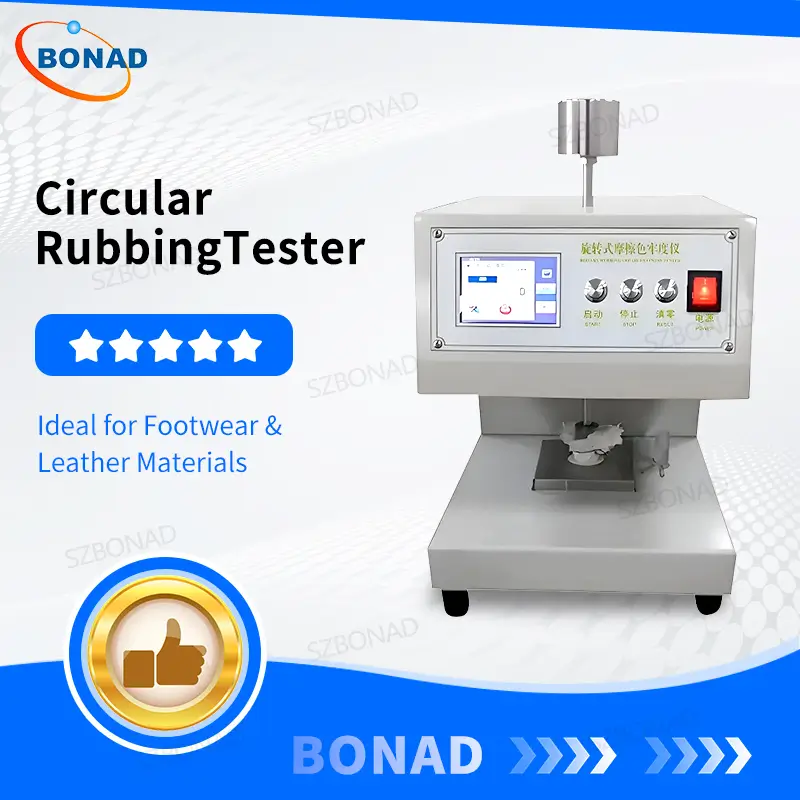
Circular Rubbing Colour Fastness Tester
Suitable for footwear, leather, coated surfaces, and specialty materials where circular friction better simulates practical use conditions.
Often selected for:
- Leather goods.
- Shoe uppers.
- Synthetic leather.
- Surface-coated textiles.
3. Abrasion Resistance Testing
Abrasion is the progressive loss of material caused by rubbing contact.
For many end users, abrasion performance directly affects perceived quality and service life.
Common Applications
- Upholstery fabrics.
- Public seating materials.
- Uniforms.
- Sportswear.
- Luggage fabrics.
- Automotive textiles.
Typical Failure Indicators
- Surface fuzzing.
- Fiber breakage.
- Yarn exposure.
- Hole formation.
- Coating wear-through.
Recommended Equipment:
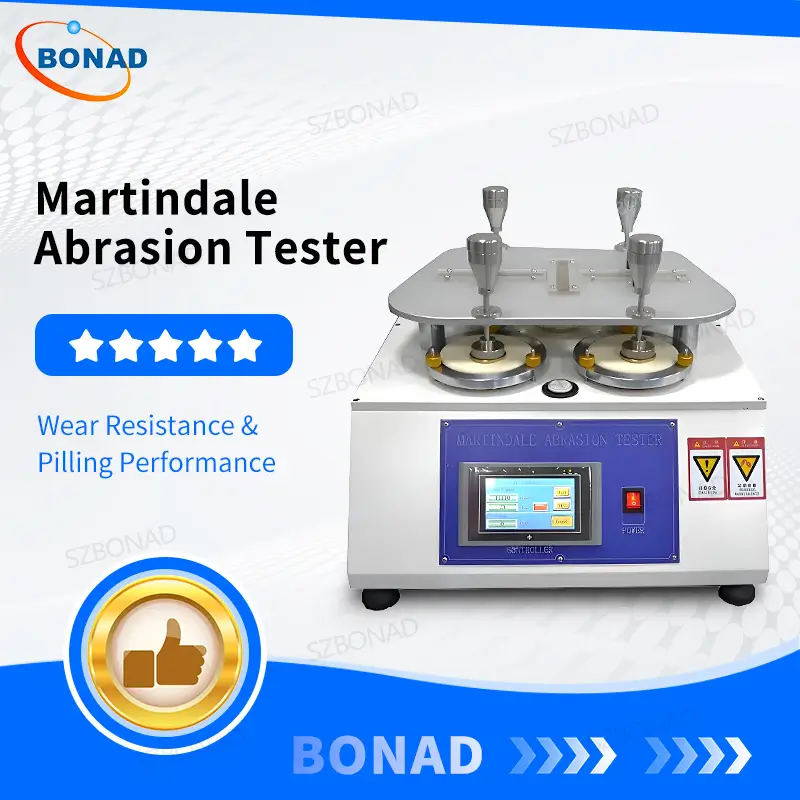
ASTM D4966 Martindale Abrasion and Pilling Tester
One of the most recognized methods for textile surface durability testing.
The Martindale method uses a controlled Lissajous motion under defined load and abrasive media.
Used to evaluate:
- Abrasion cycles to endpoint.
- Surface appearance change.
- Pilling tendency.
- Comparative fabric durability.
Widely specified by brands, retailers, and laboratories.
4. Pilling Resistance Testing
Pilling occurs when loose fibers entangle into small balls on the fabric surface.
Commonly affected products:
- Knitwear.
- Polyester blends.
- Fleece.
- Brushed fabrics.
- Softer spun yarn constructions.
Factors influencing pilling:
- Fiber type.
- Yarn twist.
- Surface finish.
- Fabric construction.
- Laundering conditions.
Martindale systems or dedicated pilling testers are commonly used.
5. Dimensional Stability Testing
Dimensional stability measures size change after washing, drying, steaming, or wet treatment.
Includes:
- Shrinkage.
- Growth / elongation.
- Spirality (especially knitwear).
- Distortion after laundering.
Critical for:
- T-shirts.
- Denim.
- Home textiles.
- Uniform garments.
Poor dimensional control is a common cause of returns.
6. Comfort and Functional Performance Testing
Modern textiles often require more than appearance.
Common Functional Tests:
Air Permeability
Measures breathability.
Moisture Management
Evaluates liquid transport and drying behavior.
Water Resistance / Hydrostatic Head
Used for rainwear and outdoor textiles.
Stretch and Recovery
Important for leggings, sportswear, and fitted garments.
Thermal Resistance
Relevant for insulation products and cold-weather apparel.
7. Garment Safety and Trim Strength Testing
Accessories must remain secure during use.
This is especially important for children’s garments, fashion products, and workwear.
Common Test Items
- Button attachment strength.
- Snap fastener retention.
- Rivet security.
- Decorative trim pull resistance.
- Toggle / cord component retention.
Recommended Equipment:
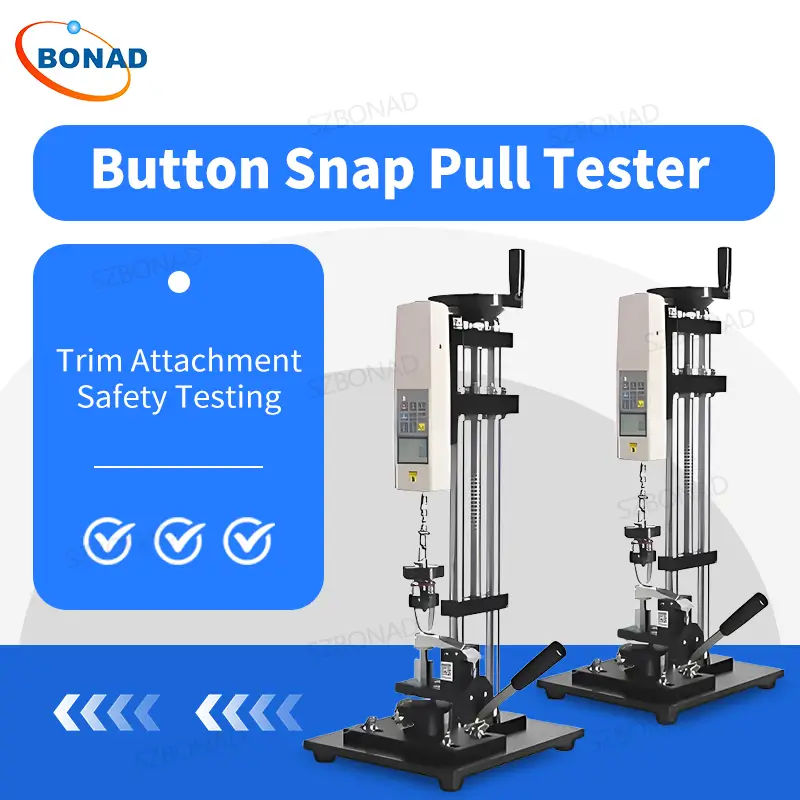
Button Snap Pull Test Machine
Used to apply controlled pull force to trims and fasteners.
Benefits:
- Reduces detachment risk.
- Supports safety programs.
- Useful for internal QC and supplier approval.
Especially relevant for:
- Infant wear.
- Children’s clothing.
- High-volume garment production.
Key Textile Standards
| Standard | Main Scope |
|---|---|
| ISO 105 Series | Color fastness |
| ISO 12947 | Martindale abrasion |
| ASTM D4966 | Abrasion resistance |
| ISO 11640 | Leather rubbing fastness |
| ASTM methods | Mechanical performance |
| AATCC methods | Textile appearance / fastness |
Always confirm the latest buyer or market version before testing.
Industries That Depend on Textile Testing
Apparel Manufacturing
Fashion, uniforms, denim, knitwear, children’s wear.
Home Textiles
Curtains, bedding, mattress covers, upholstery.
Footwear and Leather
Lining, uppers, synthetic leather, accessories.
Automotive Interiors
Seats, door trim fabrics, headliners.
Technical Textiles
Protective clothing, filtration, industrial fabrics.
Practical Laboratory Setup for Many Manufacturers
A common starter configuration includes:
| Priority | Equipment |
|---|---|
| Essential | Crockmeter |
| Essential | Martindale Abrasion Tester |
| Recommended | Button Pull Tester |
| Specialized | Circular Rubbing Tester |
This combination covers major risks:
- Color transfer.
- Surface wear.
- Pilling.
- Attachment failure.
How to Choose Textile Testing Equipment?
Consider Product Type
Different risks apply to knitwear, denim, upholstery, or leather goods.
Consider Customer Specifications
Some buyers request specific ISO, ASTM, or AATCC methods.
Consider Throughput
Multi-station testers improve efficiency for routine production.
Consider Repeatability
Stable load, motion control, and calibration support matter more than low purchase price alone.
Consider Service Support
Long-term maintenance and consumable availability affect total ownership cost.
Common Problems Identified Through Testing
- Crocking on dark fabrics
- Rapid seat fabric wear
- Knitwear pilling
- Shrinkage beyond tolerance
- Weak snap fasteners
- Uneven production quality
- Leather surface staining
- Low durability complaints
Reliable testing converts hidden quality risks into measurable data.
Why Textile Testing Supports Commercial Growth?
Strong test control can help manufacturers:
- Win stricter buyer approvals
- Reduce rework and returns
- Improve product consistency
- Validate new materials faster
- Strengthen supplier management
- Support premium market positioning
For OEM and export suppliers, trustworthy data often influences repeat orders.
Conclusion
Textile testing is an essential management tool for modern manufacturing. It improves not only compliance, but also durability, appearance retention, user safety, and long-term brand reputation.
A robust textile quality program typically focuses on:
- Physical strength
- Color fastness
- Abrasion resistance
- Pilling resistance
- Dimensional stability
- Trim security
With suitable equipment such as crockmeters, Martindale testers, button pull testers, and circular rubbing testers, manufacturers can make quality more predictable, measurable, and competitive.
FAQ:
What are the most common textile tests?
Color fastness, abrasion, pilling, shrinkage, tensile strength, and button pull tests are widely used.
Why is Martindale testing important?
It provides a recognized method to compare surface durability and wear resistance.
Is rubbing fastness necessary for all dyed fabrics?
It is highly recommended, especially for dark shades, denim, prints, and leather-related materials.
Why is button pull testing important?
It helps prevent accessory detachment, especially in children’s garments.
Can textile testing reduce complaints?
Yes. Early detection of quality risks often reduces returns and customer dissatisfaction.
Do all products require the same tests?
No. Test plans should be based on material type, end use, market requirements, and buyer specifications.