In manufacturing, product quality depends on accurate material performance testing. Whether you produce plastics, metals, rubber, packaging, cables, or structural components, understanding how a material behaves under force is essential.
A Universal Testing Machine (UTM) is one of the most widely used systems for evaluating strength, durability, and mechanical performance. It allows manufacturers and laboratories to perform multiple tests using one machine, helping improve product reliability and compliance with international standards.
This guide explains what a universal testing machine is, how it works, common applications, and how to choose the best model for your testing needs.
What Is a Universal Testing Machine?
A Universal Testing Machine is a mechanical test system used to apply controlled tensile, compression, bending, peel, or shear force to a specimen.
The term “universal” means one machine can perform different testing methods by changing fixtures, grips, and software settings.
Typical test methods include:
- Tensile testing
- Compression testing
- Bend / flexural testing
- Peel strength testing
- Shear testing
- Tear resistance testing
- Adhesion force testing
Because of its flexibility, the UTM is widely used in quality control laboratories, research centers, and manufacturing plants.
How Does a Universal Testing Machine Work?
A universal testing machine uses a moving crosshead driven by an electric motor or hydraulic actuator to apply force to the specimen.
Load cells and sensors measure:
- Maximum force
- Tensile strength
- Yield strength
- Elongation
- Compression resistance
- Displacement
- Failure point
Modern systems provide digital data reports and stress-strain curves for engineering analysis.
Industries That Use Universal Testing Machines
Universal testing machines are used across many sectors:
Plastics & Rubber
Used for tensile strength, elongation, tear resistance, and compression tests.
Metals & Alloys
Used for yield strength, ultimate tensile strength, and bend testing.
Wire & Cable
Used for conductor pull force, insulation elongation, and tensile testing.
Packaging
Used for film strength, peel force, seal strength, and carton compression.
Automotive & Aerospace
Used for composites, fasteners, springs, and structural components.
Electronics
Used for connectors, housings, adhesives, and small precision parts.
Recommended Universal Testing Machines
Choosing the correct model depends on force range, material type, environment, and test standards.
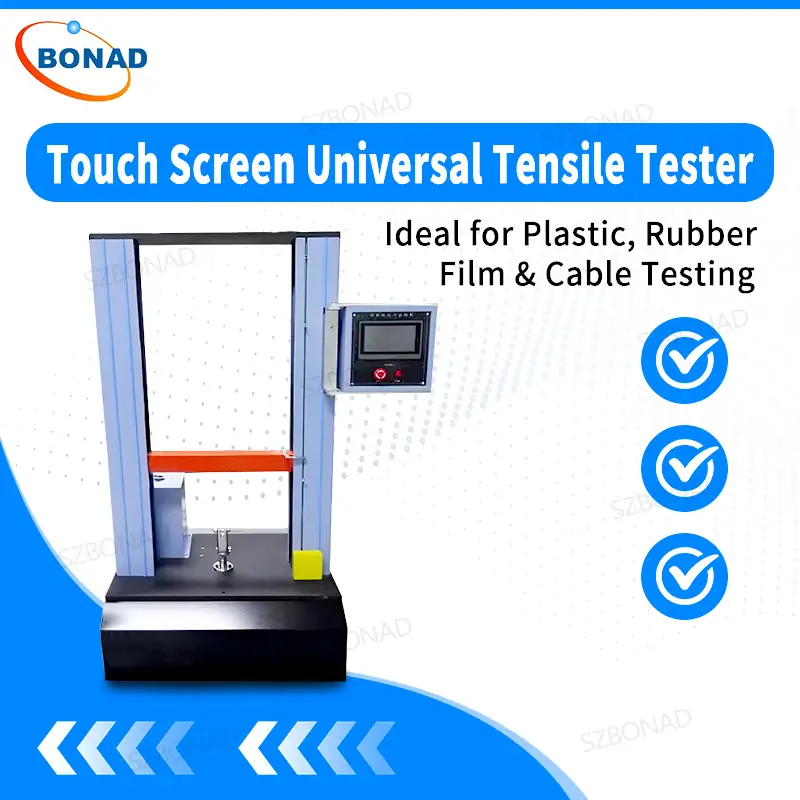
1. Touch Screen Universal Tensile Testing Machine
For daily quality control and routine material testing, a touch-screen electronic model is often the most practical option.
Recommended Equipment: Touch Screen Controlled Universal Tensile Testing Machine
Best for:
- Plastic materials
- Rubber products
- Packaging film
- Textiles
- Wire and cable
- Small metal samples
Advantages:
- User-friendly touch screen interface
- Stable and accurate load testing
- Easy parameter setup
- Suitable for factory QC and labs
- Cost-effective solution
This model is ideal for manufacturers needing efficient routine tensile and compression testing.
2. High and Low Temperature Universal Tensile Testing Machine
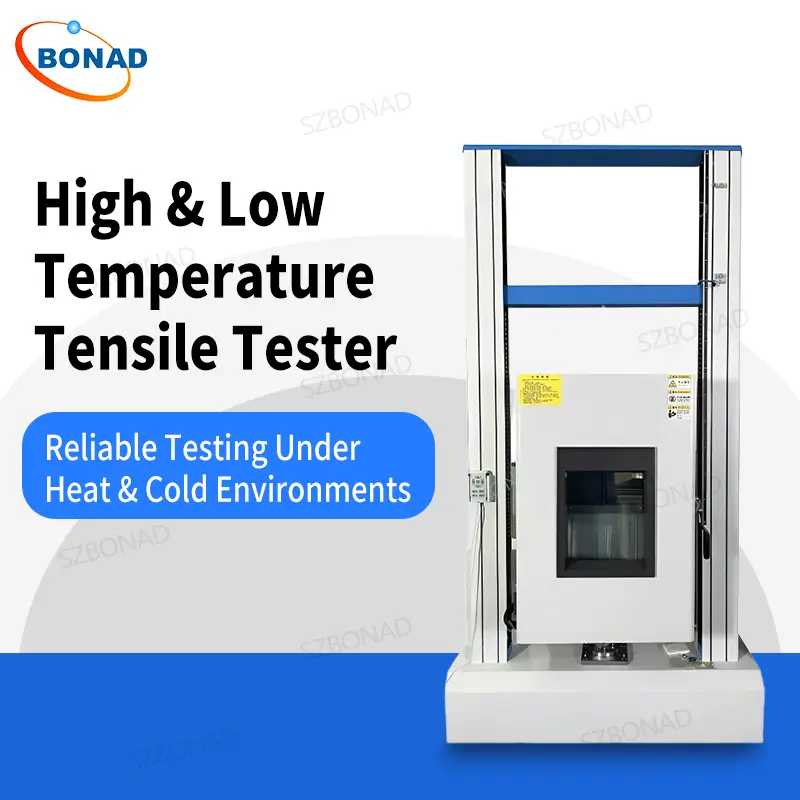
Some products must maintain mechanical strength under extreme hot or cold conditions. Standard room-temperature testing may not be enough.
Recommended Equipment: High and Low Temperature Universal Tensile Testing Machine
Best for:
- Automotive rubber parts
- Plastic housings
- Cable insulation
- Composite materials
- Heat-resistant products
- Cold-environment materials
Advantages:
- Built-in environmental chamber
- Performs tests in hot or cold conditions
- Simulates real service environments
- Improves product reliability validation
This machine is especially valuable for R&D laboratories and automotive suppliers.
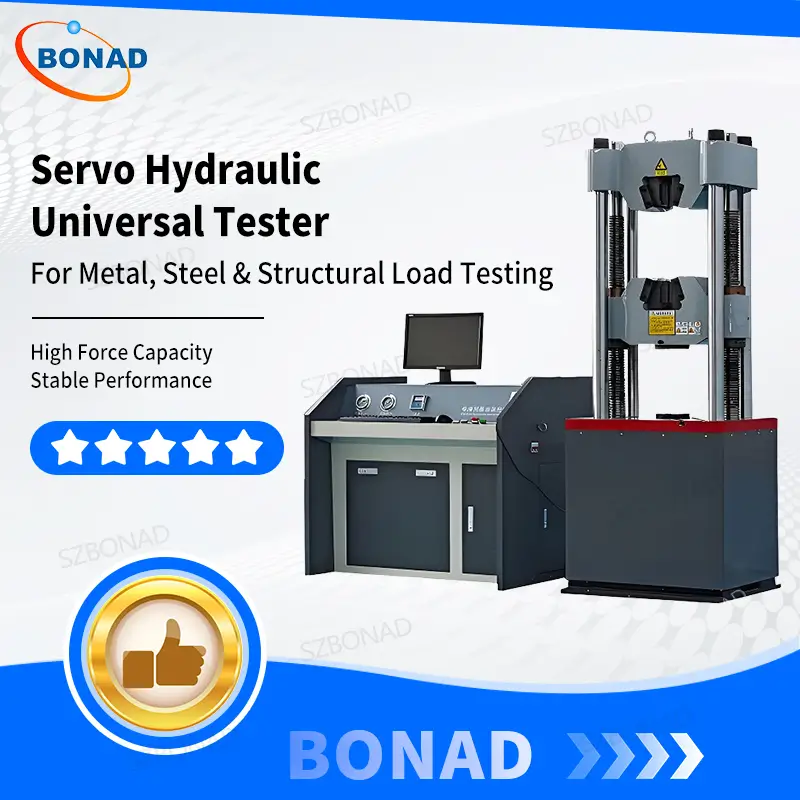
3. Servo Hydraulic Universal Testing Machine
High-load materials and structural components often require a hydraulic force system.
Recommended Equipment: Servo Hydraulic Universal Testing Machine
Best for:
- Steel bars
- Construction materials
- Heavy metal specimens
- Springs
- Structural load testing
- Industrial component validation
Advantages:
- High force capacity
- Excellent load stability
- Suitable for large specimens
- Reliable for long-cycle testing
This model is commonly used in universities, inspection centers, and advanced industrial labs.
Universal Testing Machine Comparison Guide
| Model | Best For | Force Capacity | Test Environment | Suitable Materials | Recommended Users |
|---|---|---|---|---|---|
| Touch Screen Universal Tensile Testing Machine | Daily QC testing | Low to Medium | Room Temperature | Plastic, Rubber, Film, Cable | Factories, QC Labs |
| High & Low Temperature Universal Tensile Testing Machine | Environmental simulation | Low to Medium | Hot / Cold Chamber | Plastic, Rubber, Composite | R&D Labs, Automotive |
| Servo Hydraulic Universal Testing Machine | Heavy-duty structural testing | High | Room Temperature / Optional | Metal, Steel, Construction Materials | Universities, Advanced Labs |
How to Choose the Right Universal Testing Machine?
When selecting a testing system, consider the following:
1. Maximum Test Force
Choose a force range suitable for your materials and expected failure loads.
2. Test Methods
Determine whether you need tensile only, or tensile + compression + bending.
3. Sample Size
Grip spacing, travel distance, and fixture size should match your specimens.
4. Temperature Requirements
If temperature affects performance, choose an environmental chamber model.
5. Compliance Standards
Ensure the machine supports ASTM, ISO, IEC, or customer-specific methods.
6. Software & Reporting
Reliable data software improves traceability and quality documentation.
Why Choose BONAD?
BONAD provides professional material testing equipment for global manufacturers, laboratories, and certification projects.
Benefits include:
- Multiple UTM models for different industries
- Customized fixtures and force capacities
- Export support for international markets
- Technical consultation and after-sales service
- Solutions for QC, R&D, and compliance testing
Whether you need an economical tensile tester or a high-capacity hydraulic system, BONAD can provide the right solution.
Conclusion
A universal testing machine is one of the most important tools for ensuring product quality, material strength, and engineering reliability. From daily QC testing to extreme temperature simulation and heavy structural load verification, selecting the right model improves confidence in your products and reduces failure risk.
If you are looking for dependable universal testing machine solutions, BONAD offers touch-screen, environmental, and servo hydraulic systems for a wide range of industrial testing applications.
Not sure which model fits your project? Contact BONAD for professional recommendations based on your materials, standards, and force requirements.
Frequently Asked Questions:
What is the difference between a tensile testing machine and a universal testing machine?
A tensile testing machine mainly performs pulling tests, while a universal testing machine can perform tensile, compression, bending, and other tests with different fixtures.
Which universal testing machine is best for plastic materials?
For routine plastic testing, touch-screen electronic models are commonly preferred.
Which model is best for metal testing?
For high-load metal testing, servo hydraulic systems are usually recommended.
Why use a temperature chamber tensile tester?
It allows materials to be tested under hot or cold conditions that simulate real working environments.
Can one machine test different materials?
Yes. With suitable grips and methods, one UTM can test plastics, rubber, metals, packaging, and more.