In modern manufacturing, product quality is no longer evaluated only by functionality. Reliability, durability, environmental adaptability, and compliance with international standards have become essential requirements for global markets.
Environmental reliability testing plays a critical role in verifying whether products can maintain stable performance under temperature changes, humidity, dust exposure, water ingress, vibration, and transportation stress.
Industries such as consumer electronics, automotive electronics, batteries, industrial equipment, aerospace, and household appliances increasingly rely on environmental simulation testing to reduce failure rates, improve product quality, and comply with international certification requirements.
This article provides a complete guide to environmental reliability testing, including IEC standards, industry applications, major testing methods, and commonly used environmental testing equipment.
What Is Environmental Reliability Testing?
Environmental reliability testing refers to the process of simulating natural or mechanical environmental conditions to evaluate product performance, structural stability, and long-term reliability.
These tests help manufacturers identify potential weaknesses before products enter the market.
Environmental testing conditions may include:
- High temperature
- Low temperature
- Humidity
- Dust and sand
- Water exposure
- Vibration and shock
- Corrosion
- Thermal cycling
The main purpose of environmental reliability testing is to ensure that products can withstand real-world operating conditions throughout transportation, storage, and usage.
Why Environmental Testing Is Important for Modern Manufacturing
Products today are used in increasingly complex environments.
For example:
- Outdoor electronics may face rain, dust, and UV exposure
- Automotive electronics operate under vibration and extreme temperatures
- Industrial equipment requires long-term operational stability
- Consumer electronics must survive transportation and humidity conditions
- Battery systems need thermal reliability verification
Without proper environmental testing, products may experience:
- Electrical failure
- Structural deformation
- Corrosion damage
- Seal leakage
- Material aging
- Short circuits
- Reduced service life
Environmental reliability testing helps manufacturers:
- Improve product quality
- Reduce warranty claims
- Increase customer confidence
- Meet international standards
- Accelerate product certification
- Optimize product design
Key Types of Environmental Reliability Testing
Dust and Sand Testing for IP Protection Verification
Dust ingress testing is essential for products used in outdoor, industrial, automotive, and harsh environmental conditions.
Dust and sand testing verifies enclosure protection performance according to IEC 60529 IP5X and IP6X standards.
Common testing objectives include:
- Preventing dust intrusion into enclosures
- Verifying sealing performance
- Evaluating mechanical durability
- Assessing operational reliability under dusty conditions
Typical applications include:
- Outdoor electrical cabinets
- Automotive components
- Industrial controllers
- LED lighting
- Consumer electronics
Recommended Equipment:
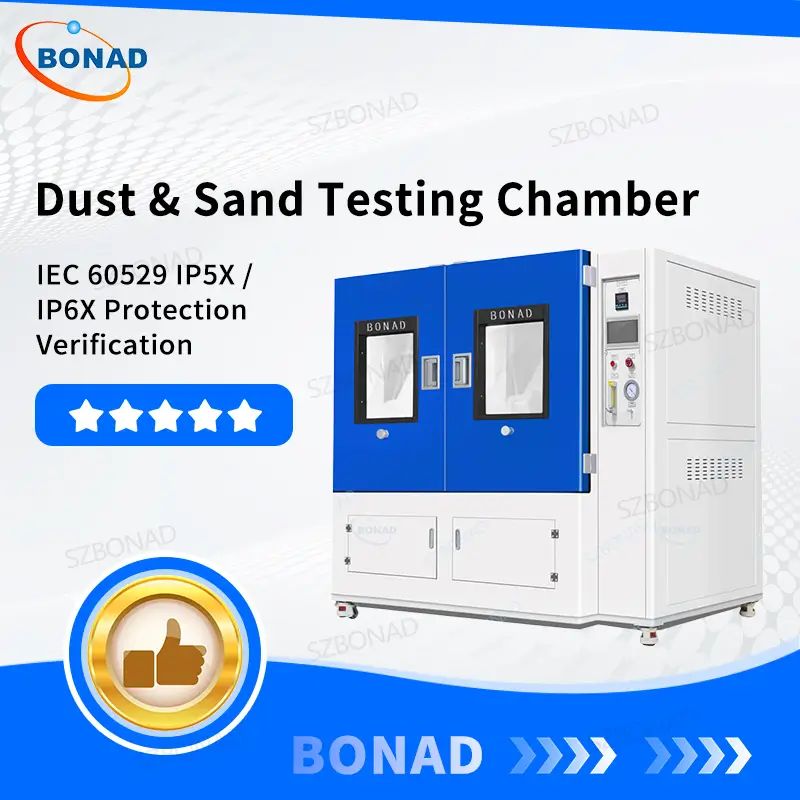
IEC 60529 2000L Sand and Dust Test Chamber
This dust test chamber is designed for IP5X and IP6X environmental testing according to IEC 60529 standards.
Key features include:
- Large 2000L chamber capacity
- Programmable testing control
- Stable dust circulation system
- Industrial-grade stainless steel structure
Suitable for electronics, automotive parts, electrical products, and industrial equipment requiring dustproof verification.
Temperature and Humidity Testing for Reliability Evaluation
Temperature and humidity testing is one of the most widely used environmental reliability testing methods.
It evaluates product stability under:
- High temperature
- Low temperature
- High humidity
- Temperature cycling
- Constant climate conditions
These tests help identify:
- Material degradation
- PCB failure
- Condensation effects
- Electrical instability
- Seal performance issues
Temperature and humidity testing is widely used in:
- Consumer electronics
- Automotive electronics
- Batteries
- Medical devices
- Communication equipment
Relevant standards include:
- IEC 60068-2-1
- IEC 60068-2-2
- IEC 60068-2-30
- IEC 60068-2-78
Recommended Equipment:
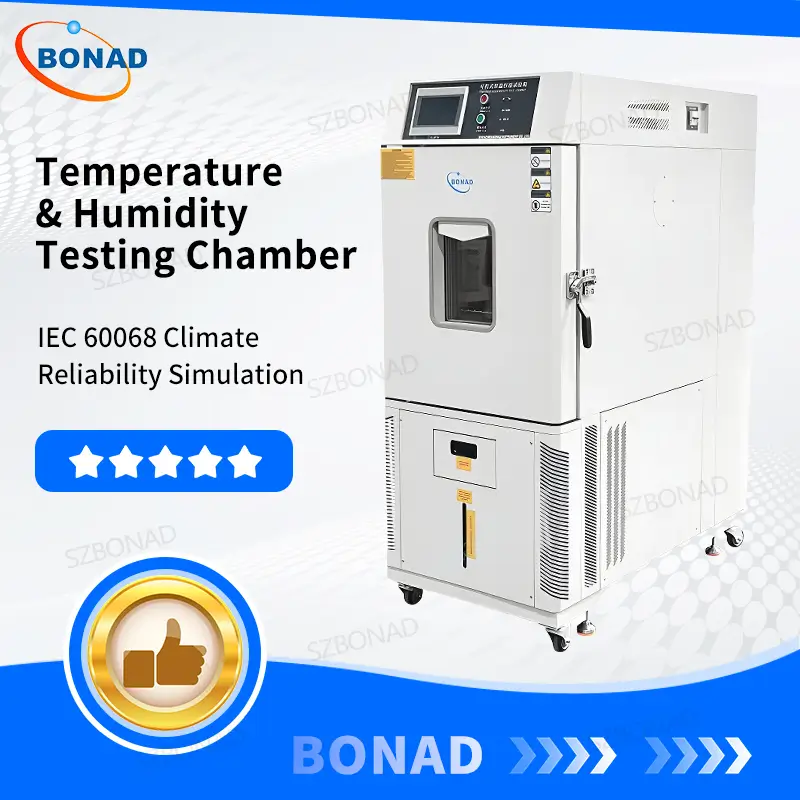
IEC 60068 Programmable Constant Temperature and Humidity Test Chamber
This programmable environmental chamber is designed for long-term climate reliability testing.
Main advantages include:
- Precise temperature and humidity control
- Programmable multi-step operation
- Stable long-duration testing
- IEC 60068 compliance
- Wide temperature range options
Suitable for environmental simulation testing across electronics, materials, automotive, and industrial sectors.
Waterproof Testing for IEC 60529 IP Ratings
Waterproof testing verifies the enclosure protection capability of products exposed to rain, dripping water, or water spray.
IP waterproof testing is especially important for:
- Consumer electronics
- Outdoor equipment
- Automotive electronics
- Lighting products
- Household appliances
IEC 60529 defines IP waterproof protection levels from IPX1 to IPX8.
Testing may include:
- Drip testing
- Spray testing
- Rain testing
- Splash testing
- Immersion testing
Recommended Equipment:
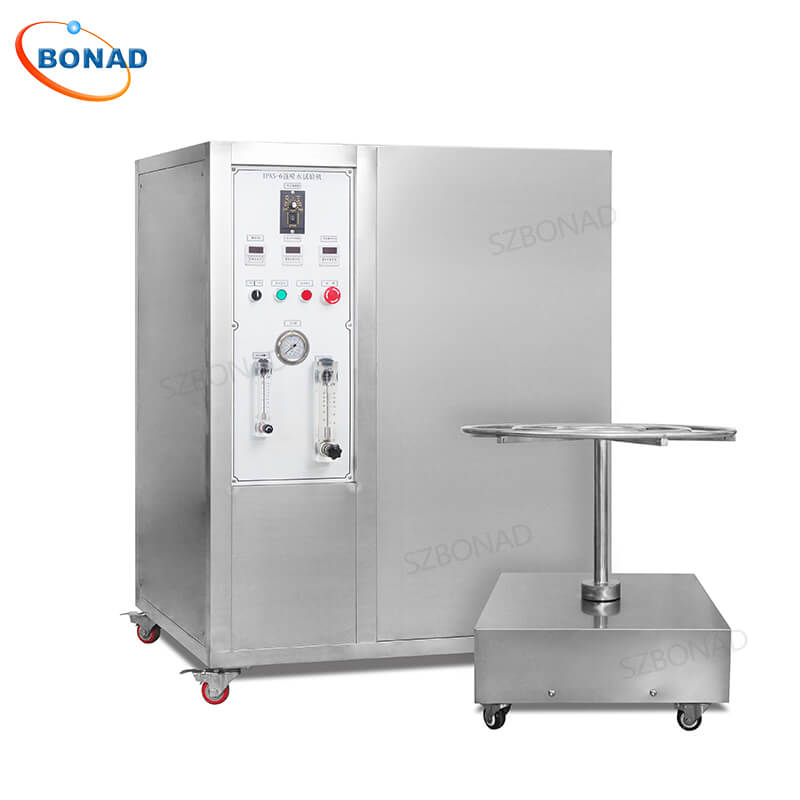
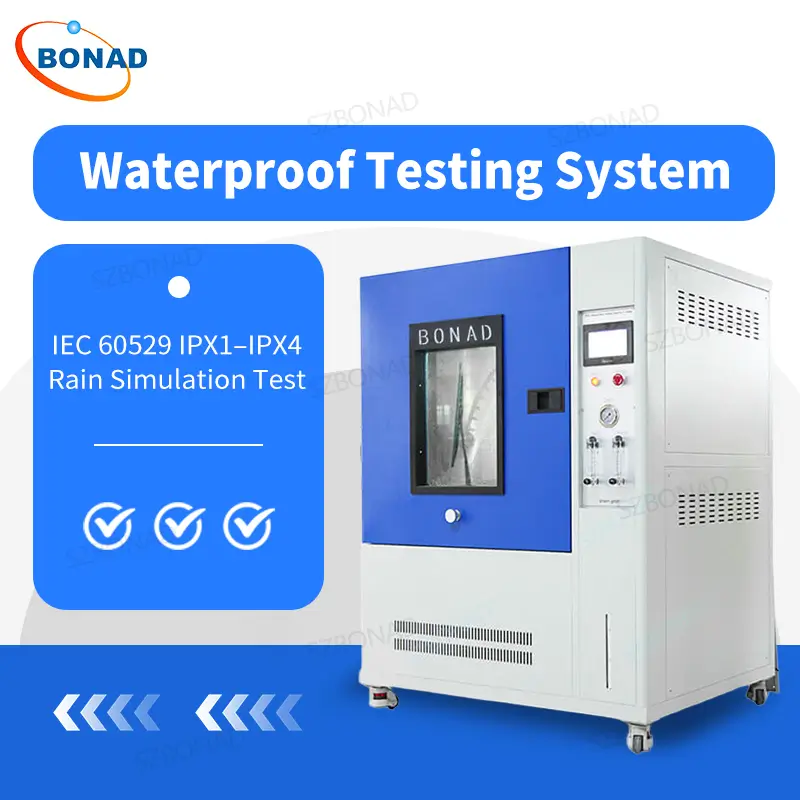
IPX1 to IPX4 Comprehensive Rain Test Equipment
This waterproof testing system is designed for IEC 60529 IPX1, IPX2, IPX3, and IPX4 testing.
Key features include:
- Multi-function waterproof testing integration
- Adjustable spray and rain simulation
- Stable water circulation system
- Automatic testing control
Suitable for electrical products, lighting, automotive components, and outdoor devices.
Vibration and Mechanical Shock Testing
Vibration testing simulates transportation and operational vibration environments to evaluate mechanical reliability.
Mechanical shock testing evaluates a product’s ability to withstand sudden impact forces.
These tests are critical for:
- Automotive electronics
- Aerospace systems
- Packaging validation
- Industrial equipment
- Consumer electronics
Testing objectives include:
- Structural integrity verification
- Connector stability
- Transportation durability
- Fatigue resistance evaluation
Relevant standards include:
- IEC 60068-2-6
- IEC 60068-2-27
- MIL-STD-810
Recommended Equipment:
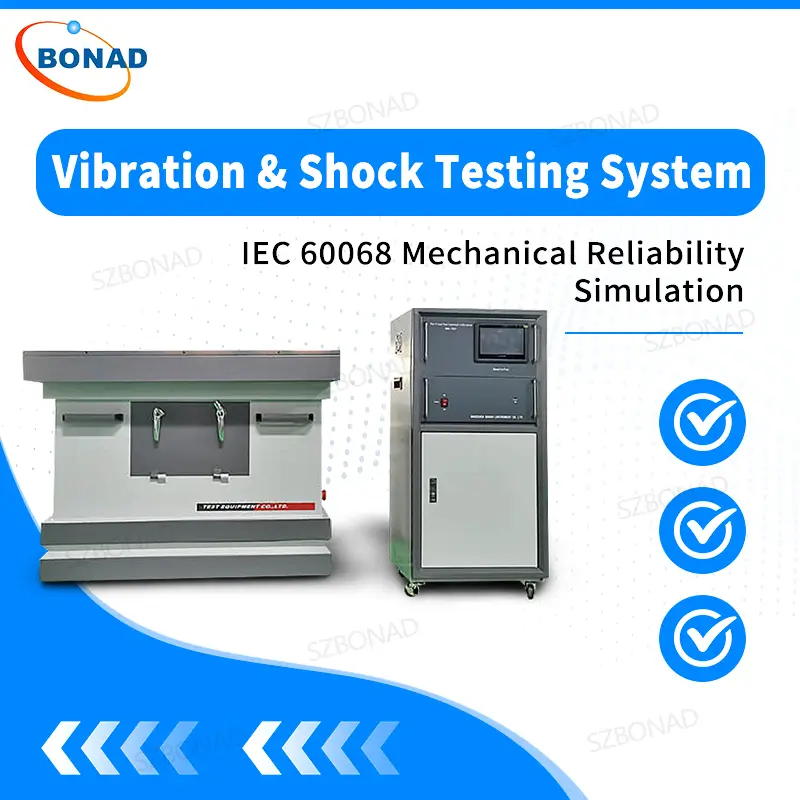
Vertical and Horizontal Electromagnetic Vibration Impact Testing Machine
This vibration testing system supports both vertical and horizontal vibration simulation.
Key advantages include:
- Wide frequency range
- Stable electromagnetic drive system
- Multiple vibration modes
- Reliable mechanical shock simulation
Suitable for transportation testing, packaging verification, electronics, automotive parts, and industrial product reliability testing.
IEC Standards Commonly Used in Environmental Testing
International environmental testing standards ensure consistency, repeatability, and global compliance.
IEC 60068 Environmental Testing Standards
IEC 60068 is one of the most widely used environmental testing standard systems.
It covers:
- Temperature testing
- Humidity testing
- Vibration testing
- Shock testing
- Thermal cycling
- Salt mist testing
IEC 60068 standards are commonly used in electronics, automotive, and industrial sectors.
IEC 60529 IP Protection Standards
IEC 60529 defines enclosure protection ratings against solid particles and water ingress.
Examples include:
- IP5X dust-protected
- IP6X dust-tight
- IPX1-IPX8 waterproof ratings
These standards are widely applied in electrical equipment, lighting, electronics, and outdoor products.
Industry Applications of Environmental Reliability Testing
Consumer Electronics
Products such as smartphones, tablets, and wearable devices require:
- Temperature cycling
- Waterproof testing
- Dust testing
- Vibration testing
Environmental testing improves durability and user safety.
Automotive Industry
Automotive electronics operate under complex environmental conditions.
Testing requirements often include:
- Thermal cycling
- Salt corrosion testing
- Vibration testing
- Waterproof verification
Environmental testing is essential for vehicle reliability and safety.
Battery and Energy Storage Industry
Battery reliability testing is increasingly important for EV and energy storage systems.
Typical tests include:
- High and low temperature testing
- Humidity testing
- Thermal stability evaluation
- Mechanical vibration testing
Environmental simulation helps improve battery safety and lifespan.
Industrial Equipment
Industrial systems often operate in harsh environments with dust, vibration, and humidity exposure.
Environmental reliability testing ensures long-term operational stability and reduced maintenance costs.
How to Choose the Right Environmental Test Equipment?
Selecting suitable environmental testing equipment depends on several factors.
Testing Standards
Confirm required standards such as:
- IEC
- ISO
- ASTM
- MIL-STD
Environmental Conditions
Consider:
- Temperature range
- Humidity range
- Dust exposure level
- Waterproof rating
- Vibration intensity
Chamber Size
Select equipment dimensions based on product size and testing capacity requirements.
Control System
Modern environmental testing systems often support:
- Touchscreen operation
- Programmable testing profiles
- Data export
- Remote communication
Long-Term Stability
Reliable equipment should provide:
- Accurate environmental control
- Stable performance
- Low maintenance
- Consistent testing repeatability
Why Environmental Reliability Testing Is Becoming More Important?
With the rapid growth of:
- Electric vehicles
- Renewable energy systems
- Smart electronics
- Industrial automation
- AI-powered devices
Product reliability expectations continue to increase.
Manufacturers now face stricter:
- International certification requirements
- Customer quality expectations
- Product safety regulations
Environmental testing is no longer optional — it has become a core part of product development and quality assurance.
Why Choose BONAD Environmental Testing Equipment?
BONAD provides environmental testing solutions designed for international reliability standards and industrial testing requirements.
Advantages include:
- IEC-compliant testing systems
- Comprehensive environmental simulation solutions
- Customizable chamber configurations
- Stable long-term testing performance
- Global export experience
- Technical support and after-sales service
BONAD environmental testing equipment is widely used in electronics, automotive, laboratory, industrial, and certification testing applications.
FAQ:
What is the difference between environmental testing and reliability testing?
Environmental testing simulates external environmental conditions such as temperature, humidity, dust, and vibration. Reliability testing focuses more broadly on long-term product stability and lifespan. Environmental testing is an important part of reliability verification.
Why are IEC standards important in environmental testing?
IEC standards provide internationally recognized testing methods that help manufacturers meet global certification and compliance requirements.
Which industries require environmental reliability testing?
Industries including electronics, automotive, batteries, aerospace, industrial equipment, and medical devices commonly require environmental testing.
What is the purpose of IP waterproof testing?
IP waterproof testing verifies a product’s resistance to water ingress under different exposure conditions defined by IEC 60529.
Why is vibration testing important?
Vibration testing helps identify mechanical weaknesses caused by transportation, operation, or long-term dynamic stress.
How does temperature and humidity testing improve product reliability?
It helps manufacturers identify material degradation, electrical instability, and condensation-related failures before products enter the market.