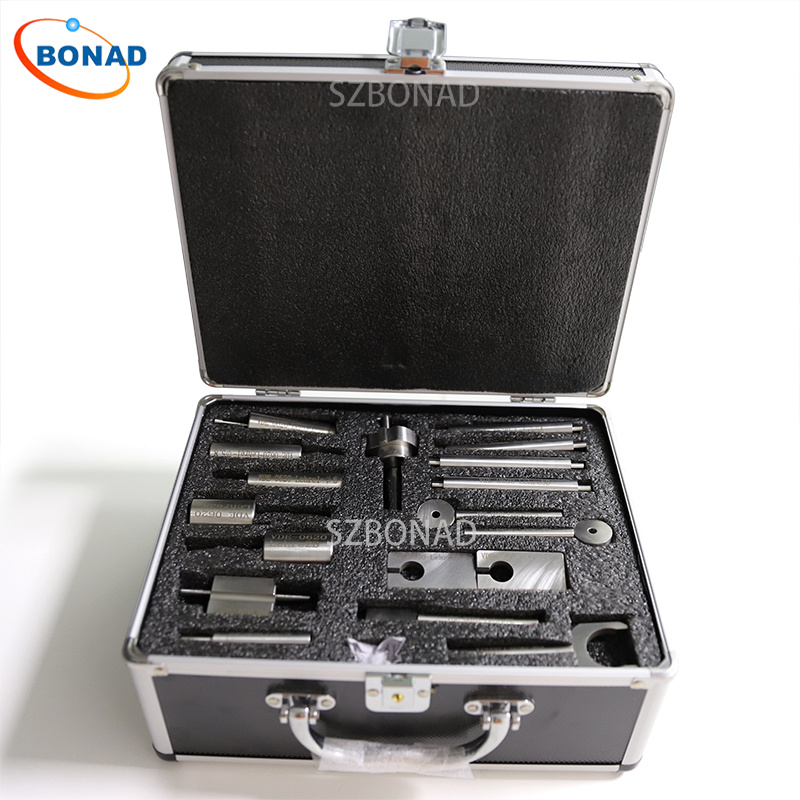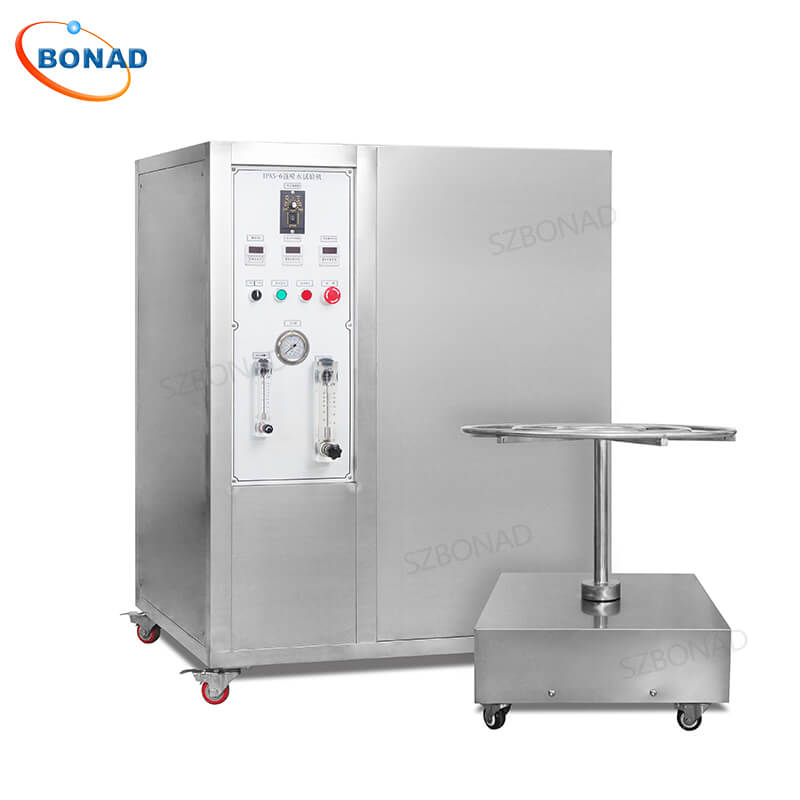
A corrosion testing chamber is essential for evaluating how products perform in harsh environments such as salt exposure, industrial pollution, and ozone-rich conditions.
From metal corrosion to connector failure and rubber cracking, different environmental factors can lead to very different failure modes. Choosing the wrong test method often results in hidden risks that only appear after products reach the market.
This guide compares salt spray corrosion test chambers, sulfur dioxide corrosion test chambers, and ozone aging test chambers, helping engineers, laboratories, and purchasing teams select the right solution for reliable durability testing.
What Is a Corrosion Testing Chamber?
A corrosion testing chamber is a type of environmental test equipment used to simulate aggressive conditions such as humidity, salt mist, corrosive gases, or ozone exposure.
It is widely used in:
- Automotive manufacturing
- Electrical and electronic equipment
- Metal coating and plating industries
- Rubber and polymer materials
- Construction and outdoor products
These chambers accelerate degradation processes to evaluate product reliability, material performance, and compliance with international standards.
Salt Spray vs SO₂ vs Ozone Testing: Key Differences
| Test Method | Main Stress Factor | Typical Materials | Failure Mode |
|---|---|---|---|
| Salt Spray | Salt + humidity | Metals, coatings | Rust, blistering |
| SO₂ Gas | Acidic industrial gas | Connectors, plated parts | Oxidation, contact failure |
| Ozone | Oxidative aging | Rubber, elastomers | Cracking, brittleness |
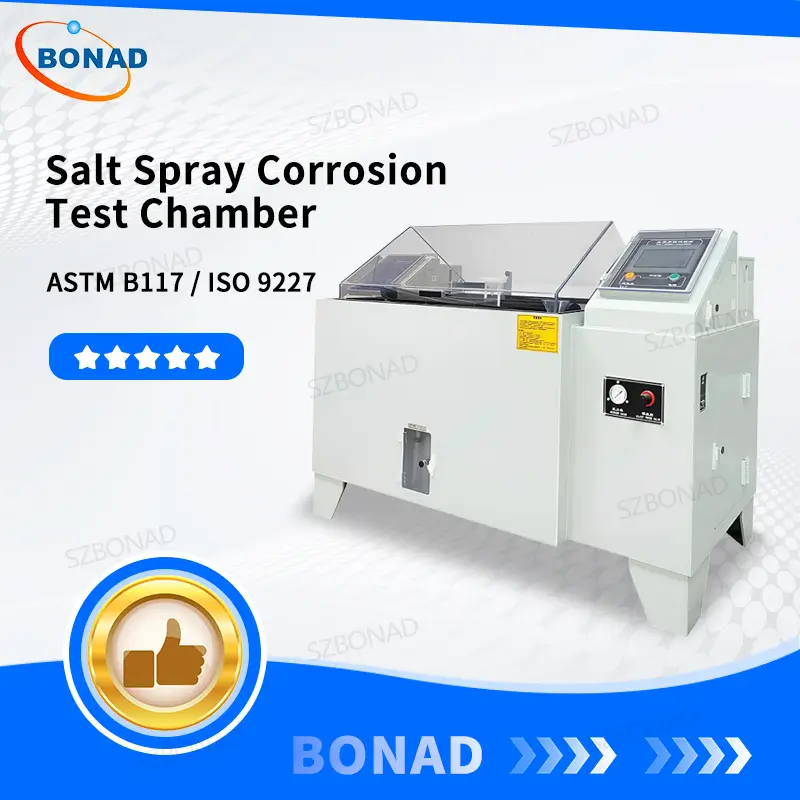
Salt Spray Corrosion Test Chamber for Metal Parts and Coatings
Salt spray testing simulates marine or high-salinity environments by generating a fine mist of salt solution in a controlled chamber.
Typical Applications
- Metal enclosures
- Fasteners and screws
- Coated steel parts
- Outdoor equipment housings
Common Standards
- ASTM B117
- ISO 9227
- IEC 60068-2-11
Suitable BONAD Equipment
Touch Screen Controlled Salt Spray Corrosion Test Chamber
- Stable salt mist distribution
- Programmable test cycles
- Corrosion comparison testing
- Suitable for coating evaluation
Ideal for: corrosion testing chamber for metal parts and coatings
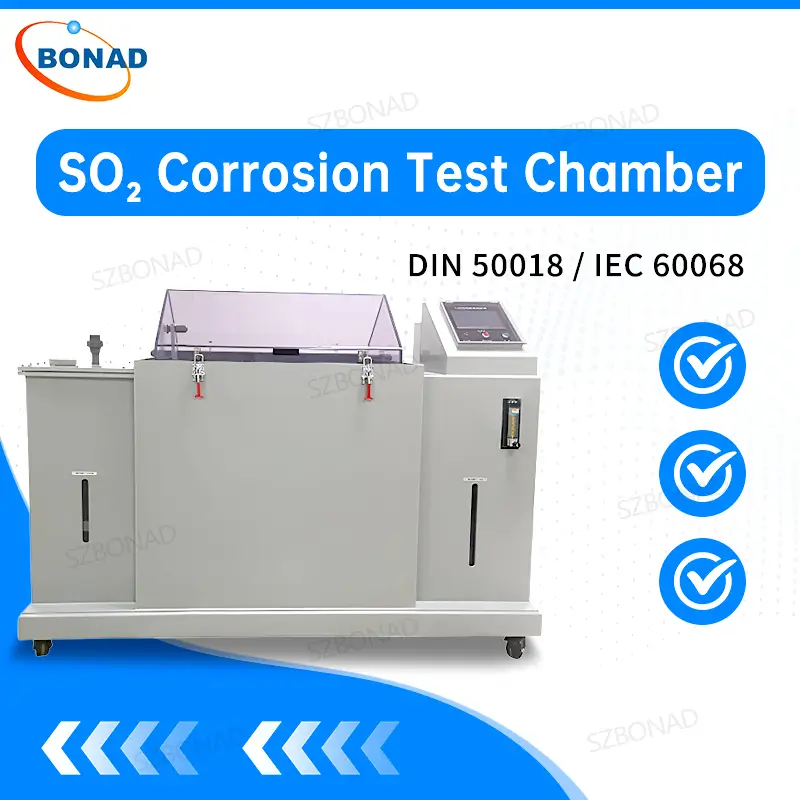
Sulfur Dioxide Corrosion Test Chamber for Connectors and Contacts
Sulfur dioxide testing simulates polluted industrial environments where acidic gases accelerate corrosion.
Typical Applications
- Electrical connectors
- Switch terminals
- Control panels
- Copper and silver contacts
Common Standards
- DIN 50018
- IEC 60068-2-42
- IEC 60068-2-43
Suitable BONAD Equipment
Sulfur Dioxide Corrosion Test Chamber
- Controlled SO₂ gas concentration
- Humidity and temperature control
- Sealed corrosion environment
- Reliable for electrical testing
Ideal for: corrosion testing chamber for connectors and electrical components
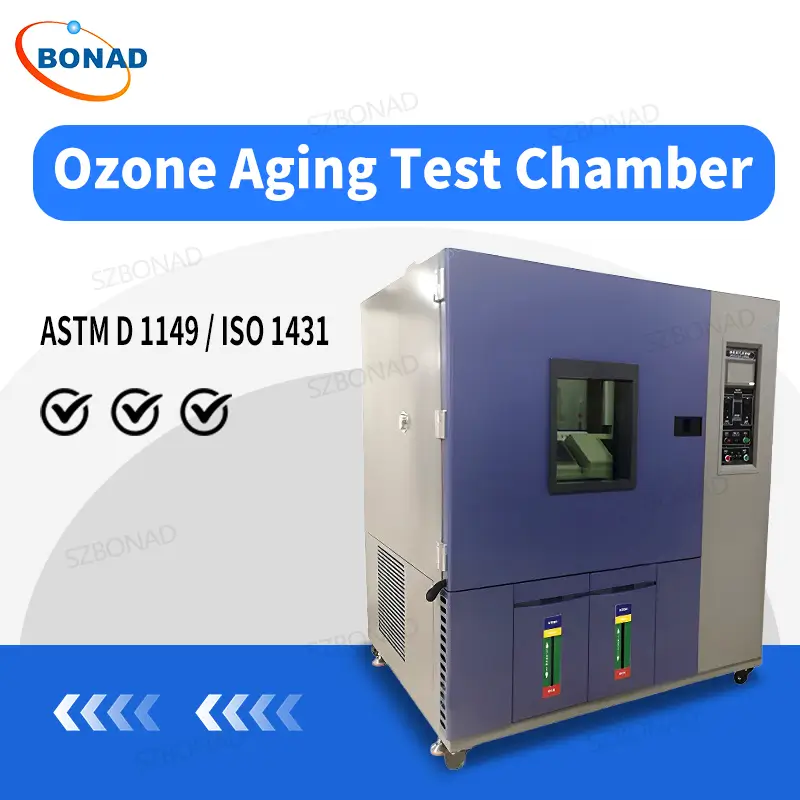
Ozone Aging Test Chamber for Rubber and Elastomers
Ozone testing evaluates how rubber and elastomer materials degrade under oxidative conditions.
Typical Applications
- Rubber seals and gaskets
- Cable insulation
- Automotive hoses
- Elastomer components
Common Standards
- ASTM D1149
- ISO 1431
Suitable BONAD Equipment
- Precise ozone concentration control
- Static and dynamic testing modes
- Crack resistance evaluation
- Long-term aging simulation
Ideal for: ozone aging test chamber for rubber materials
Quick Selection Guide
After understanding the differences, selecting the right corrosion testing chamber depends on your material and application:
- For metal parts and coatings, choose a salt spray corrosion test chamber to evaluate resistance to moisture and salt environments
- For connectors and electrical components, choose a sulfur dioxide corrosion test chamber to simulate polluted industrial atmospheres
- For rubber and elastomer materials, choose an ozone aging test chamber to assess cracking and aging performance
While the quick guide above provides a fast decision reference, selecting the right corrosion testing chamber in real projects often requires a more detailed evaluation.
How to Choose the Right Corrosion Testing Chamber?
Selecting the right corrosion testing chamber depends on several key factors:
1. Material Type
Metal, rubber, coatings, and electronic components require different testing methods.
2. Application Environment
Marine, industrial, or urban environments determine the dominant corrosion mechanism.
3. Testing Standards
Follow ASTM, ISO, IEC, or customer-specific requirements.
4. Sample Size
Ensure the chamber fits your product dimensions and testing volume.
5. Automation & Control
Modern systems include touchscreen control, programmable cycles, and data logging.
Why Manufacturers Choose BONAD?
Manufacturers worldwide choose BONAD for reliable environmental testing equipment.
Key advantages:
- Standard-compliant chamber design
- Stable and repeatable test conditions
- Customizable configurations
- Export-ready solutions
- Technical support and guidance
- OEM / ODM capabilities
Frequently Asked Questions:
1. What is a corrosion testing chamber used for?
It is used to simulate harsh environmental conditions such as salt, pollution gases, and ozone to evaluate product durability and material performance.
2. Is salt spray testing enough for corrosion resistance?
No. Salt spray testing focuses on chloride corrosion, but real environments may also include pollution, temperature changes, and UV exposure.
3. What is the difference between salt spray and SO₂ testing?
Salt spray simulates marine corrosion, while SO₂ testing simulates industrial pollution that affects connectors and electrical components.
4. Why is ozone testing critical for rubber materials?
Ozone can cause cracking and loss of elasticity in rubber, leading to seal failure and reduced product lifespan.
5. How do I choose the right corrosion testing chamber?
Consider material type, application environment, testing standards, sample size, and automation requirements.
6. Do you provide installation and after-sales support?
Yes. BONAD provides technical support, installation guidance, and spare parts services based on customer needs.
Final Thoughts
Salt spray, sulfur dioxide, and ozone testing are not interchangeable—they address different environmental risks.
- Salt spray targets metal corrosion
- SO₂ targets industrial gas corrosion
- Ozone targets rubber aging
Using the right corrosion testing chamber helps manufacturers improve product quality, reduce failures, and meet global standards.
Looking for the right corrosion testing chamber?
Contact BONAD to get expert recommendations tailored to your application.