What is Temperature and Humidity Testing?
Temperature and humidity testing is an environmental testing method used to evaluate how products perform under controlled temperature and moisture conditions to ensure reliability, safety, and durability.
It simulates real-world environments such as heat, cold, and humidity to identify potential failures before products reach the market.
What is Temperature and Humidity Testing Used For?
Temperature and humidity testing is used to:
- Detect material degradation and aging
- Prevent corrosion and moisture damage
- Validate product reliability
- Ensure compliance with international standards
- Improve product lifespan
It is widely used in electronics, automotive, batteries, and materials industries.
What Are the Most Common Test Conditions?
The most common temperature and humidity test conditions include:
- 85°C / 85%RH → Accelerated aging test
- 40°C / 93%RH → Damp heat steady-state
- -40°C to +85°C cycling → Environmental simulation
- 25°C / 60%RH → Standard baseline
85/85 testing is the industry benchmark for reliability testing
What Standards Apply to Temperature and Humidity Testing?
The most widely used international standards include:
- IEC 60068 → Temperature & humidity testing methods
- ISO 16750 → Automotive applications
- MIL-STD-810 → Extreme environments
These standards define test procedures, durations, and acceptance criteria.
Why Temperature and Humidity Testing Matters?
Temperature and humidity are the primary environmental stress factors affecting product reliability.
Combined effects can cause:
- Corrosion
- Electrical failure
- Material degradation
By simulating these conditions, manufacturers can:
- Reduce failure rates
- Improve product quality
- Meet global certification requirements
Key Testing Principles
1. Thermal Acceleration
Higher temperatures accelerate chemical reactions and aging.
2. Moisture Diffusion
Humidity penetrates materials and affects insulation.
3. Electrochemical Migration
Moisture + voltage → conductive paths → short circuits
4. Thermal Stress
Different materials expand differently, causing cracks or delamination.
Main Types of Temperature and Humidity Tests
1. Constant Temperature & Humidity Test
- Stable environment
- Used for long-term testing
2. Damp Heat Test
- Accelerated aging
- Industry standard
3. Cyclic Temperature & Humidity Test
- Simulates real environmental changes
4. HALT / HASS Testing
- Extreme stress testing
- Detects design weaknesses early
Core Equipment: Environmental Test Chambers
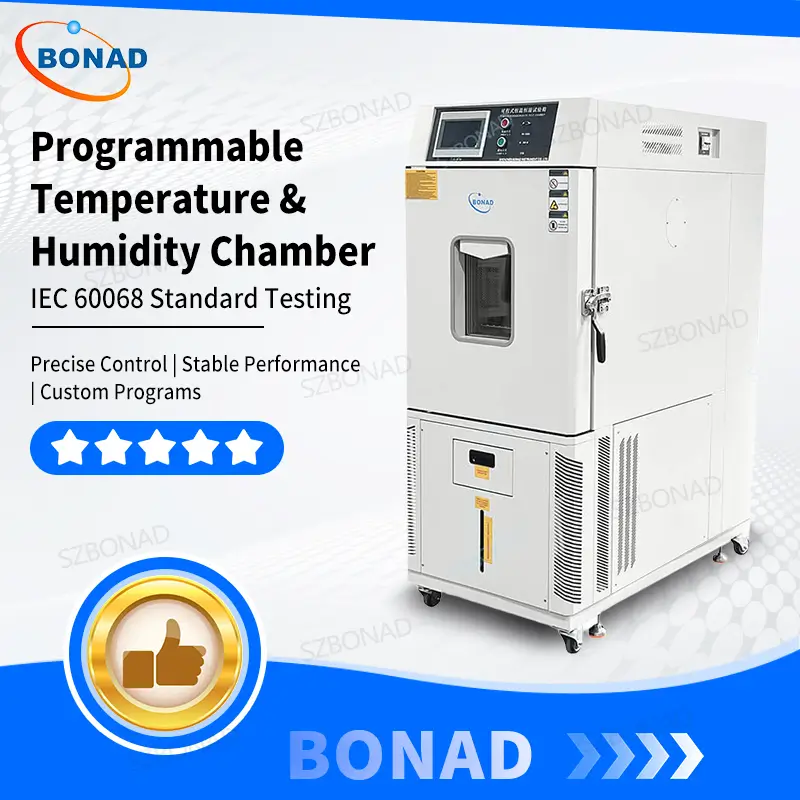
1. Programmable Temperature and Humidity Test Chamber
Key Features:
- Temperature range: -70°C to +150°C
- Humidity range: 20%–98%RH
- High precision control
- Multi-step programmable testing
Ideal for:
- Electronics
- Materials testing
- Standard compliance
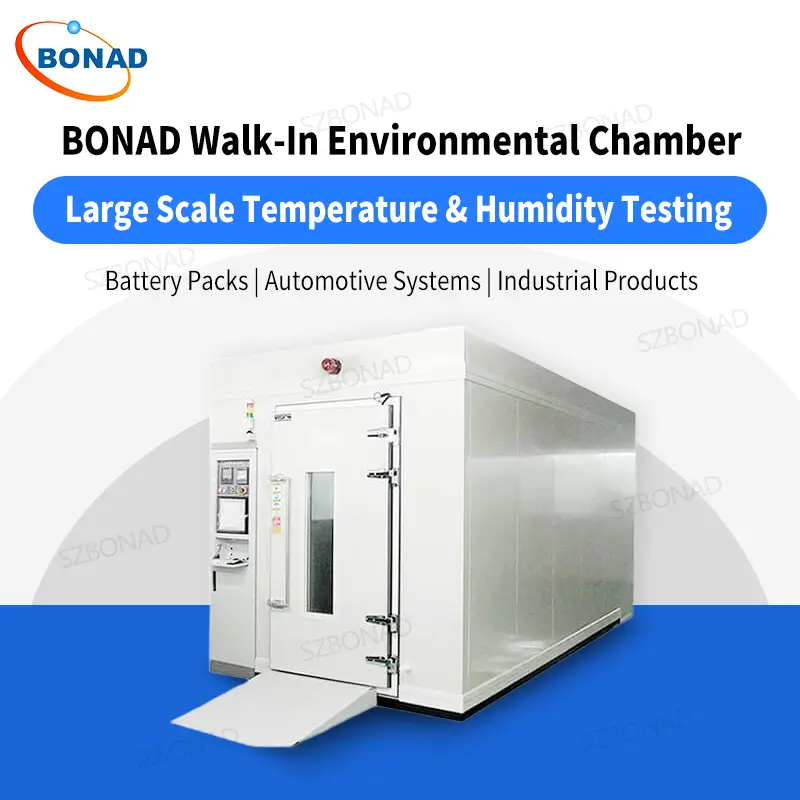
2. Walk-In Temperature and Humidity Chamber
Key Features:
- Large capacity
- Suitable for full-scale products
- Batch testing capability
Ideal for:
- Automotive systems
- Battery packs
- Industrial equipment
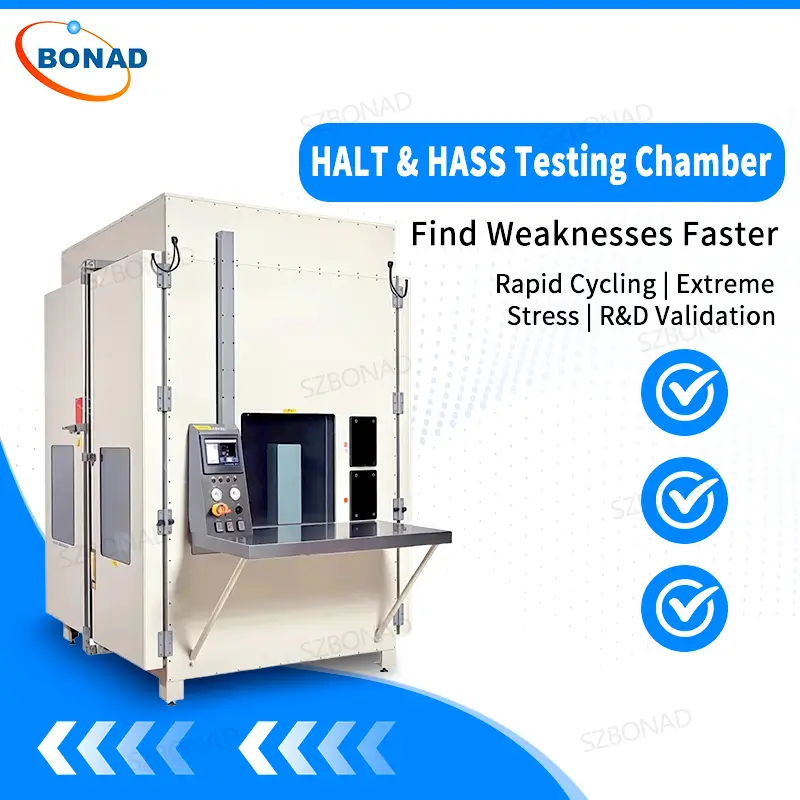
3. HALT and HASS Testing Chamber
Key Features:
- Rapid temperature change
- Extreme stress testing
- Reliability engineering
Ideal for:
- R&D
- Failure analysis
- High-end electronics
Key Technical Parameters
| Parameter | Typical Range |
|---|---|
| Temperature | -70°C to +150°C |
| Humidity | 20%RH to 98%RH |
| Accuracy | ±0.5°C / ±2%RH |
| Heating Rate | 3–5°C/min |
Common Failure Modes Detected
Temperature and humidity testing can reveal:
- Corrosion and oxidation
- Short circuits
- Insulation degradation
- Material cracking
- Delamination
How to Choose the Right Test Chamber
To select the right equipment:
- Define your testing purpose (R&D or certification)
- Choose chamber size (standard or walk-in)
- Verify temperature and humidity range
- Check control accuracy
- Ensure compliance with international standards
Pre-Sales and After-Sales Support
Pre-Sales
- Test standard consulting
- Solution design
- Equipment selection
After-Sales
- Installation and training
- Calibration services
- Maintenance support
- Fast technical response
FAQ:
What is the standard condition for humidity testing?
The most common condition is 85°C / 85%RH, used for accelerated aging and reliability testing.
Which standard is used for temperature and humidity testing?
The most widely used standard is IEC 60068.
What industries use temperature and humidity testing?
Electronics, automotive, batteries, solar energy, and materials industries all require this testing.
What is the difference between a standard chamber and a walk-in chamber?
A standard chamber is for small samples, while a walk-in chamber is designed for large products or batch testing.
What is the difference between a HALT/HASS chamber and a temperature and humidity chamber?
A HALT/HASS testing chamber is used for rapid stress testing to find product design weaknesses through extreme temperature changes and vibration during R&D.
A programmable temperature and humidity chamber is used for standard environmental testing under controlled conditions, mainly for compliance with IEC 60068 and quality verification.
Choose HALT/HASS for failure detection and product development.
Choose a temperature and humidity chamber for certification and routine reliability testing.
Do you provide technical support and after-sales service?
Yes. Full support includes consultation, installation, training, calibration, and maintenance.
Can temperature and humidity chambers be customized?
Yes. Chambers can be customized based on size, temperature range, humidity control, and testing standards.
Final Summary
Temperature and humidity testing is a critical process in modern manufacturing and reliability engineering.
By using advanced environmental test chambers and following international standards such as IEC 60068, manufacturers can:
- Detect potential failures early
- Improve product durability
- Ensure compliance
- Reduce long-term costs
Choosing the right test chamber is key to achieving accurate and reliable results.