When it comes to waterproof testing, IPX7 and IPX8 are two of the most commonly specified ratings under the IEC 60529 standard.
However, many engineers and buyers are still unclear about their exact differences—and more importantly, which test equipment is required.
This guide breaks down the differences, test conditions, and helps you choose the right solution for your products.
What is IPX7 Test?
IPX7 refers to protection against temporary immersion in water.
Key Test Conditions:
- Water depth: 1 meter
- Duration: 30 minutes
- No water ingress that affects performance
This test is typically used for:
- Consumer electronics (earbuds, phones)
- Small household appliances
- Basic waterproof enclosures
In practical testing, products are submerged in a controlled immersion tank to verify sealing integrity.
What is IPX8 Test?
IPX8 is designed for continuous immersion beyond 1 meter, with conditions defined by the manufacturer.
Key Test Features:
- Depth: greater than 1 meter
- Duration: customized
- Often involves water pressure simulation
This test is used for:
- High-end waterproof electronics
- Automotive components
- Industrial and outdoor equipment
Unlike IPX7, IPX8 usually requires pressurized or controlled immersion systems.
IPX7 vs IPX8: Quick Comparison Table
| Item | IPX7 | IPX8 |
|---|---|---|
| Water Depth | 1 meter | >1 meter |
| Test Duration | 30 minutes | Defined by manufacturer |
| Pressure | No | Yes (often required) |
| Application | Basic waterproof | Advanced waterproof |
| Complexity | Low | High |
Key Differences Between IPX7 and IPX8
1. Immersion Depth
- IPX7: fixed at 1 meter
- IPX8: deeper immersion, depending on application
2. Pressure Requirement
- IPX7: no pressure applied
- IPX8: often includes water pressure simulation, making testing more demanding
3. Testing Complexity
- IPX7: simple tank-based test
- IPX8: requires sealed chambers and pressure control systems
4. Application Scenarios
- IPX7: everyday waterproof products
- IPX8: professional, industrial, or high-reliability environments
Which Test Do You Need?
Choosing between IPX7 and IPX8 depends on your product’s real-world usage:
- Choose IPX7 if:
- Your product faces accidental immersion
- You need cost-effective compliance testing
- Choose IPX8 if:
- Your product operates underwater or in harsh environments
- You need higher reliability and durability validation
In many cases, manufacturers targeting IP68 rating will require IPX8 testing.
Recommended IPX7 & IPX8 Test Equipment
To ensure compliance and repeatability, selecting the right equipment is critical.
IPX7 Water Immersion Test Equipment
For standard immersion testing, the following immersion test chamber is widely used:
IEC60529 IPX7 Water Immersion Test Equipment (Stainless Steel Type)
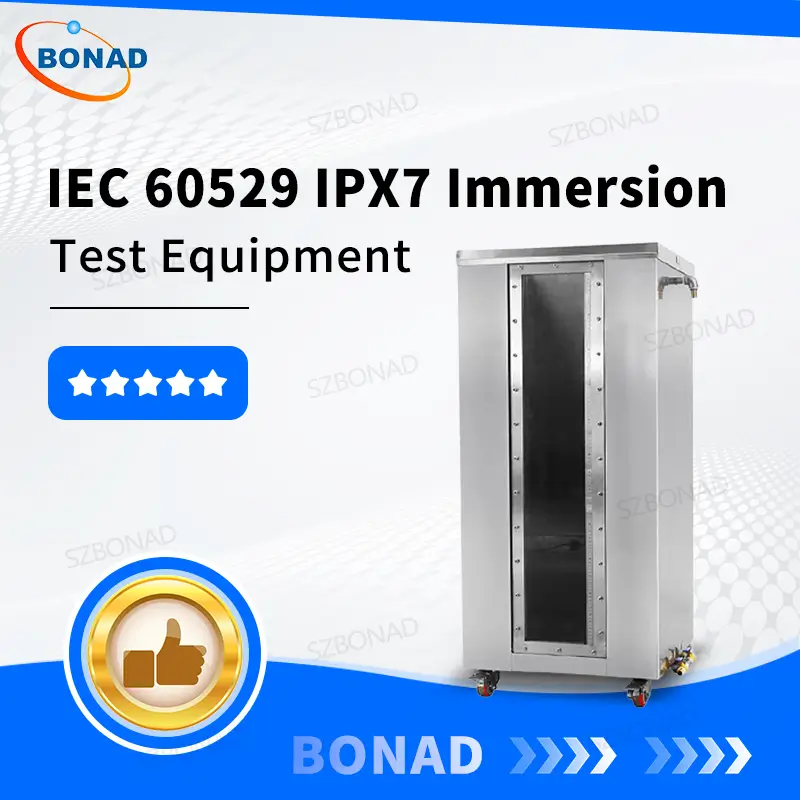
Key Features:
- Stainless steel tank for durability
- Precise water level control (1m standard)
- Fully compliant with IEC 60529
- Suitable for batch testing
Ideal for manufacturers needing reliable and repeatable IPX7 validation
IPX8 Pressure Immersion Test Chamber
For advanced waterproof testing:
IEC 60529 IPX8 Heated Immersion Pressure Test Chamber
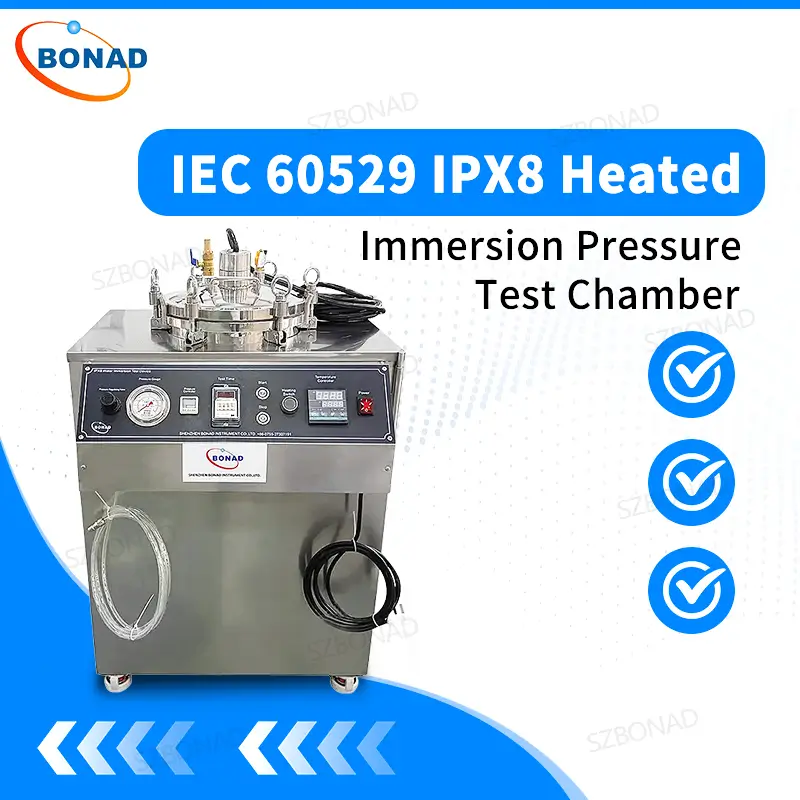
Key Features:
- ضغط(pressure)controlled immersion system
- Customizable depth and duration
- Heating function for complex environments
- Designed for IPX8 and IP68 testing
Perfect for high-end, industrial, and automotive applications
Conclusion
Understanding the difference between IPX7 and IPX8 is essential for selecting the right testing strategy and equipment.
- IPX7 → basic immersion protection
- IPX8 → advanced, high-pressure waterproof testing
Choosing the correct test not only ensures compliance but also improves product reliability and market competitiveness.
FAQ: IPX7 vs IPX8
What is the main difference between IPX7 and IPX8?
IPX7 is limited to 1 meter for 30 minutes, while IPX8 involves deeper immersion and often includes pressure conditions.
Can IPX8 replace IPX7?
Yes. If a product passes IPX8 testing, it typically meets IPX7 requirements as well.
What depth is used for IPX8 testing?
There is no fixed depth; it is defined by the manufacturer based on application needs.
Is IPX7 enough for outdoor products?
For light exposure, yes. For harsh or prolonged exposure, IPX8 is recommended.