Electrical safety testing is a critical requirement for manufacturers of electrical and electronic products, ensuring compliance with global standards such as IEC, UL, and CE. It is designed to prevent electric shock, fire hazards, and insulation failures during product operation.
From production lines to laboratory validation, electrical safety testing focuses on verifying insulation integrity, leakage current control, and real-world operating safety.
What Is Electrical Safety Testing?
Electrical safety testing refers to a set of standardized tests used to evaluate whether electrical devices are safe under both normal and fault conditions.
The core tests include:
- Dielectric withstand (Hipot) testing
- Insulation resistance testing
- Leakage current measurement
- Ground continuity testing
These tests are essential because even properly designed equipment can generate small leakage currents, and insulation failure can lead to serious hazards.
In simple terms:
Electrical safety testing = preventing electric shock + ensuring insulation reliability
Why Electrical Safety Testing Matters for Manufacturers?
For manufacturers, electrical safety testing is not optional—it is mandatory.
Key benefits:
- Ensure compliance with IEC / UL standards
- Prevent product recalls and liability risks
- Improve product reliability and brand trust
- Enable market access (EU, US, global)
Especially for appliances, power supplies, and lab equipment, safety testing is a certification gatekeeper
Core Electrical Safety Tests Explained
1. Dielectric Withstand Test
Hipot testing applies high voltage between conductive parts and ground to verify insulation strength.
- Detects insulation breakdown, cracks, or spacing defects
- Ensures products can withstand voltages higher than normal operation
- Monitors leakage current during testing
If insulation fails, excessive leakage current flows—indicating a safety risk
2. Leakage Current Test
Leakage current is one of the most critical safety indicators.
- Measures unintended current flowing to ground or accessible parts
- Determines risk of electric shock
- Required in IEC standards (especially IEC 60601, IEC 61010)
Even small increases in leakage current can indicate insulation degradation
3. Load Testing
Many electrical failures occur under load conditions, not in idle state.
Load testing:
- Simulates real operating current
- Detects overheating, instability, or abnormal current
- Validates safety under actual usage
This is why load cabinets are essential in modern testing systems
Complete Electrical Safety Testing Solution
To achieve full compliance and reliable results, manufacturers typically combine multiple devices into one integrated testing system:
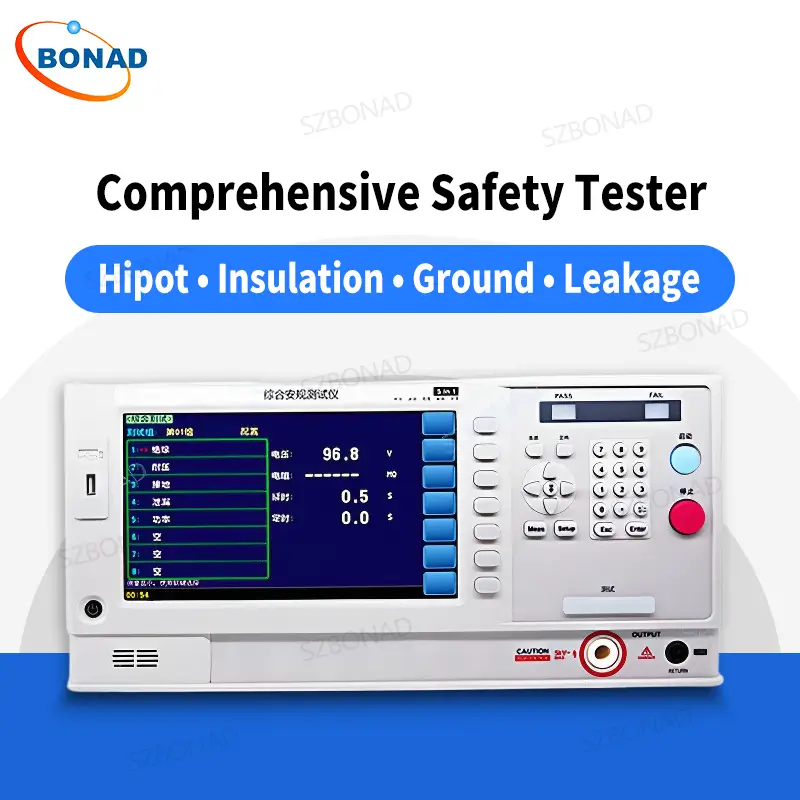
1. Comprehensive Electrical Safety Tester
Key Functions:
- Hipot (withstand voltage) test
- Insulation resistance
- Ground bond test
- Leakage current test
Why it matters:
- Covers 80–90% of safety test requirements
- Ideal for production line and lab testing
- Reduces equipment cost with integrated design
This is the central control unit of any electrical safety testing setup
2. Capacitor Leakage Current Tester
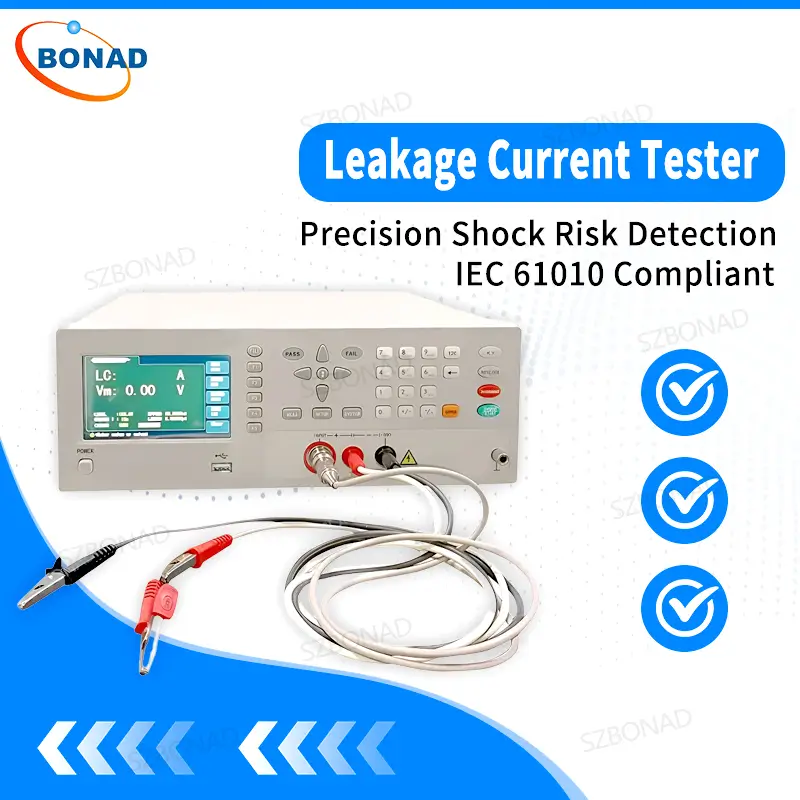
Key Functions:
- High-precision leakage current measurement
- Designed for IEC 61010 compliance
- Suitable for capacitors, power devices, lab equipment
Why it matters:
- Leakage current = direct indicator of electric shock risk
- Critical for high-end and regulated industries
This device ensures accurate safety validation beyond basic testing
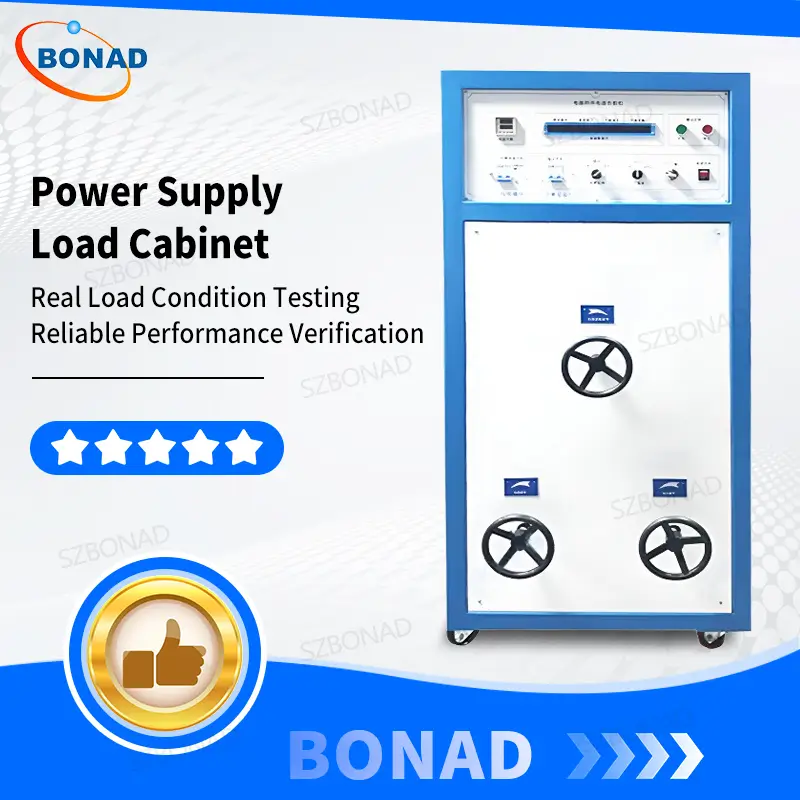
3. Power Supply Load Cabinet
Key Functions:
- Simulates actual electrical load conditions
- Supports multi-channel testing
- Enables long-term reliability and stress testing
Why it matters:
- Identifies failures that only occur during operation
- Essential for IEC appliance and power supply testing
This is the bridge between lab testing and real-world performance
How These 3 Devices Work Together
| Testing Stage | Equipment | Purpose |
|---|---|---|
| Basic safety validation | Comprehensive Tester | Insulation, voltage, grounding |
| Critical risk detection | Leakage Current Tester | Shock prevention |
| Real condition verification | Load Cabinet | Operational safety |
Together, they form a complete electrical safety testing solution
Applications Across Industries
Electrical safety testing equipment is widely used in:
- Home appliances (IEC 60335)
- Power supplies and chargers
- Laboratory and test equipment (IEC 61010)
- Medical devices (IEC 60601)
- Industrial electrical systems
How to Choose the Right Electrical Safety Testing Equipment?
When selecting equipment, consider:
1. Compliance requirements
- IEC, UL, CE standards
- Product category (appliance, lab, medical)
2. Testing scope
- Basic vs full safety testing
- Need for leakage precision?
3. Production vs lab use
- Automation level
- Multi-station capability
4. Integration capability
- Can devices work together as a system?
Best practice:
Choose a complete solution, not a single device
FAQ:
What is the most essential electrical safety testing equipment?
The most essential device is a comprehensive electrical safety tester, as it integrates multiple tests such as hipot, insulation, and leakage current into one system.
For higher accuracy, it is recommended to combine it with a dedicated leakage current tester.
Why is leakage current testing so important?
Leakage current directly determines the risk of electric shock. Even small deviations can indicate insulation failure or design issues.
That’s why industries like medical and laboratory equipment require strict leakage testing standards.
Do I need a load cabinet for safety testing?
Yes, if your product operates under load conditions.
Many safety issues only appear when the device is running, so load testing is critical for real-world validation.
Can one device complete all electrical safety tests?
A comprehensive tester can cover most tests, but for higher accuracy and compliance, a combined system (tester + leakage + load) is recommended.
Do you provide integrated testing solutions?
Yes. We provide complete electrical safety testing solutions, including:
- Equipment selection
- Technical guidance
- Custom testing setups
Contact us to get a tailored solution for your application.
Conclusion
Electrical safety testing is the foundation of product compliance, reliability, and user safety. By combining:
- Comprehensive safety testing
- Precision leakage measurement
- Real-world load simulation
manufacturers can build a fully compliant and high-reliability testing system.