In today’s global marketplace, product reliability is a critical requirement—not only for end users, but also for regulatory compliance and brand reputation.
For manufacturers, testing laboratories, and certification bodies, endurance testing is a fundamental process used to verify whether electrical components can withstand repeated operation over time without failure.
From switches and socket-outlets to appliance doors and retractable cord systems, endurance testing helps identify mechanical wear, electrical fatigue, and potential safety risks before products reach the market.
What is Endurance Testing?
Endurance testing evaluates a product’s ability to perform under repetitive operational cycles defined by international standards such as IEC 60669 and IEC 60335.
Typical parameters include:
- Number of operation cycles
- Electrical load conditions
- Mechanical actuation speed
- Defined failure criteria
The objective is straightforward: determine whether a component can maintain safe and reliable performance throughout its expected service life.
Endurance Testing vs Durability Testing
While the terms are sometimes used interchangeably, they serve different purposes in engineering and compliance contexts:
- Endurance Testing focuses on repeated mechanical or electrical operation (cycle life)
- Durability Testing includes broader long-term performance factors such as environmental stress, aging, and corrosion
In IEC-based testing environments, endurance testing is the standard method for validating life cycle performance of electrical components.
Why Endurance Testing Matters
For manufacturers and testing organizations, endurance testing is essential to:
- Demonstrate compliance with IEC standards
- Reduce product failure rates and warranty risks
- Validate design robustness before mass production
- Support certification processes with reliable data
Globally recognized organizations such as TÜV Rheinland and Intertek rely on standardized endurance testing procedures to assess product safety and performance.
IEC-Compliant Endurance Testing Applications
Below are typical endurance testing scenarios for electrical appliances, along with representative equipment solutions.
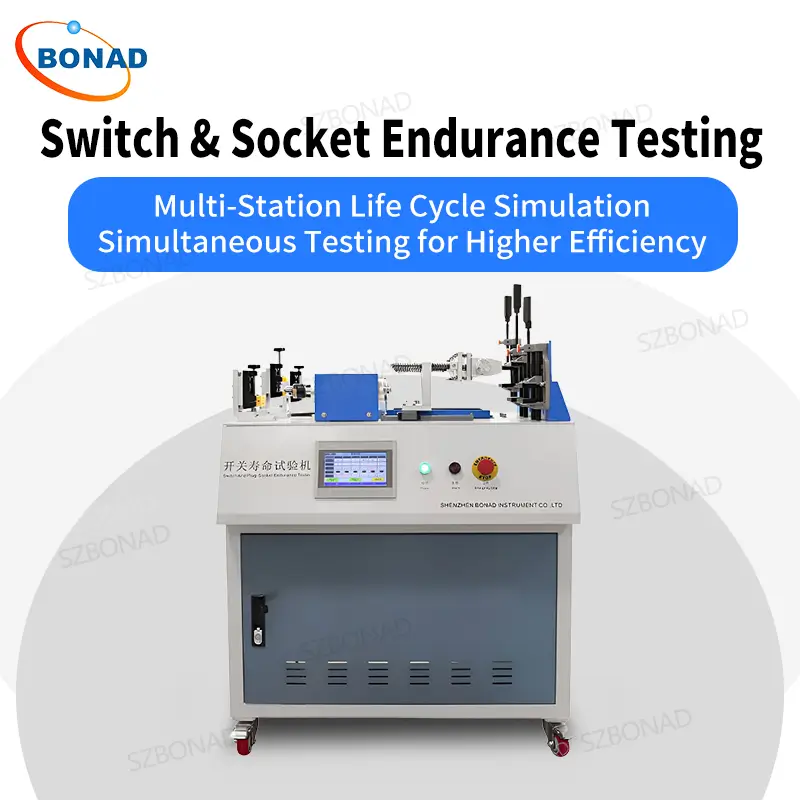
Switch, Plug & Socket Endurance Testing
Switches and socket-outlets must endure extensive ON/OFF cycles while maintaining electrical integrity and mechanical stability.
IEC 60669 Six-Station Switch, Plug and Socket Endurance Tester
This solution enables:
- Simultaneous multi-sample testing
- Accurate simulation of real-world switching operations
- Evaluation of contact wear and electrical performance
Such systems are widely used in appliance manufacturing facilities and independent testing laboratories.
Appliance Door Endurance Testing
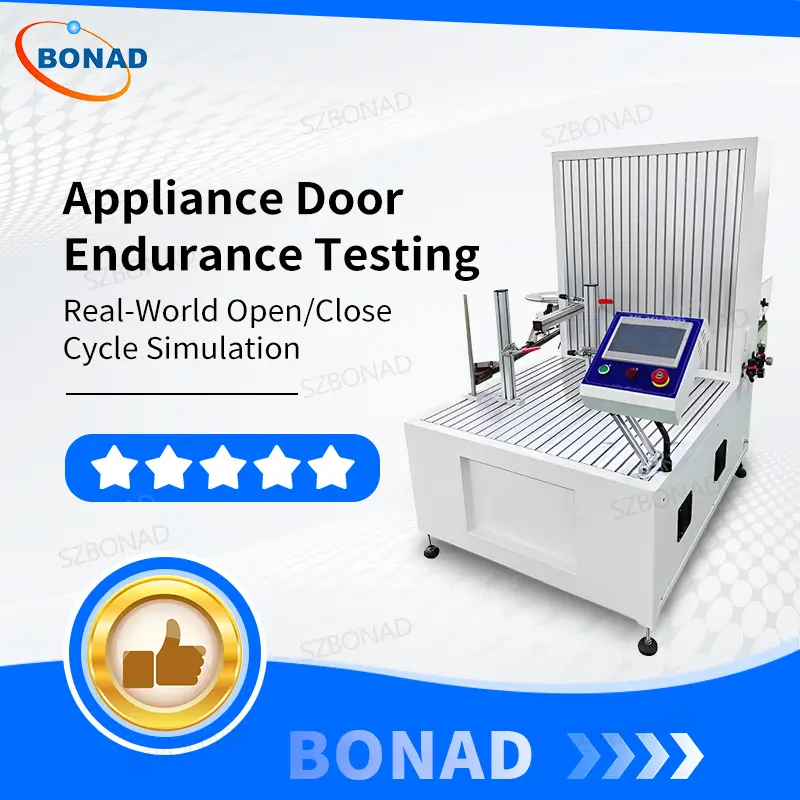
Appliance doors, particularly in ovens and microwave units, are subject to frequent opening and closing during normal use.
IEC 60335-2-6 Microwave Oven Door Endurance Tester
Key features include:
- Controlled door cycling under repeatable conditions
- Adjustable test parameters for different appliance types
- Assessment of hinge durability and structural integrity
This ensures long-term usability and compliance with safety requirements.
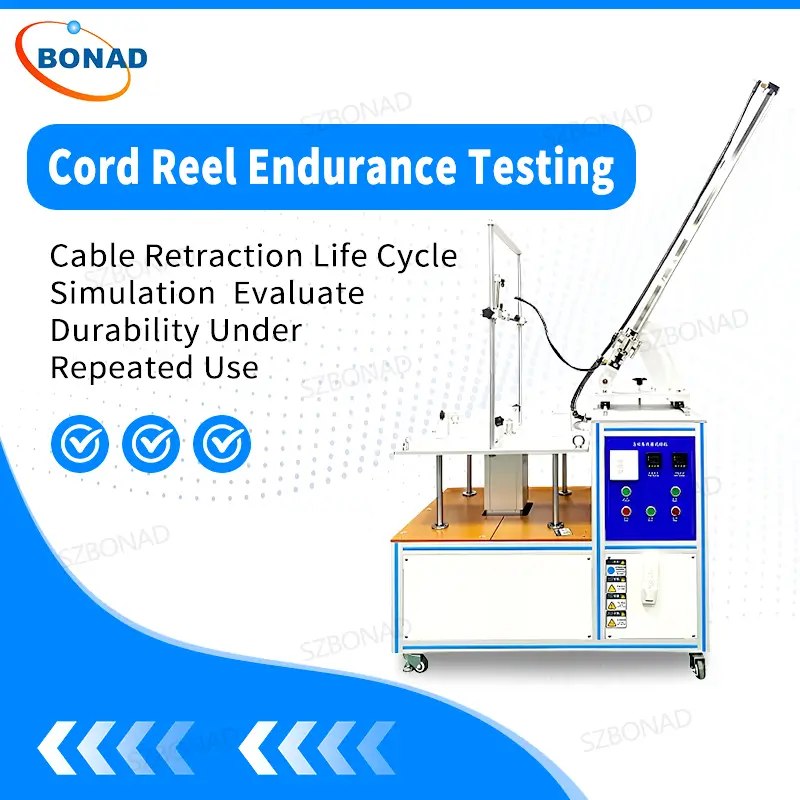
Automatic Cord Reel Endurance Testing
Retractable power cords must maintain consistent mechanical and electrical performance over repeated use.
IEC 60335-1 Clause 22.16 Automatic Cord Reel Endurance Testing Equipment
This system is designed to:
- Simulate repeated cable extension and retraction
- Evaluate wear resistance and tension consistency
- Verify compliance with IEC safety standards
It is particularly relevant for appliances with integrated cable management systems.
Selecting the Right Endurance Testing Equipment
When evaluating endurance testing solutions, manufacturers and laboratories should consider:
Compliance with International Standards
Ensure alignment with IEC requirements and certification needs.
Accuracy and Repeatability
Consistent results are essential for reliable product validation.
Application Flexibility
Equipment should support different product types and test configurations.
Technical Support and Service
Long-term performance depends on proper installation, calibration, and maintenance.
A Trusted Partner for Endurance Testing Solutions
With extensive experience in electrical appliance testing, BONAD provides:
- IEC-compliant endurance testing systems
- Custom-engineered solutions for specific applications
- Reliable performance for global laboratories and manufacturers
- Ongoing technical support and service
Our equipment is designed to meet the practical needs of modern testing environments while supporting compliance with international standards.
Get Expert Support for Your Testing Requirements
If you are evaluating endurance testing solutions for your products or laboratory, our technical team is available to assist.
👉 Contact us to discuss:
- Application-specific testing requirements
- Equipment selection and customization
- Compliance with IEC standards
We are committed to helping you achieve accurate, reliable, and efficient testing results.
FAQ:
What is the difference between endurance testing and life cycle testing?
In most IEC applications, these terms are used interchangeably and refer to repeated operation testing to evaluate product lifespan.
Which IEC standards require endurance testing?
Common standards include IEC 60669 for switches and IEC 60335 for household appliances.
Can the testing equipment be customized?
Yes. Fixtures, cycle parameters, and test configurations can be tailored to specific products and standards.
What industries use endurance testing equipment?
Endurance testing is widely used by appliance manufacturers, electronics companies, testing laboratories, and certification organizations.
Do you provide installation and after-sales support?
Yes. Full technical support, including installation guidance, training, and maintenance services, is available.