What is UV Testing?
UV Testing (Ultraviolet Testing) is a method used to evaluate how materials degrade when exposed to ultraviolet (UV) radiation. It is widely used to simulate long-term outdoor exposure in a short period of time.
Key purposes of UV testing:
- Evaluate material durability
- Predict product lifespan
- Identify issues such as fading, cracking, and chalking
UV radiation is one of the primary causes of material degradation, especially for:
- Plastics
- Coatings
- Rubber
- Electronic components
UV Aging Test vs UV Weathering Test
UV Aging Test
- Focuses mainly on UV light exposure
- Used for rapid material screening in laboratories
UV Weathering Test
- Simulates real environmental conditions, including:
- UV radiation
- Temperature
- Humidity
- Condensation
- Water spray
UV weathering tests provide more realistic results for outdoor applications.
How Does UV Testing Work?
UV test chambers simulate environmental conditions through multiple factors:
1. UV Light Simulation
- Uses UV-A or UV-B lamps
- Shortwave UV causes faster material degradation
2. Temperature Acceleration
- Elevated temperatures speed up chemical reactions
- Enables accelerated aging (days = months/years)
3. Moisture & Condensation
- Simulates dew and humidity
- Critical for coatings and polymers
4. Water Spray
- Simulates rain and erosion
- Enhances realism of weathering tests
Key UV Testing Standards
The most widely recognized standards include:
- ASTM D4329 – UV exposure of plastics
- ISO 4892-3 – UV fluorescent lamp testing
- ISO 11507 – Artificial weathering
- SAE J2020 – Automotive materials testing
ASTM D4329 is one of the most commonly used standards for accelerated UV weathering of plastics.
Recommended UV Test Chambers
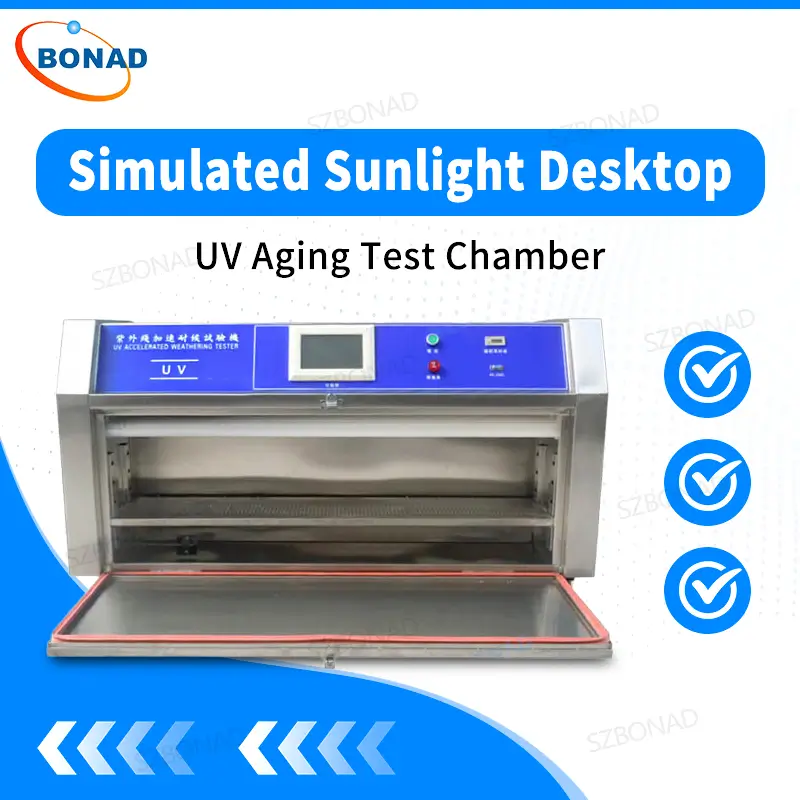
Desktop UV Aging Test Chamber
Key Features:
- Compact and space-saving design
- Simulates natural sunlight UV radiation
- Cost-effective for R&D applications
Best for:
- Laboratories
- Material development
- Small-scale testing
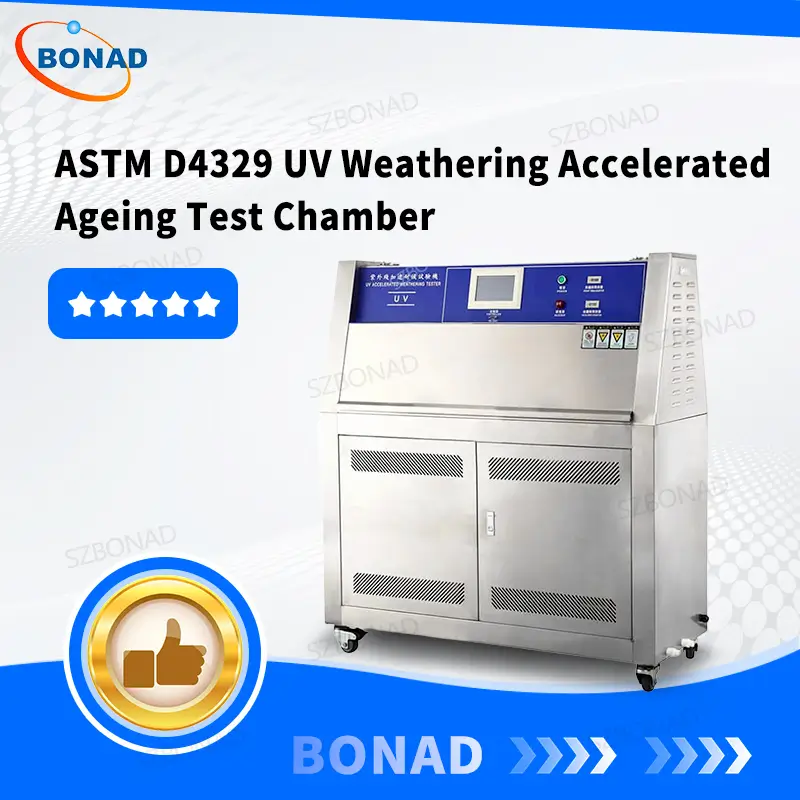
ASTM D4329 UV Weathering Test Chamber
Key Advantages:
- Complies with ASTM D4329 & ISO 4892
- Combines UV, condensation, and water spray
- High repeatability and reliability
Technical Highlights:
- UV-A / UV-B lamp options
- Temperature range: RT+10°C to 70°C
- Humidity ≥ 90% RH
Applications:
- Automotive
- Construction materials
- Coatings and paints
- Electronics
Applications of UV Testing
UV testing is widely used across industries:
Materials
- Plastic UV resistance testing
- Rubber aging tests
- Coating durability evaluation
Industries
- Automotive interior testing
- Solar panel testing
- Outdoor product validation
UV Testing vs Xenon Test
| Factor | UV Testing | Xenon Testing |
|---|---|---|
| Spectrum | UV only | Full spectrum |
| Cost | Lower | Higher |
| Speed | Faster | Slower |
| Accuracy | Medium | High |
Recommendation:
- Use UV testing for fast screening
- Use xenon testing for precise simulation
Conclusion
UV testing is essential for ensuring product durability and long-term performance.
- For lab-scale testing → choose a desktop UV aging chamber
- For standard-compliant testing → choose an ASTM D4329 chamber
Selecting the right UV testing equipment directly impacts product quality, compliance, and market competitiveness.
FAQ
What is UV testing used for?
UV testing is used to evaluate how materials perform under ultraviolet radiation, especially in outdoor environments.
What is ASTM D4329?
ASTM D4329 is a standard for testing plastic materials under UV exposure using fluorescent lamps.
How long does a UV aging test take?
It typically ranges from hundreds to thousands of hours, depending on the test requirements.
Is UV testing equivalent to real outdoor exposure?
Not exactly, but it provides reliable comparative results for material performance.