
Battery testing plays a critical role in ensuring the safety, reliability, and performance of modern energy storage systems. From consumer electronics to electric vehicles and renewable energy storage, batteries must undergo rigorous testing before entering the market.
In this guide, we will cover everything you need to know about battery testing, including testing methods, global standards, and professional battery test equipment used in laboratories and manufacturing environments.
What is Battery Testing?
Battery testing refers to a series of controlled experiments and evaluations conducted to determine a battery’s:
- Performance (capacity, efficiency)
- Safety (thermal stability, overcharge resistance)
- Durability (cycle life, aging behavior)
- Environmental reliability (temperature, vibration, humidity)
These tests ensure that batteries comply with international safety regulations and perform reliably under real-world conditions.
Why is Battery Testing Important?
Battery testing is essential for several reasons:
1. Safety Assurance
Lithium-ion batteries can pose risks such as overheating, fire, or explosion. Testing helps identify potential hazards before deployment.
2. Regulatory Compliance
Manufacturers must meet standards like:
- UN 38.3 (transport safety)
- IEC 62133 (portable batteries)
- UL certifications
Failure to comply can prevent products from entering global markets.
3. Performance Validation
Testing verifies:
- Battery capacity
- Charge/discharge efficiency
- Energy density
4. Product Reliability
Ensures long-term stability under different environmental conditions.
Main Types of Battery Testing
1. Performance Testing
Evaluates how well a battery functions under normal conditions.
Common tests include:
- Capacity test
- Charge/discharge test
- Internal resistance test
Widely used in R&D and production quality control.
2. Cycle Life Testing
Measures how many charge-discharge cycles a battery can endure before its capacity degrades.
- Key metric: cycle life (e.g., 500–2000 cycles)
- Critical for EV and energy storage systems
3. Safety Testing
Ensures the battery does not pose hazards under extreme conditions.
Typical safety tests:
- Overcharge test
- Short circuit test
- Nail penetration test
- Thermal runaway test
4. Environmental Testing
Simulates harsh environmental conditions to evaluate durability.
- High/low temperature testing
- Humidity testing
- Thermal shock testing
- Altitude simulation
These tests are typically conducted using environmental test chambers.
5. Mechanical Testing
Assesses the battery’s resistance to physical stress.
- Vibration test
- Shock test
- Crush test
- Impact test
Battery Testing Standards and Regulations
To ensure global market access, batteries must comply with international standards:
Key Standards
- UN 38.3 – Transportation safety testing for lithium batteries
- IEC 62133 – Safety requirements for portable batteries
- UL 1642 / UL 2054 – Safety standards for lithium batteries
- ISO 12405 – EV battery testing
- IEC 60068 – Environmental testing
These standards define test procedures, conditions, and acceptance criteria.
Battery Testing Equipment Overview
Professional battery testing requires advanced and reliable equipment.
1. Battery Charge/Discharge Test Systems
Used for:
- Capacity testing
- Cycle life testing
- Performance evaluation
2. Environmental Test Chambers
Simulate environmental conditions such as:
- Temperature extremes
- Humidity
- Thermal cycling
3. Safety Test Equipment
Designed for destructive and safety tests:
- Overcharge test systems
- Short circuit testers
- Thermal runaway chambers
4. Mechanical Test Equipment
Includes:
- Vibration tables
- Drop testers
- Crush testers
If you are looking for professional solutions, explore our full range of
Battery Test Equipment here:
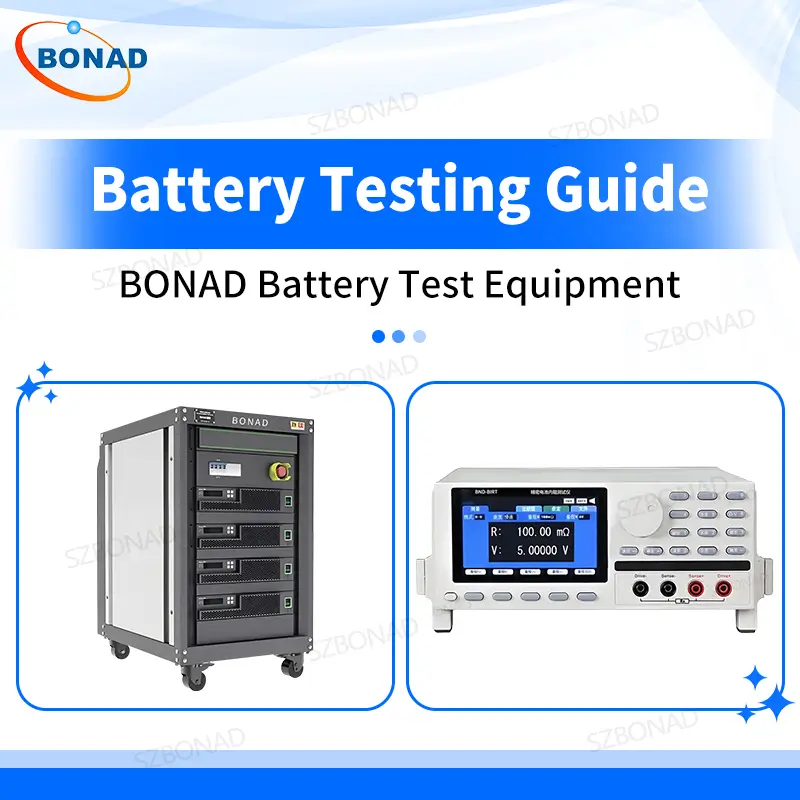
This category includes advanced systems designed to meet IEC, UL, and UN standards, suitable for laboratories, manufacturers, and certification bodies.
How to Choose the Right Battery Testing Equipment?
When selecting battery testing equipment, consider:
1. Compliance Requirements
Ensure compatibility with standards like UN 38.3 or IEC 62133.
2. Testing Scope
Identify whether you need:
- Performance testing
- Safety testing
- Environmental testing
3. Accuracy and Control
High-precision control systems are essential for reliable results.
4. Automation Level
Modern systems support:
- Programmable test cycles
- Data logging
- Remote monitoring
Battery Testing for Different Applications
Electric Vehicles (EV)
- Focus: cycle life, safety, thermal management
- Standards: ISO 12405, UN 38.3
Consumer Electronics
- Focus: safety and compact performance
- Standards: IEC 62133
Energy Storage Systems
- Focus: long-term stability and efficiency
Renewable Energy
- Solar and wind storage battery validation
Future Trends in Battery Testing
Battery testing is evolving rapidly with new technologies:
- AI-driven testing and data analysis
- High-capacity battery validation (solid-state batteries)
- Faster testing cycles
- Smart testing systems with IoT integration
Conclusion
Battery testing is a fundamental process that ensures the safety, durability, and performance of modern batteries across industries. By understanding testing methods, standards, and equipment, manufacturers can improve product quality and meet global regulatory requirements.
For reliable and standards-compliant solutions, explore our professional range of Battery Test Equipment.
FAQ:
What is the purpose of battery testing?
Battery testing ensures safety, performance, and compliance with international standards before products are released to the market.
What are the most important battery tests?
Key tests include capacity testing, cycle life testing, safety testing (overcharge, short circuit), and environmental testing.
What standards are used for battery testing?
Common standards include UN 38.3, IEC 62133, UL 1642, and ISO 12405.
What equipment is used for battery testing?
Battery testing uses charge/discharge systems, environmental chambers, safety test equipment, and mechanical testing machines.
Can BONAD customize battery test equipment?
Yes, BONAD provides customized battery test equipment solutions based on specific testing requirements. This includes tailored configurations for different battery types (such as lithium-ion, EV, or energy storage batteries), compliance with standards like UN 38.3 and IEC 62133, and integration of specific test functions such as thermal, safety, or environmental testing.