Tensile testing is one of the most fundamental mechanical tests used in material science and engineering. It measures how a material behaves when subjected to a pulling force and helps determine key mechanical properties such as strength, ductility, and elasticity.
Manufacturers, laboratories, and certification organizations use tensile tests to evaluate the reliability and structural performance of materials including metals, plastics, rubber, and composites.
In this guide, we will explain:
- What a tensile test is
- The tensile testing procedure
- Important international testing standards
- Types of tensile testing machines used in laboratories and industrial quality control
What is a Tensile Test?
A tensile test, also known as a tension test, is a mechanical testing method used to determine how a material reacts to forces that attempt to stretch it.
During the test, a sample specimen is clamped at both ends and pulled apart at a controlled speed until it deforms or breaks.
The test allows engineers to measure several critical properties, including:
- Ultimate tensile strength (UTS)
- Yield strength
- Elongation at break
- Young’s modulus (elastic modulus)
- Reduction of area
These parameters help engineers evaluate whether a material is suitable for specific applications such as structural components, electronic enclosures, automotive parts, or industrial equipment.
Why is Tensile Testing Important?
Tensile testing plays a crucial role in quality control and product development. It ensures that materials meet required strength and durability standards before being used in manufacturing.
Key benefits include:
Material verification
Manufacturers confirm that raw materials meet mechanical property requirements.
Product reliability
Tensile testing helps prevent product failure under mechanical stress.
Compliance with international standards
Testing ensures products meet regulatory standards such as ASTM and ISO.
Research and development
Engineers use tensile tests to analyze new materials and optimize product designs.
Tensile Test Procedure
The tensile testing procedure follows a standardized method to ensure accurate and repeatable results.
1. Specimen Preparation
A standardized specimen is prepared according to the relevant testing standard. Common specimen shapes include:
- Dog-bone shape for metals and plastics
- Rectangular strips for rubber or polymers
Specimen dimensions must comply with specific standards to ensure comparable results.
2. Mounting the Specimen
The specimen is clamped into the tensile testing machine grips to prevent slipping during the test.
Proper alignment is essential to ensure uniform stress distribution.
3. Applying Tensile Force
The machine applies a controlled tensile load by moving the crosshead at a constant speed.
The force gradually increases while sensors record:
- Applied load
- Extension
- strain
4. Recording the Stress-Strain Curve
The system generates a stress–strain curve, which illustrates the relationship between applied stress and material deformation.
Important points on this curve include:
- Elastic region
- Yield point
- Plastic deformation
- Ultimate tensile strength
- Fracture point
5. Result Analysis
After the test is completed, the testing software calculates mechanical properties such as:
- Tensile strength
- Yield strength
- Elongation percentage
- Elastic modulus
These results are typically included in a tensile test report.
Common Tensile Test Standards
Tensile testing is performed according to internationally recognized standards to ensure consistent results across laboratories.
Some of the most widely used standards include:
ASTM Standards
- ASTM E8 / E8M – Tensile testing of metallic materials
- ASTM D638 – Tensile properties of plastics
- ASTM D412 – Tensile testing of rubber
ISO Standards
- ISO 6892 – Tensile testing of metallic materials
- ISO 527 – Tensile properties of plastics
- ISO 37 – Tensile testing of rubber
Following these standards ensures reliable test results and international comparability.
Types of Tensile Testing Machines
Different types of tensile testing machines are used depending on testing requirements, automation level, and environmental conditions.
Universal Tensile Testing Machine
A universal testing machine (UTM) is the most common equipment used for tensile testing.
It can perform multiple mechanical tests including:
- tensile testing
- compression testing
- bending testing
- shear testing
These machines are widely used in research laboratories, industrial manufacturing, and certification bodies.
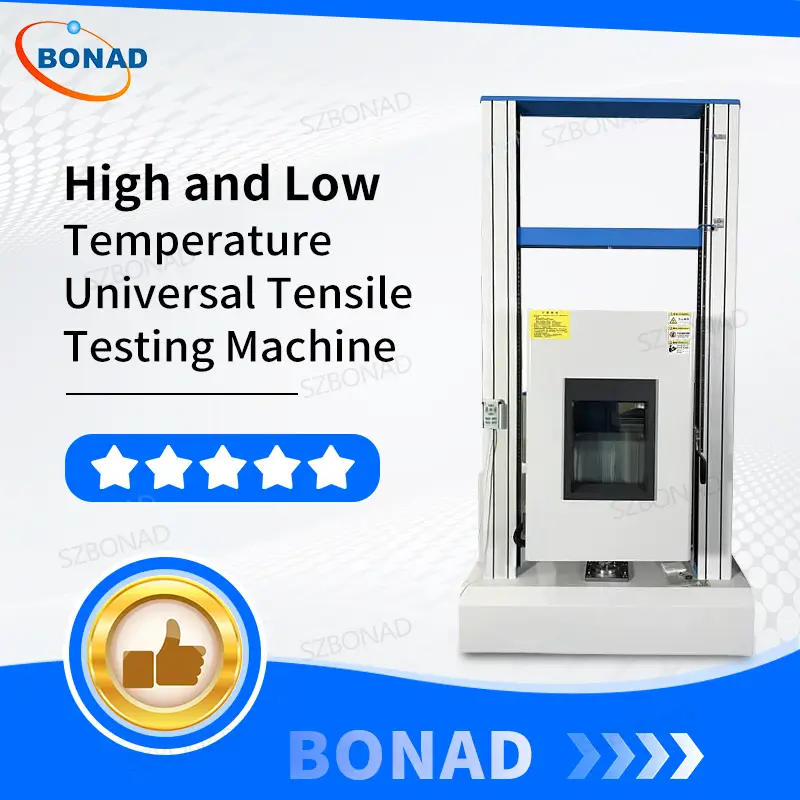
High and Low Temperature Tensile Testing Machine
Some materials must be tested under extreme environmental conditions.
The High and Low Temperature Universal Tensile Testing Machine allows tensile tests to be performed at controlled temperature ranges, making it ideal for testing materials used in aerospace, automotive, and electronic industries.
Learn more about this equipment here:
Touch Screen Controlled Universal Tensile Testing Machine
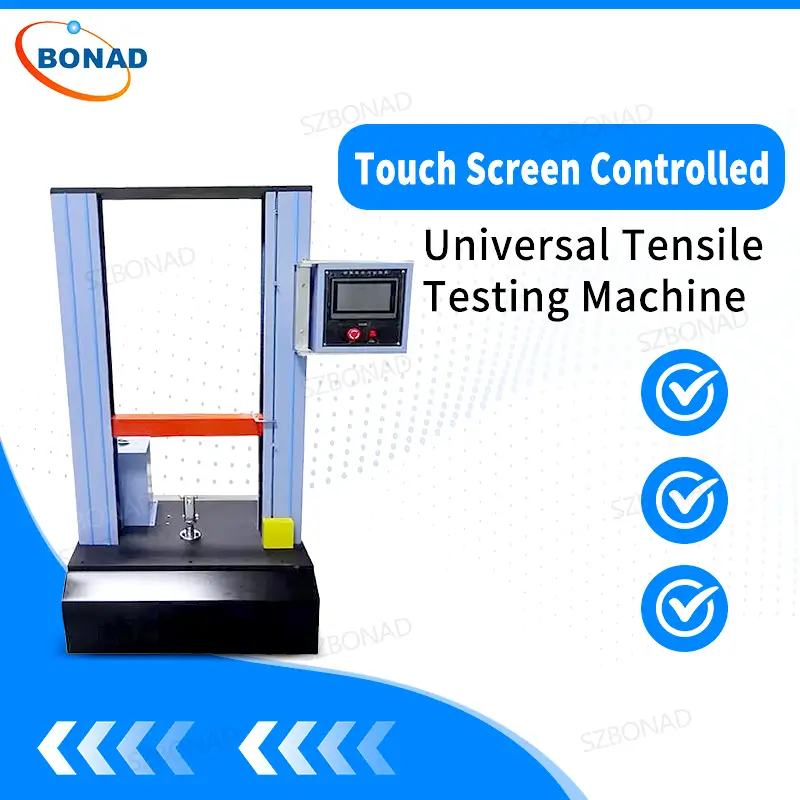
Modern laboratories often require intuitive operation and quick parameter adjustments.
The Touch Screen Controlled Universal Tensile Testing Machine provides a user-friendly interface, allowing operators to easily configure test parameters, monitor results, and export test reports.
Explore the product here:
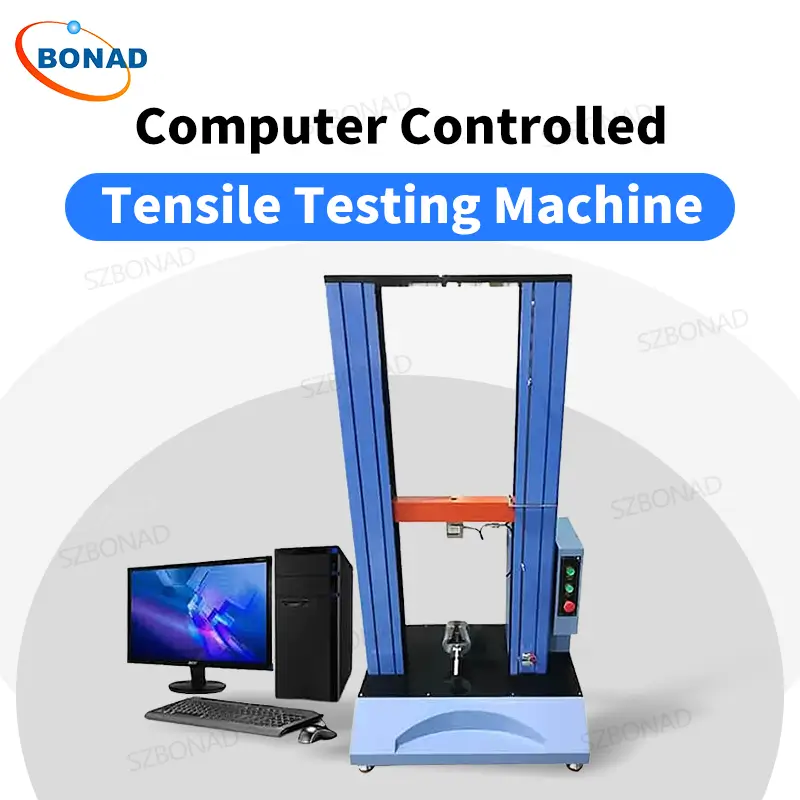
Computer Controlled Tensile Testing Machine
For advanced material analysis and automated data processing, many laboratories use computer-controlled systems.
The Computer Controlled Tensile Testing Machine integrates professional testing software that enables precise control, real-time data acquisition, and detailed test analysis.
See full specifications here:
Applications of Tensile Testing
Tensile testing is widely used across various industries.
Metal Industry
Testing structural metals such as steel, aluminum, and alloys.
Plastic and Polymer Industry
Evaluating the mechanical strength of plastics and composite materials.
Rubber and Elastomers
Determining elongation and tensile strength of flexible materials.
Automotive and Aerospace
Ensuring safety and durability of components exposed to mechanical stress.
Electronics and Consumer Products
Testing materials used in product housings, cables, and connectors.
Choosing the Right Tensile Testing Machine
Selecting the appropriate tensile testing machine depends on several factors:
- Maximum load capacity
- Material type
- Required accuracy
- Testing standards
- Environmental conditions
- Automation level
Laboratories often choose universal testing machines that support multiple test types and provide flexible software control.
Conclusion
Tensile testing is an essential method for evaluating the mechanical properties of materials. By applying controlled tensile forces and analyzing the resulting stress–strain behavior, engineers can determine critical parameters such as tensile strength, elasticity, and ductility.
Using standardized procedures and advanced tensile testing machines ensures reliable results that support product development, quality control, and regulatory compliance.
For laboratories and manufacturers seeking professional tensile testing solutions, advanced universal testing machines provide accurate, repeatable, and efficient testing capabilities.
FAQ
What is a tensile test used for?
A tensile test is used to determine the mechanical properties of a material, including tensile strength, yield strength, elongation, and elastic modulus.
What materials can be tested with a tensile testing machine?
Tensile testing machines can test metals, plastics, rubber, polymers, composites, and other engineering materials.
What is the difference between tensile strength and yield strength?
Yield strength refers to the stress at which a material begins to deform permanently, while tensile strength is the maximum stress the material can withstand before breaking.
What standards are used for tensile testing?
Common standards include ASTM E8, ASTM D638, ISO 6892, ISO 527, and ISO 37.