Modern industrial products are expected to maintain long-term reliability under heat, sunlight, humidity, ozone, oxidation and outdoor environmental exposure. From plastics and rubber to electrical insulation materials and automotive coatings, environmental aging can gradually reduce mechanical strength, electrical performance and appearance quality over time.
For manufacturers, laboratories and quality control engineers, accelerated aging testing has become an essential method for evaluating product durability, predicting service life and improving reliability before products enter the market.
This guide explains the principles of accelerated aging testing, common testing methods, international standards and the environmental test chambers widely used in material durability testing.
What Is Accelerated Aging Testing?
Accelerated aging testing is a reliability testing method that simulates long-term environmental exposure within a shortened testing period by increasing environmental stress conditions such as:
- temperature
- UV radiation
- ozone concentration
- oxygen pressure
- humidity
- weathering cycles
The purpose is to accelerate material degradation and identify potential failure risks earlier than natural outdoor exposure testing.
Accelerated aging testing is widely used in:
- plastics
- rubber products
- electrical appliances
- cable insulation
- coatings
- automotive materials
- textiles
- electronic components
Compared with natural weather exposure, accelerated testing significantly reduces development time while providing repeatable laboratory conditions.
Why Aging Testing Is Important for Product Reliability?
Environmental aging affects nearly all industrial materials. Long-term exposure can lead to:
- discoloration
- cracking
- chalking
- loss of gloss
- brittleness
- oxidation
- reduced tensile strength
- insulation failure
Without proper aging evaluation, these problems may only appear after products are already in the market, leading to warranty claims, safety issues and brand reputation risks.
Accelerated aging testing helps manufacturers:
- improve product durability
- optimize material selection
- verify compliance with international standards
- reduce product failure rates
- predict product lifespan
- support R&D and quality control
Main Environmental Factors Causing Material Aging
Different environmental conditions produce different aging mechanisms. Selecting the correct testing method is critical for obtaining reliable durability data.
Thermal Oxidative Aging Testing
Thermal oxidative aging occurs when materials are continuously exposed to elevated temperatures and oxygen. High temperature accelerates chemical oxidation reactions inside polymers, insulation materials and rubber compounds.
Typical aging symptoms include:
- hardening
- embrittlement
- cracking
- insulation degradation
- loss of elasticity
Thermal aging testing is commonly applied to:
- electrical insulation materials
- wire and cable materials
- rubber products
- polymer compounds
- appliance components
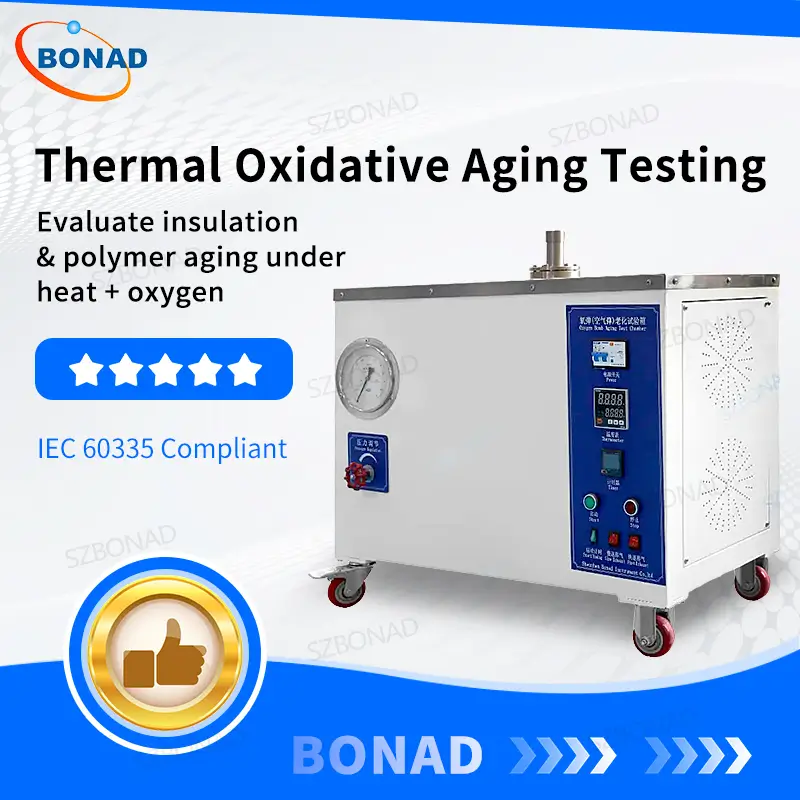
A commonly used device for this application is the Oxygen Bomb / Air Bomb Aging Tester, which is designed for accelerated thermal oxygen aging evaluation under controlled pressure and temperature conditions.
Relevant standards include:
- IEC 60335-1 Clause 22.32
- ASTM D572
- ISO 188
Ozone Aging Testing for Rubber Materials
Ozone in the atmosphere can severely damage rubber materials, especially under tension or dynamic stress conditions.
Ozone aging typically causes:
- surface cracking
- loss of elasticity
- sealing failure
- reduced mechanical performance
Industries commonly requiring ozone resistance testing include:
- automotive seals
- tires
- rubber hoses
- cable insulation
- elastomer products
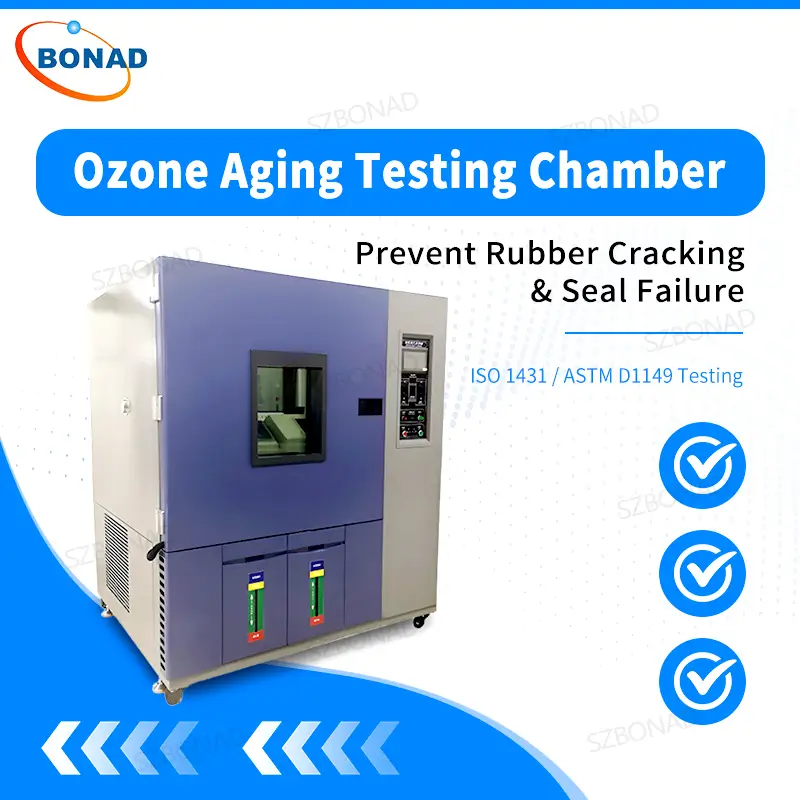
The Ozone Aging Test Chamber simulates controlled ozone concentration environments to evaluate ozone resistance and crack formation behavior in rubber materials.
Common testing standards include:
- ISO 1431
- ASTM D1149
- JIS K6259
UV Accelerated Weathering Testing
Ultraviolet radiation is one of the primary causes of outdoor material degradation. UV energy breaks molecular bonds inside polymers and coatings, resulting in appearance and performance deterioration.
Typical UV aging failures include:
- fading
- chalking
- discoloration
- cracking
- gloss loss
UV accelerated weathering testing is widely used for:
- plastics
- coatings
- paints
- construction materials
- outdoor consumer products
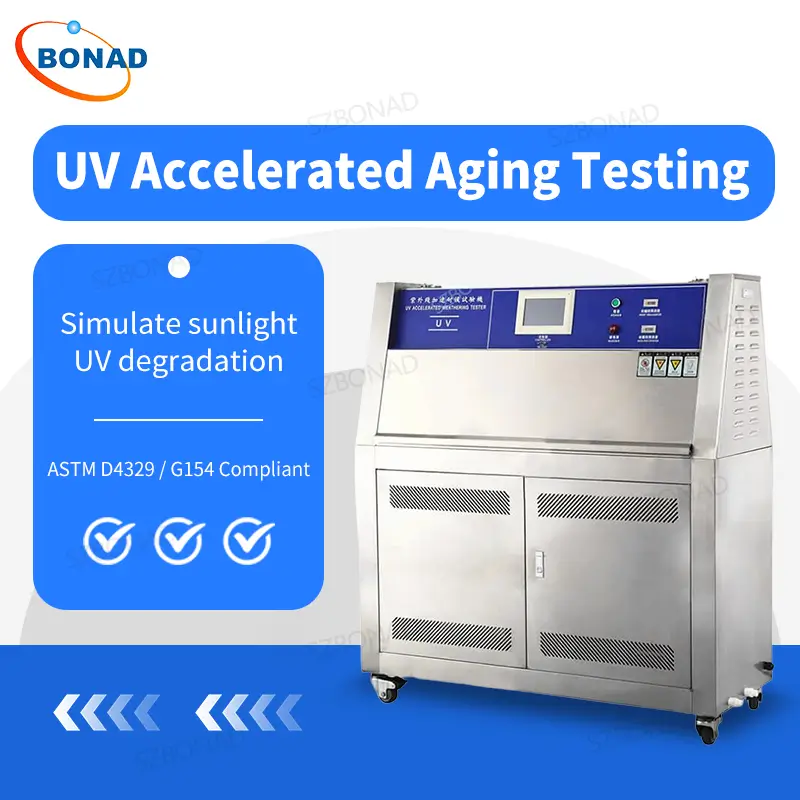
The UV Weathering Accelerated Ageing Test Chamber uses fluorescent UV lamps to simulate sunlight exposure and condensation cycles under accelerated laboratory conditions.
Common standards include:
- ASTM G154
- ASTM D4329
- ISO 4892-3
Xenon Arc Weathering Testing
Xenon arc testing provides one of the most realistic accelerated weathering simulations because xenon lamps closely reproduce the full spectrum of natural sunlight, including:
- ultraviolet light
- visible light
- infrared radiation
Xenon weathering chambers are widely used in:
- automotive coatings
- plastics
- textiles
- aerospace materials
- outdoor products
Compared with UV fluorescent testing, xenon testing provides more comprehensive sunlight simulation and is especially suitable for products exposed to outdoor environments for long periods.
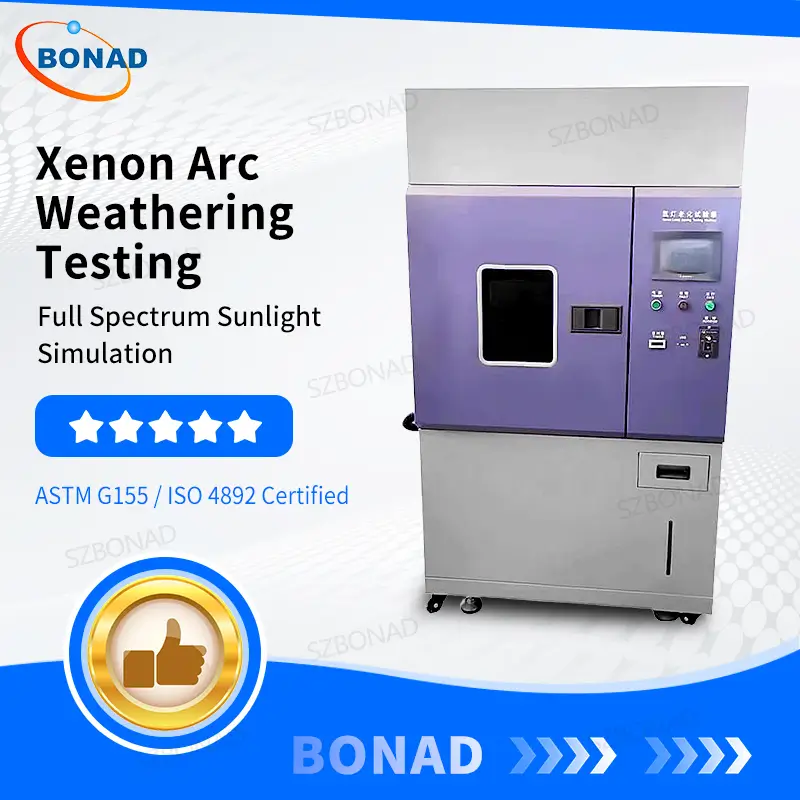
The Xenon Lamp Aging Environmental Test Chamber is designed for accelerated weathering evaluation under simulated sunlight, temperature and humidity conditions.
Typical standards include:
- ASTM G155
- ISO 4892-2
- SAE J2527
Comparison of Different Aging Test Methods
| Test Method | Simulated Condition | Main Applications |
|---|---|---|
| Thermal Oxidative Aging | Heat + oxygen | Cable insulation, polymers |
| Ozone Aging | Ozone atmosphere | Rubber products |
| UV Weathering | UV radiation | Plastics, coatings |
| Xenon Weathering | Full-spectrum sunlight | Automotive and outdoor materials |
Each testing method targets different environmental degradation mechanisms. In many industries, multiple aging tests are combined to achieve a more comprehensive durability evaluation.
International Standards for Accelerated Aging Testing
Reliable aging evaluation requires compliance with recognized international testing standards.
Commonly used standards include:
| Standard | Application |
|---|---|
| IEC 60335-1 | Electrical appliance aging |
| ASTM G154 | UV weathering testing |
| ASTM G155 | Xenon arc weathering |
| ISO 4892 | Plastics weathering |
| ASTM D1149 | Rubber ozone testing |
| ISO 188 | Thermal aging of rubber |
Standardized testing improves consistency, repeatability and international acceptance of laboratory results.
How to Choose the Right Aging Test Chamber?
Selecting the appropriate environmental aging chamber depends on several factors:
Material Type
Different materials require different aging simulations.
Examples:
- rubber → ozone aging
- plastics → UV or xenon aging
- insulation materials → thermal oxidative aging
Real Application Environment
Indoor and outdoor applications require different weathering simulations.
- outdoor exposure → xenon weathering
- UV-focused degradation → UV weathering chamber
Testing Objective
Possible objectives include:
- appearance durability
- lifespan prediction
- standards compliance
- material comparison
- accelerated failure analysis
Applicable Standards
Different industries follow different test standards. The testing chamber should support the required standard specifications and test cycles.
Future Trends in Aging Testing
Modern accelerated aging testing is evolving toward:
- intelligent environmental control
- automated data collection
- AI-based lifespan prediction
- multi-factor composite aging simulation
- remote monitoring systems
As product reliability requirements continue to increase, accelerated aging testing is becoming increasingly important across manufacturing industries worldwide.
Conclusion
Accelerated aging testing plays a critical role in evaluating long-term material reliability and environmental durability. By simulating heat, UV radiation, ozone and sunlight exposure under controlled laboratory conditions, manufacturers can identify potential failures earlier, improve product quality and reduce long-term reliability risks.
From thermal oxidative aging to xenon weathering simulation, selecting the correct testing method and environmental chamber is essential for accurate durability evaluation and compliance with international standards.
For manufacturers involved in plastics, rubber, coatings, electronics and industrial materials, accelerated aging testing has become an indispensable part of modern quality assurance and product development.
FAQ:
What is the difference between UV aging testing and xenon aging testing?
UV aging testing mainly evaluates UV-related material degradation such as fading, cracking and chalking using fluorescent UV lamps. Xenon aging testing simulates the full spectrum of natural sunlight, including UV, visible and infrared light, making it more suitable for comprehensive outdoor weathering evaluation.
How long does accelerated aging testing take?
Testing duration depends on the material, testing standard and application requirements. Common testing periods range from 24 hours to 3000 hours or longer. Accelerated aging testing significantly reduces evaluation time compared with natural outdoor exposure testing.
Which materials require ozone aging testing?
Ozone aging testing is mainly used for rubber and elastomer materials such as seals, tires, hoses and cable insulation. It helps evaluate crack resistance and long-term durability under ozone exposure.
Why is accelerated aging testing important?
Accelerated aging testing helps manufacturers evaluate long-term product reliability, identify potential material failures early, improve product durability and comply with international testing standards.
What standards are commonly used for aging testing?
Common standards include ASTM G154 for UV testing, ASTM G155 for xenon weathering, ASTM D1149 for ozone testing, ISO 4892 for plastics weathering and IEC 60335-1 for electrical appliance aging evaluation.
How do I choose the right aging test chamber?
The selection depends on the material type, application environment and testing objective. UV chambers are suitable for UV degradation testing, xenon chambers for full sunlight simulation, ozone chambers for rubber ozone resistance testing, and thermal aging testers for heat oxidative aging evaluation.