
Dust chamber manufacturer
BONAD manufactures dust chambers for dust ingress protection testing of electrical enclosures, household appliances, lighting products, control boxes and automotive electronics. Our solutions include standard cabinet dust chambers, 2000L chambers, walk-in systems and automotive dust chambers, with custom configurations available.
- IEC 60529 · IP5X / IP6X
- ISO 20653 · IP5KX / IP6KX
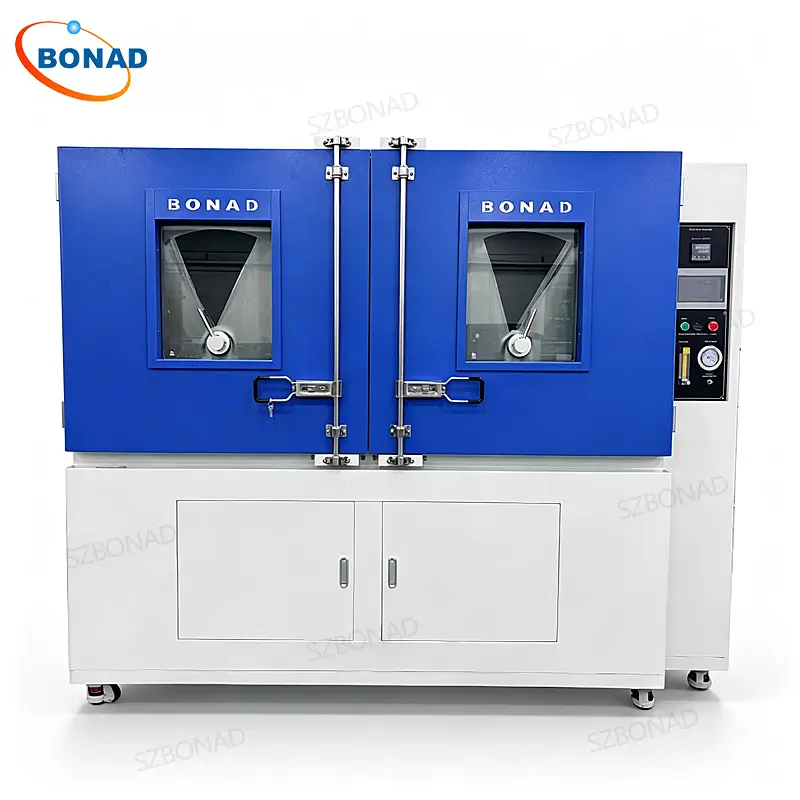
Dust testing standards and methods
Identify the required standard, edition and dust-protection level, then compare cabinet, 2000L and walk-in options for your sample size and loading requirements.
IEC 60529
IP5X · IP6X / ENCLOSURE DUST PROTECTION
For electrical enclosures, including control boxes, luminaires, instruments and industrial or consumer equipment.
- IP5X — dust-protected: Limited ingress is acceptable only where the amount and location of dust do not impair operation or safety.
- IP6X — dust-tight: No dust deposit may be visible inside the enclosure after the specified test.
Test method: Suspended talcum powder. Confirm the enclosure category and specimen air-extraction requirements; IP6X uses the category 1 procedure.
Equipment options: Compare standard cabinets, 2000L cabinets and walk-in chambers. Confirm the usable dimensions, loading and required IEC 60529 configuration.
ISO 20653
IP5KX · IP6KX / ROAD-VEHICLE ELECTRICAL EQUIPMENT
For road-vehicle electrical equipment, including sensors, control units, lighting and connector assemblies. The K identifies special road-vehicle requirements.
- IP5KX — dust-protected: Any dust entering the enclosure must remain at a level that does not impair performance or safety.
- IP6KX — dust-tight: Dust must not enter the enclosure under the specified ISO 20653 test.
Test method: ISO 12103-1 A2 (Arizona) dust is specified in ISO 20653:2023 unless otherwise agreed. Match the dust circulation and exposure sequence to the selected method.
Equipment options: Start with the automotive dust chamber. Larger cabinet or walk-in configurations can be reviewed around the sample and required automotive test method.
Need both standards? BONAD can review a combined configuration, including the dust media, circulation, specimen connections and cleaning or changeover requirements.
How a dust chamber works
A dust chamber, also known as a sand and dust test chamber, is used to evaluate a product enclosure’s resistance to dust ingress. It circulates specified test dust around the specimen under controlled conditions to assess the protection provided by seals, joints and cable entries. Depending on the chamber configuration and test method, it supports IP5X/IP6X testing under IEC 60529 or IP5KX/IP6KX testing under ISO 20653 for road-vehicle electrical equipment.
Circulate the specified dust
A circulation system lifts and distributes the prescribed dust through the working space. Collection and vibration arrangements help return dust for the required exposure sequence.
Set the specimen conditions
Place the sample with the required clearance and connections. Where the method requires it, controlled air extraction produces underpressure inside the specimen enclosure.
Run the sequence and inspect
Control exposure, pauses and extraction according to the test plan. After the specified sequence, inspect the sample and assess it against the applicable acceptance criteria.
Dust chamber options
Explore the product families below. Standard, 2000L and walk-in describe workspace choices; automotive describes a test configuration that can be reviewed for different sizes.
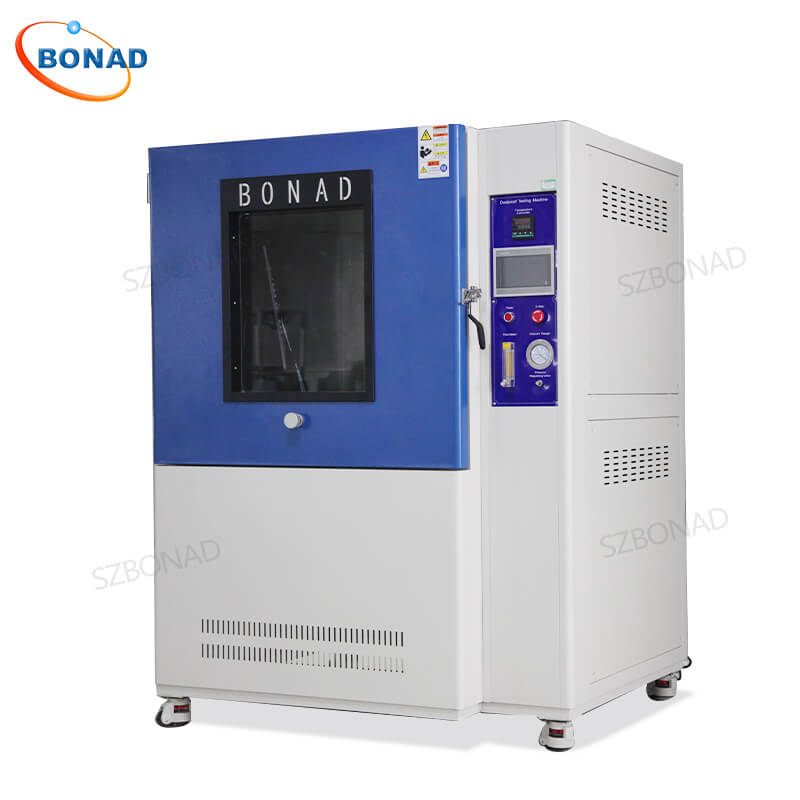
BND-IP56X SERIES
Standard cabinet dust chamber
A practical starting point for electrical enclosures, lighting products and small assemblies. Select a cabinet around the complete sample dimensions and required dust exposure.
125L · 500L · 1000L · 1500L
BND-IP56X-2000L
2000L dust chamber
A wider working space for larger enclosures or a planned arrangement of several specimens. Double doors provide access for loading and positioning the samples.
2000 × 1000 × 1000 mm
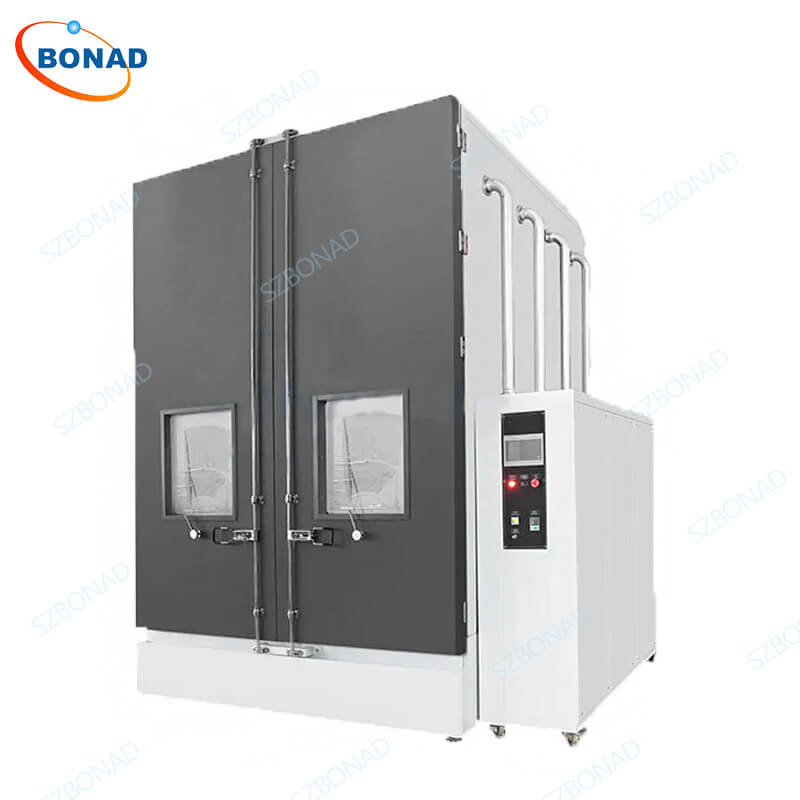
BND-WISD SERIES
Walk-in dust chamber
Larger sand and dust test chambers for bulky assemblies and demanding loading layouts. Workspace, floor loading, door access and handling can be planned together.
8 m³ · 15 m³ · 27 m³

BND-IP56KX
Automotive dust chamber
For automotive enclosure testing to ISO 20653 IP5KX/IP6KX requirements. Match the dust system, specimen connections and test sequence to the vehicle or OEM specification.
800 × 800 × 800 mm internal
Dust chamber applications
Electrical enclosures and controls
Evaluate dust ingress protection for control cabinets, electrical boxes and instrument housings, including seals, joints and cable entries.
Lighting and signaling equipment
Check dust protection for luminaires and signaling equipment, with attention to enclosure joints, covers and cable connections.
Automotive electronics
Test ECU housings, sensors and connector assemblies against the dust-protection requirements specified for the vehicle or component.
Electronic devices and household appliances
Assess enclosure protection for electronic devices and household appliances with specified dust-protection requirements during product development and qualification.
Compare dust chamber specifications
Compare the key specifications of our standard, 2000L, walk-in and automotive dust chambers.
| Technical parameter | Standard cabinets BND-IP56X |
2000L cabinet BND-IP56X-2000L |
Walk-in system BND-WISD |
Automotive chamber BND-IP56KX |
|---|---|---|---|---|
| Available workspace | 125L, 500L, 1000L and 1500L nominal models | 2000L 2000 × 1000 × 1000 mm L × D × H |
8, 15 or 27 m³ | 800 × 800 × 800 mm cabinet example L × D × H; other sizes by project |
| Inner / outer construction | Inner: SUS304 stainless steel Outer: powder-coated A3 steel |
Stainless-steel construction | Inner: 304 stainless steel, 1.2 mm Outer: color-coated steel with polyurethane insulation |
Inner and outer: stainless steel |
| Test dust | Dry talc | Dry talc | Dry talc | Arizona-type dust |
| Specimen underpressure capability | 0–10 kPa adjustable | 0–10 kPa adjustable | 2 kPa 5 or 10 kPa for non-standard requirements |
0–10 kPa adjustable |
| Specimen air extraction | 0–6000 L/h adjustable | 0–6000 L/h adjustable | One large and one small vacuum pump | 0–6000 L/h adjustable |
| Controller | 7-inch touchscreen + Panasonic PLC | 7-inch touchscreen + Panasonic PLC | Touchscreen + PLC | 7-inch touchscreen + PLC |
| Test timer / timing accuracy | 0–999 h adjustable ±1 s timing accuracy |
0–999 h adjustable ±1 s timing accuracy |
0 s to 999 h 99 m 99 s Adjustable stop/blow timing and cycle period |
0–999 h adjustable ±1 s timing accuracy |
Test dust selection and handling
Select the dust for the specified test method, and include its storage, usage records and replacement procedure in your laboratory plan.
IEC 60529: talcum powder
- Sieve specification: use talc that passes a square-aperture sieve with a nominal opening of 75 µm and nominal wire diameter of 50 µm.
- Loading: 2 kg of talc per m³ of test-chamber volume. This is the powder charge, not a measured airborne concentration.
- Reuse limit: no more than 20 tests under IEC 60529. Record test uses separately from individual blowing cycles.
ISO 20653: Arizona dust
ISO 20653:2023 specifies ISO 12103-1 A2 (Arizona) dust unless otherwise agreed. Check the selected grade and any agreed alternative against the required particle-size distribution.
Confirm supplier specifications, batch identification and any required particle-size documentation when ordering the dust.
Keep talc and Arizona dust separate. Agree the cleaning procedure before switching media, and use the replacement criteria specified for the selected test method and dust.
Storage and replacement
Moisture and clumping can affect dust dispersion, circulation and test repeatability.
- Store powder sealed and dry. Check for clumps, contamination and abnormal circulation before each test.
- Record the dust batch, loading mass and test uses. Follow the applicable drying instructions for the powder and equipment.
- Replace unsuitable powder before further testing. Set cleaning intervals for filters, hoppers and air paths according to use and the equipment manual.
How to choose a dust chamber
Start with the required test method and sample setup, then compare the workspace and functions available in each chamber.
Test method
Identify the standard, edition, protection level and any OEM procedure before comparing models. The required method determines the dust medium, exposure sequence and whether specimen air extraction is needed.
Sample size and loading
Check the complete sample dimensions, required clearances, batch quantity and weight, including fixtures and cables. Use the loading layout and door access to compare standard cabinets, 2000L chambers and walk-in systems.
Sample operation and data recording
Decide whether samples must run during testing and what needs to be monitored or recorded. Include the electrical load, measurement channels and reporting requirements when comparing equipment configurations.
Standard or custom configuration
Choose a standard model when its workspace and functions cover the test plan. Non-standard dimensions, dedicated fixtures, complex wiring or combined climatic conditions may call for a custom configuration.
Custom dust chamber solutions
We design and manufacture custom dust chambers with workspace dimensions, sample fixtures, connections and controls matched to your test setup and installation space.
Delivery, installation and support
We help you plan installation, prepare for delivery and get the chamber ready for use. The equipment proposal sets out site requirements, included equipment and support arrangements.
Site preparation
- Check installation space, delivery routes and access openings against the chamber dimensions.
- Allow clearance for door opening, sample handling and routine maintenance.
- Check floor load capacity, including point loads, and arrange unloading and positioning.
Pre-delivery checks
- Confirm the final configuration, included equipment and selected options.
- Agree factory inspection and acceptance checks, including any requested test demonstrations or inspection records.
- Set out packing, shipping and commissioning responsibilities in the order documents.
Warranty and support
Warranty
We provide a 12–18-month warranty, depending on the model. Your quotation specifies the applicable period and coverage.
Technical support
Lifetime technical support includes operating guidance, manuals, videos and remote troubleshooting. Commissioning, training and on-site assistance can be arranged to suit the project.
Spare parts & consumables
Contact us for replacement filters, seals and suitable test dust. Availability, pricing and shipping options are confirmed for your chamber.
Certification and calibration support
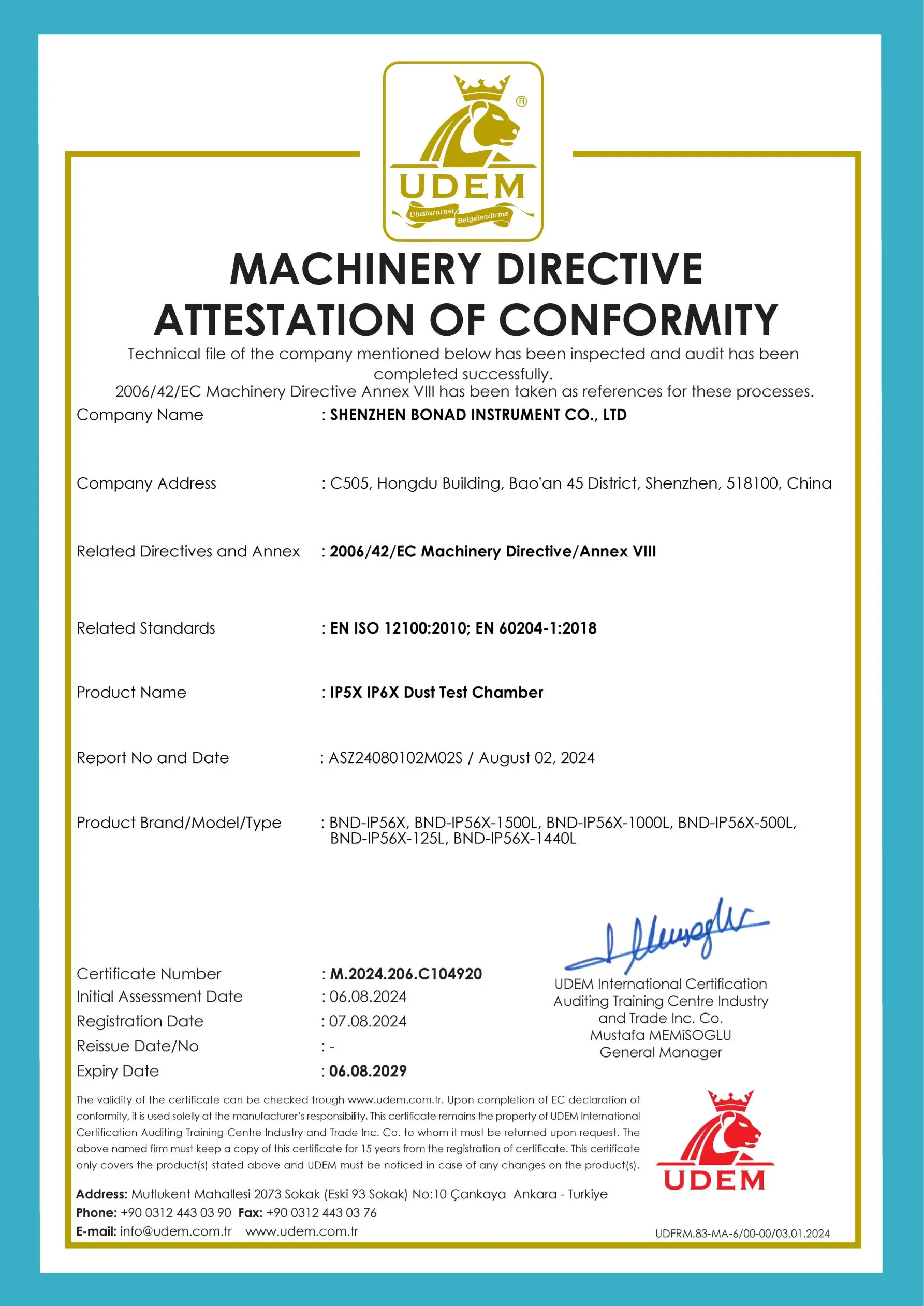
Selected conformity certificate
- Document
- Machinery Directive Attestation of Conformity
- Product series
- BONAD BND-IP56X standard cabinet dust chambers
We design and manufacture dust test chambers to meet applicable testing standards and your project requirements.
CE conformity documentation and third-party calibration reports can be arranged on request. Let us know which documents you need when requesting a quotation.
Dust chamber FAQs
Answers to common questions about choosing, configuring and purchasing a dust chamber.
How do I choose between a standard, 2000L and walk-in dust chamber?
Select the chamber around the sample’s full dimensions, including fixtures, cables and space for dust circulation. Standard cabinets suit smaller assemblies, while the 2000L model provides a wider working space. Walk-in chambers accommodate large assemblies and more demanding loading arrangements.
Can one chamber support both IEC 60529 and ISO 20653?
A chamber can support both standards when its dust system and controls are configured for both test methods. The test dust, circulation, exposure sequence and specimen connections must meet each method’s requirements. Changing between dust types also requires a suitable cleaning procedure.
Is a vacuum system required for IP5X and IP6X testing?
IP6X testing under IEC 60529 requires air extraction from the specimen enclosure. IP5X normally follows the same category 1 procedure; category 2 testing without air extraction applies when specified by the relevant product standard. During air extraction, the pressure difference must not exceed 2 kPa.
Can the chamber be customized for powered samples and monitoring?
Yes. We can configure sample fixtures and sealed power and signal connections for powered testing and external monitoring. The design takes account of the sample’s voltage, current, cable layout and heat output, along with any external load or monitoring equipment.
Can dust testing be combined with temperature and humidity control?
Combined dust and climatic testing requires a configuration designed for the specified conditions. A dust-drying heater keeps the test powder dry; it does not provide full temperature and humidity control. We review the required ranges and whether exposures run simultaneously or in sequence before proposing a custom system.
What are the installation requirements?
Prepare the specified electrical supply, adequate floor capacity and clearance for delivery, door opening and maintenance. The selected chamber determines any additional compressed-air, unloading and sample-handling requirements.
What determines the price and delivery time?
Price depends on chamber size, test method, controls and custom options; lead time depends on the configuration and production schedule. Your quotation includes pricing, estimated lead time and any requested shipping, calibration or installation services.
Can BONAD provide CE documentation and third-party calibration reports?
Yes. CE conformity documentation and third-party calibration reports can be arranged on request. If you need calibration from an ISO/IEC 17025-accredited laboratory, specify this when requesting a quotation so the required calibration scope and additional costs can be included.
What warranty and after-sales support does BONAD provide?
BONAD provides a 12–18-month warranty and lifetime technical support, including operating guidance, remote troubleshooting and spare parts assistance. Your quotation specifies the warranty terms and any requested training or commissioning.
Can I request a quotation before choosing a model?
Yes, contact BONAD with a brief description of your sample and testing requirements. We can recommend a suitable chamber and prepare a quotation.
Discuss your dust testing project
Get in touch at any stage of your project. Our technical team supports you from chamber selection and customization through installation, operation and ongoing maintenance.