
Temperature Humidity Chamber Manufacturer
BONAD provides temperature and humidity chambers for environmental reliability testing of electronic products, electrical appliances, automotive components and materials. Our standard and customized solutions include benchtop, laboratory and walk-in chambers, as well as combined temperature, humidity and vibration test systems.
Common test references
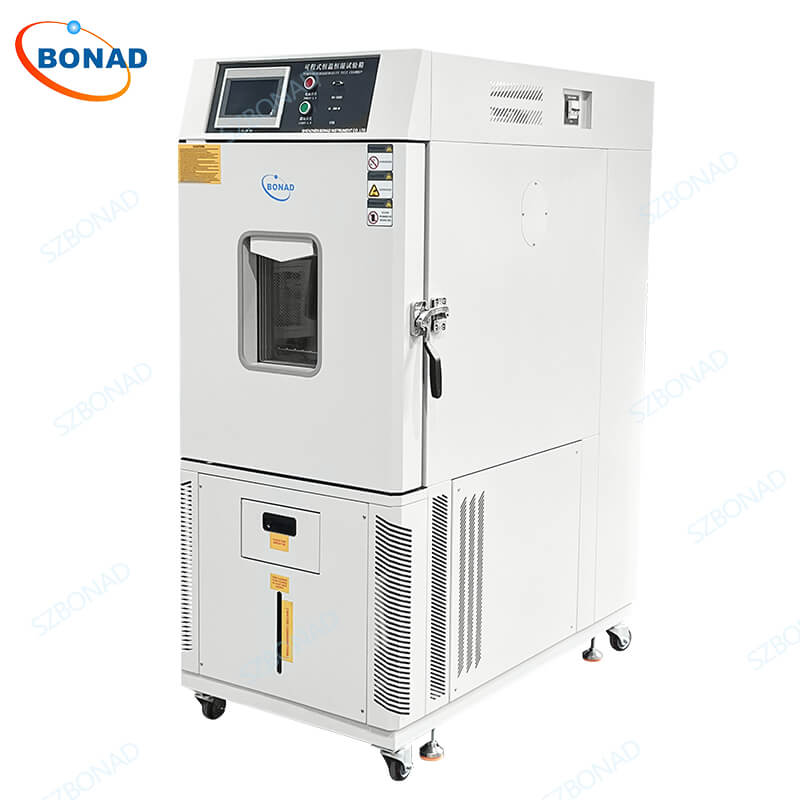
Temperature and Humidity Testing Solutions
Start with your sample size and test conditions. Then check the required temperature changes, humidity conditions and specimen heat output.
| Your testing requirement | Chamber type to consider | Key selection checks |
|---|---|---|
| Small components and limited laboratory space | Benchtop temperature and humidity chamber | Usable internal dimensions, sample clearance and temperature range |
| Laboratory testing of components or small assemblies | BND-HWS-150 150 L chamber | Sample fit, heat load, programmed profile and data recording |
| Tests needing faster heating or tighter humidity control at 75% RH or below | BND-HWS-150L 150 L chamber | Specified heating rate, humidity deviation and performance under the intended sample load |
| Large assemblies or multiple samples in one test | Walk-in temperature and humidity chamber | Working volume, loading access, floor loading and installation space |
| Temperature and humidity exposure combined with vibration | Temperature, humidity and vibration system | Shaker capacity, frequency range, displacement, fixture and sample mass |
Scroll sideways to view the complete table
Temperature and Humidity Chambers
A temperature and humidity chamber controls temperature and relative humidity to evaluate the performance and reliability of products, components and materials. Choose a chamber based on sample size, required test conditions, heating rate and whether combined vibration testing is needed.
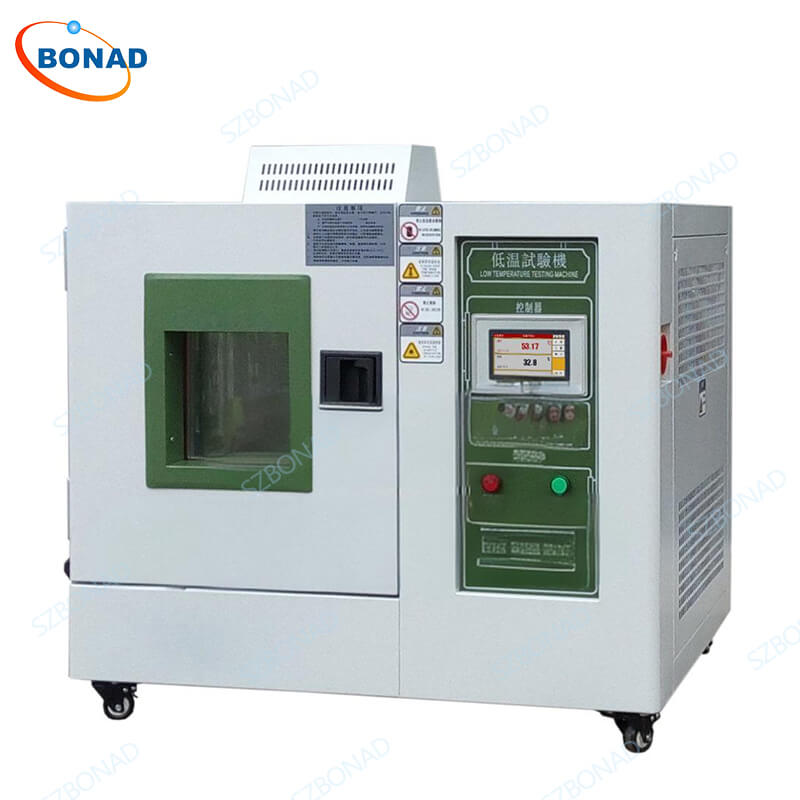
BND-DTHT
Compact Benchtop Temperature and Humidity Chamber
Choose for: Small components and limited laboratory space.
- Design: Compact benchtop layout.
- Control: Touchscreen with temperature and humidity curves.
- Temperature: Configurable low-temperature limits down to −70°C; upper limit +150°C.
- Humidity: 20–98% RH within the operating envelope.
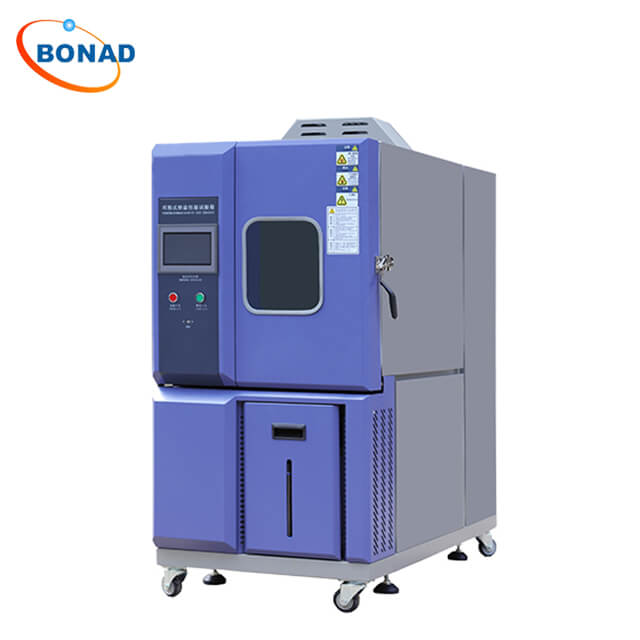
BND-HWS-150
150 L Laboratory Temperature and Humidity Chamber
Choose for: Routine laboratory testing of components and small assemblies.
- Capacity and control: 150 L with programmable test sequences.
- Temperature: −40°C to +150°C or −70°C to +150°C.
- Humidity: 20–98% RH within the operating envelope.
- Heating rate: 1–3°C/min, non-linear, at no load.
- Humidity deviation: ±3% RH above 75% RH; ±5% RH at 75% RH or below.
For constant humidity tests at 20–35°C, the specified continuous duration limit is 24 hours.
BND-HWS-150L
150 L Temperature and Humidity Chamber with Faster Heating
Choose for: Tests requiring faster heating or tighter humidity control at 75% RH or below.
- Capacity and control: 150 L with programmable test sequences.
- Temperature: −70°C to +150°C.
- Humidity: 20–98% RH within the specified temperature–humidity operating envelope (20–85°C).
- Heating rate: Higher specified no-load rate than BND-HWS-150.
- Humidity deviation: ±3% RH, including at 75% RH and below.
Published humidity performance assumes no active heat load from the specimen.
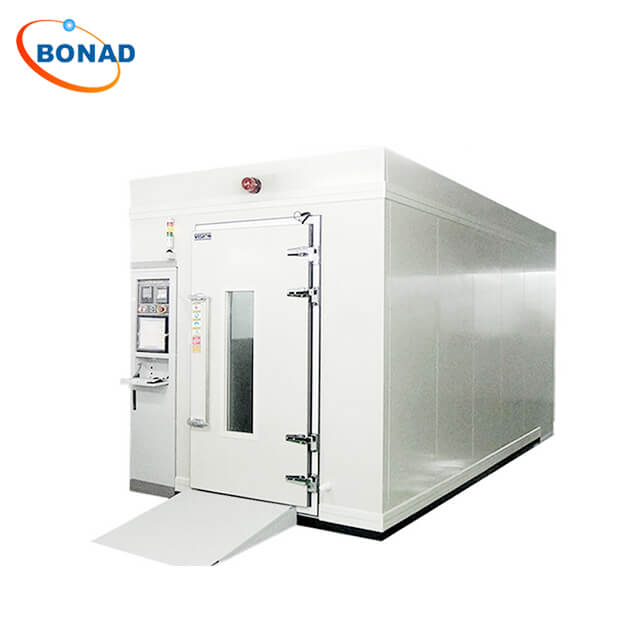
BND-WSF series
Walk-in Temperature and Humidity Chamber for Large Samples
Choose for: Large equipment, bulky assemblies and batch testing.
- Working volumes: 8, 16, 24, 30 or 48 m³ for large assemblies or multiple samples.
- Temperature: Configurable low-temperature limits down to −65°C; upper limit +85°C.
- Humidity: 30–95% RH within the operating envelope.

BND-THV series
Combined Temperature, Humidity and Vibration Test Chamber
Choose for: Temperature, humidity and vibration applied simultaneously.
- Combined exposure: Temperature, humidity and vibration applied to the same specimen.
- Separate tests: Temperature or vibration can be run independently.
- Chamber selection: Working space matched to the sample and fixtures.
- Shaker selection: Force, frequency range, displacement and payload matched to the test.
Temperature and Humidity Tests: Methods and Equipment Requirements
Temperature and humidity testing can reveal changes in function, materials and connections under specified environmental conditions. The test method determines the exposure, duration and sequence; the product specification defines the measurements and acceptance criteria.
| Test | What it evaluates | Common reference | Equipment consideration |
|---|---|---|---|
| Cold exposure | Behavior under low-temperature conditions | IEC 60068-2-1 | Required low temperature, specimen heat output and stabilization time |
| Dry heat | Behavior under elevated temperature without controlled humidity exposure | IEC 60068-2-2 | Temperature range, heat load and temperature distribution |
| Damp heat, steady state | Resistance to high humidity at a constant temperature, without condensation on the specimen | IEC 60068-2-78 | Required temperature–humidity combination and exposure duration |
| Damp heat, cyclic | Effects of high humidity with temperature cycling, generally producing condensation on the specimen | IEC 60068-2-30 | Ability to reproduce the specified cycle and condensation conditions |
| Change of temperature | Effects of specified transitions between temperatures | IEC 60068-2-14 | Required change rate or transfer time; some methods need dedicated equipment |
| Combined climatic and dynamic testing | Effects of climatic exposure combined with mechanical stress | IEC 60068-2-53 | Compatibility between the chamber, vibration system, fixtures and required test profile |
Scroll sideways to view the complete table
Typical Test Applications
- Electronics and electrical components: Check powered or unpowered assemblies, circuit boards, connectors and sensors for functional changes after exposure.
- Automotive components: Evaluate electronic modules, connectors and assemblies under specified climatic conditions; add vibration when the test calls for combined stresses.
- Appliances and industrial equipment: Assess component or assembly operation during temperature and humidity exposure.
- Materials and manufactured parts: Examine moisture-related changes, deformation, cracking or loss of function against defined acceptance criteria.
How to Choose a Temperature Humidity Test Chamber
Five practical checks for your sample, test profile and installation. Our team can help you work through these details during the inquiry.
Check Working Space and Sample Heat Output
Use the internal working dimensions to assess sample fit. Include fixtures, cables and the clearance needed for air circulation. External equipment volume is not usable test capacity.
A powered specimen also adds heat to the chamber. Its heat output, size and arrangement can affect cooling performance and temperature distribution, even when the specimen fits comfortably inside.
Match the Actual Temperature and Humidity Conditions
Specify the temperature and relative humidity needed together. A chamber’s minimum temperature and maximum humidity do not describe a condition that can necessarily be achieved simultaneously.
For example, an 85°C / 85% RH test requires confirmation that the selected model can maintain that combination for the required duration and sample load. Check the humidity operating envelope rather than relying on two headline ranges.
Distinguish Chamber Air Temperature from Sample Temperature
A temperature-change rate measured without a load does not establish how quickly a loaded specimen reaches its target temperature. Sample mass, material, airflow and heat output all influence stabilization.
Check whether the test specifies an air-temperature ramp, a specimen-temperature requirement or a transfer between environments. Define dwell times accordingly, and verify that the selected equipment can reproduce the required sequence.
Plan Control, Measurement and Records
Consider the number of program steps, repeated cycles, data export and any independent specimen measurements. Cable access may be needed for powered testing or external sensors.
Useful test records identify the specimen, test procedure, measured conditions, exposure time and any interruptions. Calibration and chamber performance checks support confidence in those measurements; acceptance criteria still come from the relevant product or test specification.
Check Installation Requirements
Review the electrical supply, installation footprint, door clearance and servicing access. Humidity testing also requires an appropriate water supply and any specified drainage arrangements.
For walk-in installations, consider loading routes, floor loading and how samples will be positioned. Account for heat rejected by the equipment and the ventilation available in the installation area.
Frequently Asked Questions
What is a temperature humidity chamber?
A temperature humidity chamber controls temperature and relative humidity around a test sample. It helps assess how components, materials and assemblies perform during exposure to heat, cold and moisture under specified test conditions.
Which test standards can these chambers support?
Common references include IEC 60068-2-1 (cold), IEC 60068-2-2 (dry heat), IEC 60068-2-78 (steady-state damp heat) and IEC 60068-2-30 (cyclic damp heat). Combined climatic and vibration test plans may reference IEC 60068-2-53. Suitability depends on the selected model, specified edition, test conditions and sample load.
Can a constant temperature and humidity chamber run programmed cycles?
Yes, with suitable programmable controls. Both 150 L laboratory models shown here can maintain fixed conditions and run programmed sequences. The selected chamber must also achieve the temperature changes, humidity conditions and hold times required by the test.
How do the two 150 L chamber models differ?
Both models are programmable 150 L chambers. BND-HWS-150L has a higher specified no-load heating rate and a tighter humidity deviation specification at 75% RH and below: ±3% RH, compared with ±5% RH for BND-HWS-150. The BND-HWS-150 specification also limits constant humidity tests at 20–35°C to 24 hours.
Is a 150 L chamber large enough for my sample?
Check the working dimensions as well as volume. Both 150 L models have internal dimensions of 500 W × 500 D × 600 H mm. Allow space for fixtures, cables and air circulation, and consider heat from powered samples. For larger assemblies or batches that need more working space, consider a walk-in chamber.
Can these chambers perform 85°C / 85% RH testing?
This depends on the model and configuration. Temperature and humidity must be checked as a combined operating condition, not as two separate maximum ratings. BONAD can confirm suitability for the required duration and sample load.
Can a programmable chamber perform thermal shock testing?
Not automatically. A chamber that runs temperature cycles may not achieve the rapid transitions required for thermal shock. Tests involving transfer between temperature zones or very short transition times may require a dedicated thermal shock chamber.
What installation requirements should I check?
Check the model-specific power supply, grounding, ventilation and access requirements. Water quality, filling method and drainage arrangements also depend on the humidification system. Walk-in installations additionally require suitable loading access and floor capacity. BONAD can confirm these requirements for the selected configuration.
What affects the price of a temperature and humidity test chamber?
Chamber size, temperature limits, humidity performance, change rates and accessories all affect the price. Walk-in construction and vibration integration also affect the configuration and cost. BONAD can recommend suitable options and provide a quotation.
Can BONAD customize a chamber?
Yes. BONAD can assess your application and recommend a standard or customized chamber configuration. Options may include working dimensions, temperature range, cable ports, shelves, control interfaces and loading arrangements, depending on the model.
Chamber Selection and Support from BONAD
BONAD provides standard and customized temperature and humidity testing solutions. Contact our team, and we’ll help you select a suitable chamber, confirm the configuration and answer your technical questions before you order.
Equipment Support
- Installation and operating guidance
- Remote technical support and troubleshooting
- Routine maintenance guidance
- Spare parts assistance
- CE documentation for applicable equipment
- Third-party calibration on request