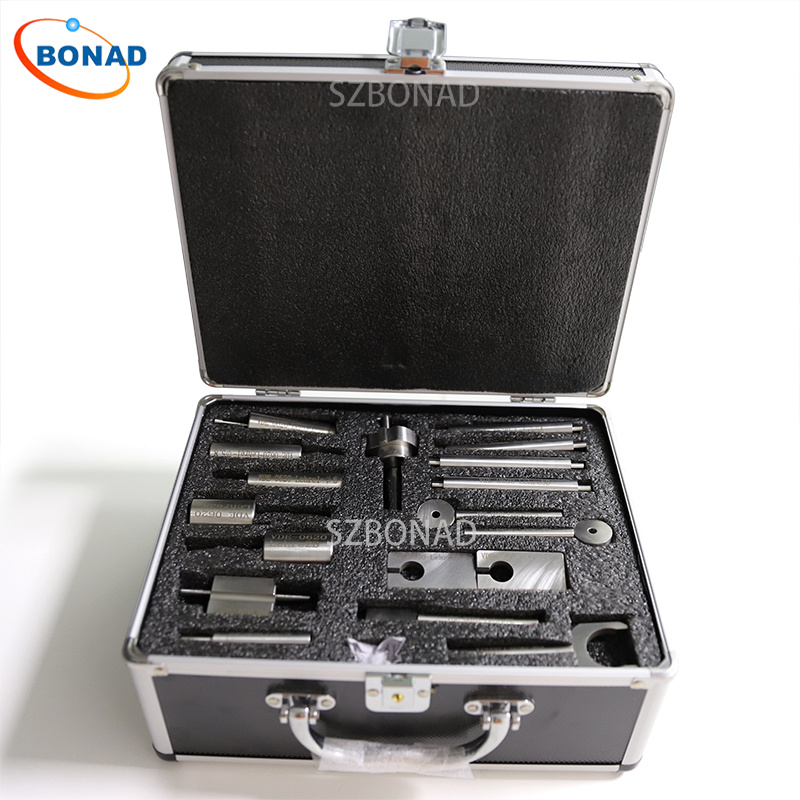
What Is IPX9K Testing?
IPX9K testing represents one of the highest levels of water ingress protection. It evaluates a product’s ability to withstand high-pressure, high-temperature water jets sprayed from multiple directions. This test is widely applied in industries where equipment must survive aggressive wash-down or extreme outdoor conditions, such as automotive, electrical enclosures, industrial machinery, and outdoor electronics.
The IPX9K rating is defined and referenced in several international standards, including:
- ISO 20653 – Road vehicles: Degrees of protection (IP code)
- IEC 60529 – Degrees of protection provided by enclosures
- DIN 40050-9 – German standard aligned with ISO 20653
Compared with lower IPX levels, IPX9K simulates real-world scenarios such as high-pressure industrial cleaning and hot water exposure, making it a critical requirement for safety‑critical and durability‑focused products.
Why IPX9K Testing Is Critical for Modern Products
Many products can pass basic water spray or immersion tests, yet fail in real service environments. IPX9K testing goes beyond basic protection by verifying:
- Resistance to high-pressure water impact
- Stability under elevated water temperatures (≈80 °C)
- Sealing integrity under multi-angle jet exposure
- Long-term reliability in harsh cleaning or outdoor environments
For manufacturers targeting global markets, IPX9K compliance helps reduce warranty risks, improve brand credibility, and meet stringent customer and regulatory expectations.
IPX9K Test Conditions and Parameters
A standard IPX9K test typically includes the following conditions:
- Water pressure: 8,000–10,000 kPa
- Water temperature: 80 ± 5 °C
- Flow rate: Approx. 14–16 L/min
- Spray angles: 0°, 30°, 60°, and 90°
- Spray distance: 100–150 mm
- Test duration: 30 seconds per angle
- Sample motion: Mounted on a rotating turntable
These parameters ensure complete exposure of the test sample and accurately simulate extreme wash‑down conditions.
Key Requirements for IPX9K Test Equipment
To achieve reliable and repeatable IPX9K results, professional test systems should include:
- High‑pressure pump with stable flow control
- Water heating system with precise temperature regulation
- Standard‑compliant spray nozzles
- Adjustable spray angles and distances
- Programmable PLC control and test automation
- Safety protection systems (over‑temperature, over‑pressure, leakage protection)
Choosing compliant equipment is essential to ensure test validity and international acceptance.
IPX9K Test Equipment Comparison: Enclosed vs Open‑Type Systems
When selecting IPX9K testing equipment, laboratories and manufacturers generally choose between enclosed test chambers and open‑type test systems. Below is a professional comparison using two IPX9K solutions from BONAD Test Equipment.
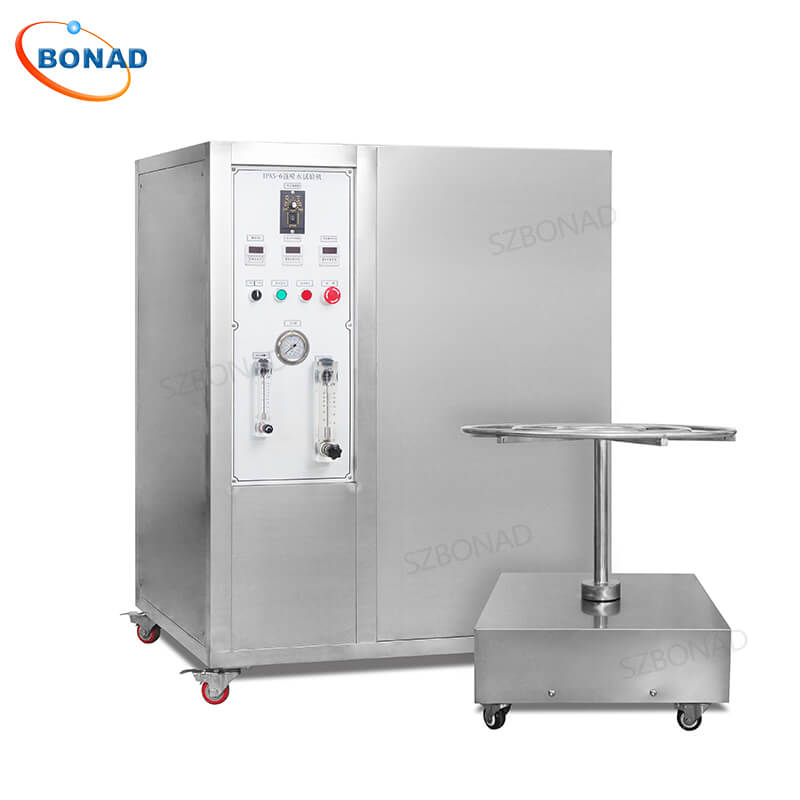
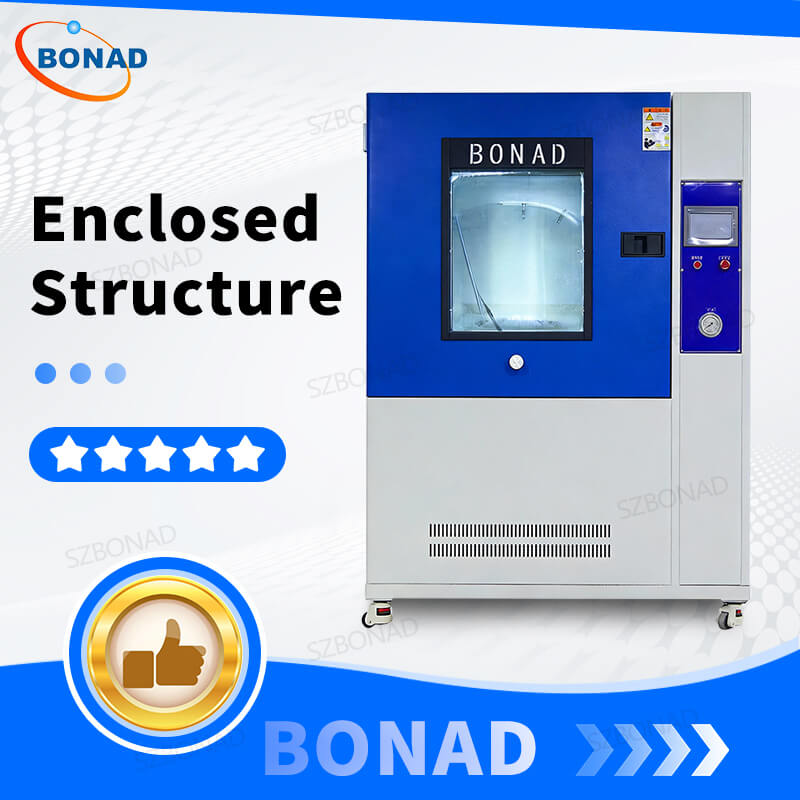
Enclosed ISO 20653 IPX9K High‑Pressure Waterproof Test Chamber
The ISO 20653 IPX9K High‑Pressure Waterproof Test Chamber is designed for strict standard compliance and controlled laboratory testing.
Key features:
- Fully compliant with ISO 20653 IPX9K requirements
- Enclosed stainless‑steel chamber for safe and clean operation
- Four fixed spray angles (0°, 30°, 60°, 90°)
- High‑pressure hot water circulation system
- Rotating turntable for uniform exposure
- Observation window with internal lighting
Best suited for:
- Electrical and electronic components
- Automotive connectors and sensors
- Laboratory certification and quality control testing
This enclosed design ensures excellent repeatability, operator safety, and clean test conditions, making it ideal for standardized environments.
Open‑Type IPX9K Waterproof Test Chamber
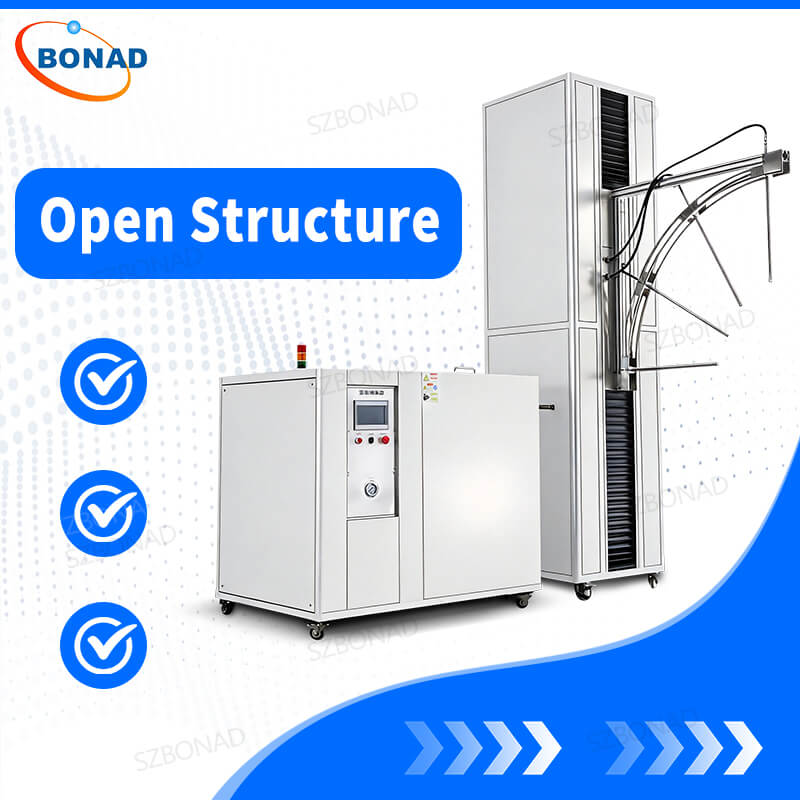
The Open‑Type IPX9K Waterproof Test Chamber provides maximum flexibility for large or irregularly shaped products.
Key features:
- Open structure for oversized or complex samples
- Adjustable spray arms and nozzle positions
- PLC touch‑screen control system
- Compatible with IEC 60529, ISO 20653, and DIN 40050‑9
- Independent nozzle control for stable pressure and flow
Best suited for:
- Large automotive parts
- Industrial control cabinets
- Outdoor equipment and assemblies
- R&D and on‑site validation testing
This solution is especially valuable when enclosed chambers cannot accommodate product size or geometry.
Enclosed vs Open‑Type IPX9K Test Systems: Quick Comparison
| Feature | Enclosed IPX9K Chamber | Open‑Type IPX9K Chamber |
|---|---|---|
| Standard focus | ISO 20653 | IEC 60529 / ISO 20653 / DIN 40050‑9 |
| Sample size | Small to medium | Medium to large |
| Test environment | Fully enclosed | Open and flexible |
| Operator safety | Very high | High (with shielding) |
| Typical application | Certification labs | R&D and production testing |
How to Choose the Right IPX9K Test Solution
- Choose an enclosed IPX9K chamber if you require strict standard compliance, high repeatability, and laboratory‑grade testing.
- Choose an open‑type IPX9K system if your products are large, irregular, or require flexible test configurations.
Both approaches play a critical role depending on application, budget, and testing objectives.
Conclusion
IPX9K testing is no longer optional for products exposed to extreme cleaning or outdoor environments. Understanding the test principles and selecting the correct test equipment directly impacts product reliability, certification success, and market competitiveness.
By combining standard‑compliant testing procedures with professional IPX9K equipment, manufacturers can confidently validate product durability and meet global market expectations.
FAQ
What does IPX9K mean?
IPX9K indicates that a product is protected against high-pressure, high-temperature water jets sprayed from multiple directions. It represents one of the highest levels of water ingress protection defined in international standards.
Which standards define IPX9K testing?
IPX9K testing is mainly defined in ISO 20653 and DIN 40050-9, and is also referenced alongside IEC 60529 for enclosure protection testing. ISO 20653 is most commonly used in the automotive industry.
What are the main test conditions for IPX9K?
Typical IPX9K test conditions include water pressure of 8,000–10,000 kPa, water temperature of approximately 80 °C, spray angles of 0°, 30°, 60°, and 90°, and a spray distance of 100–150 mm.
What is the difference between IPX9 and IPX9K?
IPX9 generally refers to high-pressure water jet protection under IEC 60529, while IPX9K originates from DIN and ISO automotive standards. IPX9K usually implies stricter requirements, especially for vehicle-related applications.
What products require IPX9K testing?
IPX9K testing is commonly required for automotive components, electrical enclosures, outdoor equipment, industrial machinery, sensors, connectors, and products exposed to high-pressure cleaning processes.
How do I choose between an enclosed and open-type IPX9K test chamber?
Enclosed IPX9K chambers are ideal for laboratory testing, certification, and small to medium samples requiring strict standard compliance. Open-type IPX9K systems are better suited for large, heavy, or irregularly shaped products that cannot fit into enclosed chambers.
Is IPX9K testing mandatory?
IPX9K testing is not universally mandatory, but it is often required by automotive OEMs, industrial customers, and international markets to demonstrate durability, safety, and compliance with demanding environmental conditions.
Can one IPX9K test system support multiple standards?
Yes. Many professional IPX9K test systems are designed to comply with ISO 20653, IEC 60529, and DIN 40050-9, allowing manufacturers to perform multi-standard testing using a single solution.