Sulfur Dioxide Corrosion Test Chamber – BONAD High Quality SO2 Test Equipment
Standards:
- DIN 50018: Corrosion Testing Standards
- DIN 50900: Terminology and General Concepts of Metal Corrosion
- DIN 53210: Rusting Degree Designation of Paint Surfaces
- ISO 6988: Sulfur Dioxide Test with Moisture Condensation
- IEC 60068-2-42 & IEC 60068-2-43: Environmental Testing for Contacts and Connections
- IEC 60079-1:2014 (GB/T5135.3): Explosive Atmospheres Equipment Protection
- ISO 22479-2019: Sulfur Dioxide Test in Humid Atmosphere
Applications:
Sulfur dioxide test chambers are ideal for testing the effects of corrosive gases on parts, electronic components, metal materials, and various industrial products.
Features:
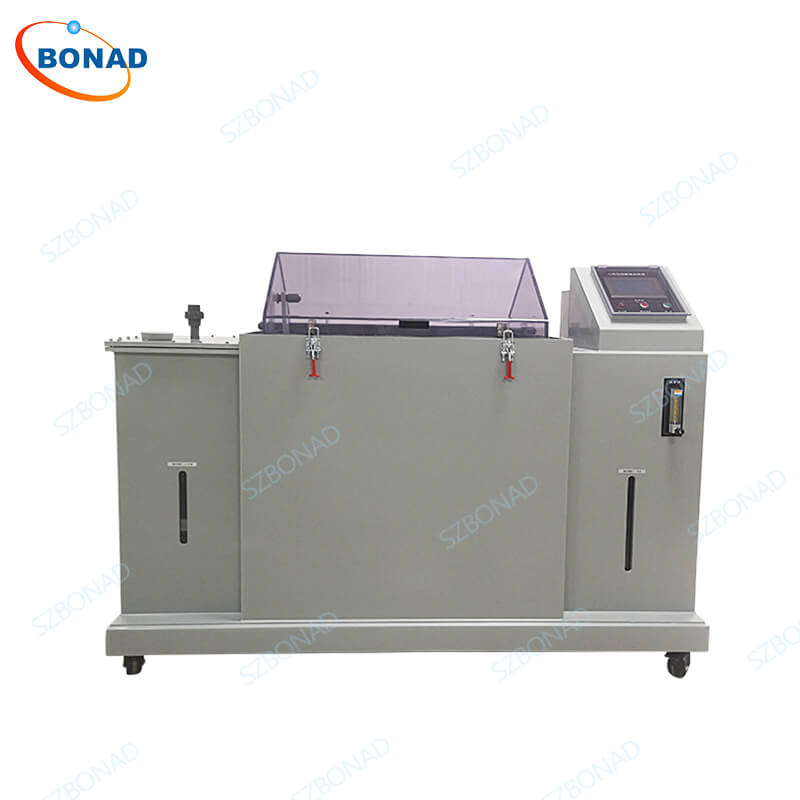
- Temperature & Humidity Control: Advanced SO2 corrosion room temperature humidity control and display unit.
- Saturated Barrel Control: Includes temperature control and display unit with humidity dry-wet bulb sensor.
- User-Friendly Interface: Programmable color LCD touch screen controller with high precision PT-100 MV A grade temperature sensor.
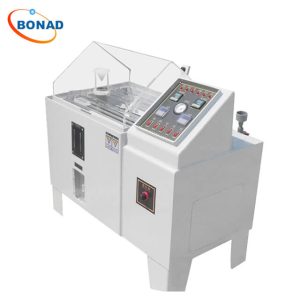
- Safety Systems: Equipped with a toxic gas containing SO2 tank, flow meter, exhaust pipe, drain pipe, and comprehensive safety protection system.
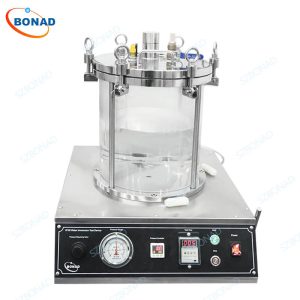
- Durable Construction: Made from anti-corrosion PVC board pressed in one piece to prevent leakage.
- Transparent Observation Lid: Allows clear observation of test items inside the chamber.
- Environmental Safety: Double air filters ensure exhaust gases do not pollute the environment.
- Customization Options: Can be tailored to meet specific test requirements.
Technical parameters:
| Specification | Details |
|---|---|
| Model | BND-SDTC |
| Internal Dimensions | 1600 x 1000 x 500 mm |
| External Dimensions | 2700 x 1300 x 1400 mm |
| Temperature Range | RT +10℃ ~ 60℃ |
| Relative Humidity | 85% ~ 100% R.H |
| Temperature Uniformity | ± 1.0℃ |
| Temperature Fluctuation | ± 0.5℃ |
| Gas Concentration | 0.05 ~ 1% (volume percentage) |
| Inlet Method | Cylinder type, fixed gas method |
| Exhaust Interface | Φ63 mm |
| Exhaust Composition | Weakly alkaline high humidity gas, non-toxic and harmless (after exhaust treatment) |
| Power | 3.5 KW |
| Voltage | AC 220V / 50HZ |
FAQ – Sulfur Dioxide Corrosion Test Chamber
What is a sulfur dioxide (SO₂) corrosion test chamber?
A sulfur dioxide (SO₂) corrosion test chamber is used to simulate polluted and industrial atmospheres containing SO₂ gas, helping evaluate the corrosion resistance of metals, coatings, and components. It is an important part of environmental testing, similar to environmental test chamber category page solutions.
What are SO₂ corrosion tests used for?
SO₂ corrosion tests are widely used to:
- Evaluate coatings and plating performance.
- Test electronic and electrical product reliability.
- Simulate urban and industrial pollution environments.
For comparison, salt-based corrosion testing can be performed using salt spray test chamber category page equipment.
How does the SO₂ corrosion test work?
The chamber introduces SO₂ gas into a high-humidity environment. The gas dissolves in condensed moisture, forming acidic conditions that accelerate corrosion and simulate long-term exposure in a short time.
What is the Kesternich test?
The Kesternich test (DIN 50018) is a cyclic SO₂ corrosion test method involving gas exposure and condensation phases. It is widely used for testing coated metals and industrial materials.
What parameters can be controlled in the test?
Key parameters include:
- Temperature.
- Humidity.
- SO₂ concentration.
- Test duration and cycles.
Advanced systems can integrate multiple environmental factors, similar to combined environmental test chamber systems.