In a world where products are shipped globally and handled by both machines and humans, the risk of accidental drops is inevitable. For engineers and manufacturers, understanding how a product behaves when it hits the ground is not just about preventing a crack; it is about ensuring safety, maintaining brand reputation, and reducing costs.
Drop testing is the controlled study of what happens to a product (or its packaging) when it is dropped onto a hard surface from a specified height and orientation. While consumers most commonly associate this with mobile phones surviving a tumble onto pavement, drop testing is a critical quality assurance process across aerospace, heavy machinery, medical devices, defense, and consumer goods.
At BONAD, we specialize in providing the precision engineering tools necessary to conduct these vital tests, helping businesses move from guesswork to guaranteed durability.
What is a Drop Test?
A drop test is more than just letting an object fall. It is a scientific method used to measure impact magnitude, assess functional integrity, and document cosmetic damage. The ultimate goal is to ensure that a product can survive a reasonable number of falls during transport (inside packaging) and during usage (out of packaging).
To achieve this, engineers must control specific variables:
- Drop Height: Determines the impact velocity and energy.
- Product Orientation: Corner and edge drops concentrate force, causing more damage than flat-surface drops.
- Impact Surface: Concrete, steel, and plywood all transfer energy differently.
- Number of Drops: Products must often survive multiple impacts from various heights.
The Equipment Behind the Impact: BONAD Drop Testing Solutions
Conducting a reliable drop test requires equipment that can consistently replicate these variables. At BONAD, we offer a range of drop testing machines designed to meet international standards and accommodate various package sizes and weights. Our equipment ensures that every test is repeatable, accurate, and informative.
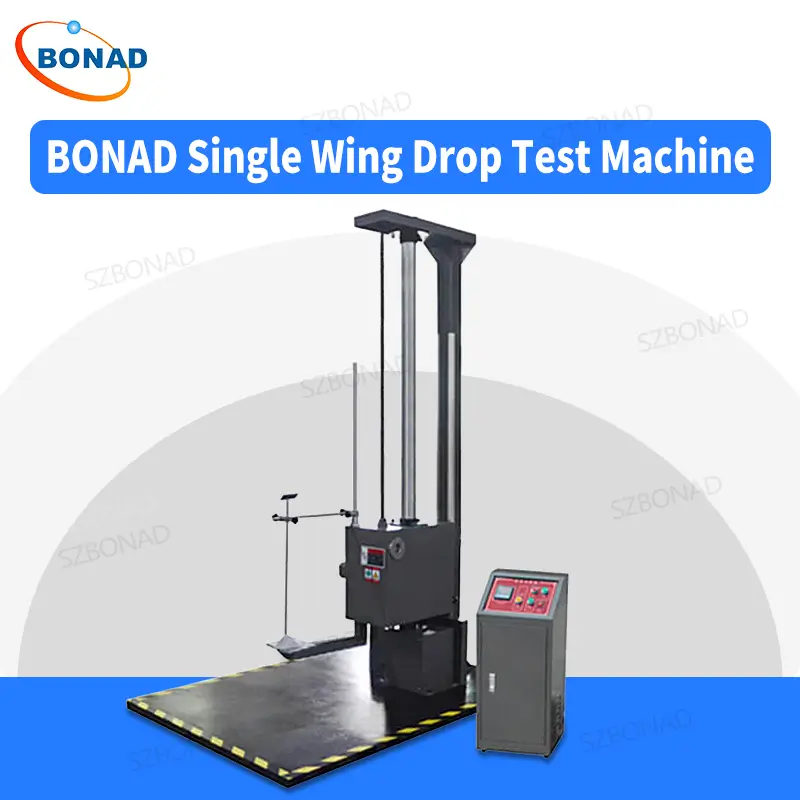
1. Single Wing Packaging Drop Test Machine (BND-DLS)
Designed based on the principle of free fall, the BONAD BND-DLS is ideal for evaluating the impact resistance of product packaging.
- Functionality: It simulates drops from different heights, angles, and surfaces to understand how packaging components protect the product inside.
- Best For: Manufacturers needing to assess packaging durability during the shipping and handling process.
- Key Benefit: Provides clear data on the drop height thresholds your packaging can withstand, allowing for material optimization without compromising safety.
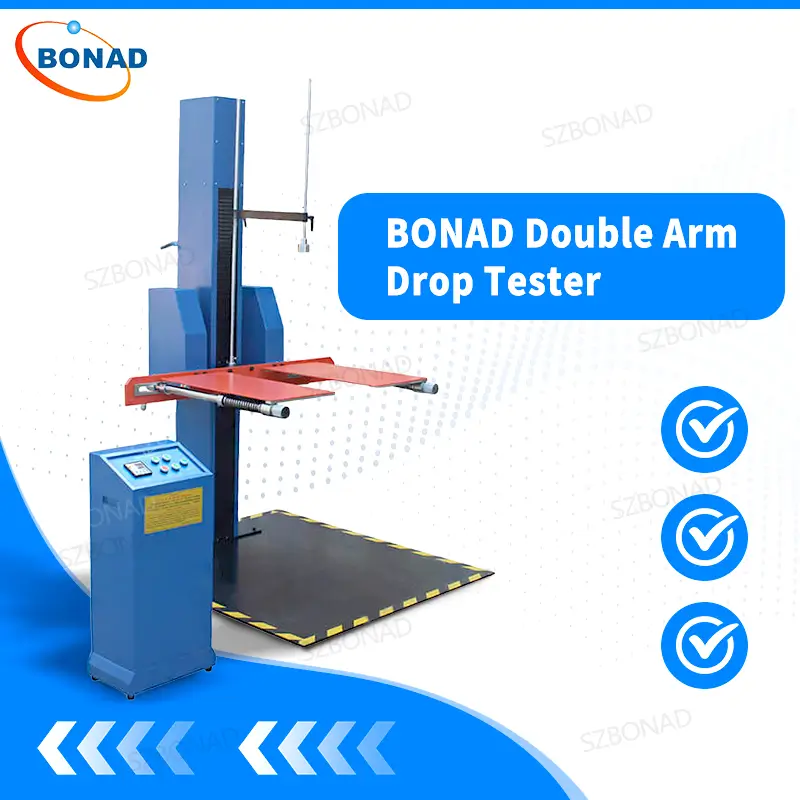
2. ISO 2248 Packaging Double Arm Drop Tester (BND-ZXD002)
For heavier or larger packages, stability during testing is paramount. The BONAD BND-ZXD002 Double Arm Drop Tester offers a robust solution.
- Functionality: This double-wing tester allows for a secure hold and precise release, assessing the impact degree of packaged goods during real-world transportation and loading.
- Compliance: It is specifically designed to meet standards like ISO 2248, ensuring your testing protocol aligns with global requirements.
- Key Benefit: Evaluates both the impact resistance of the goods and the rationality of the packaging design, helping to prevent damage during the roughest handling processes.
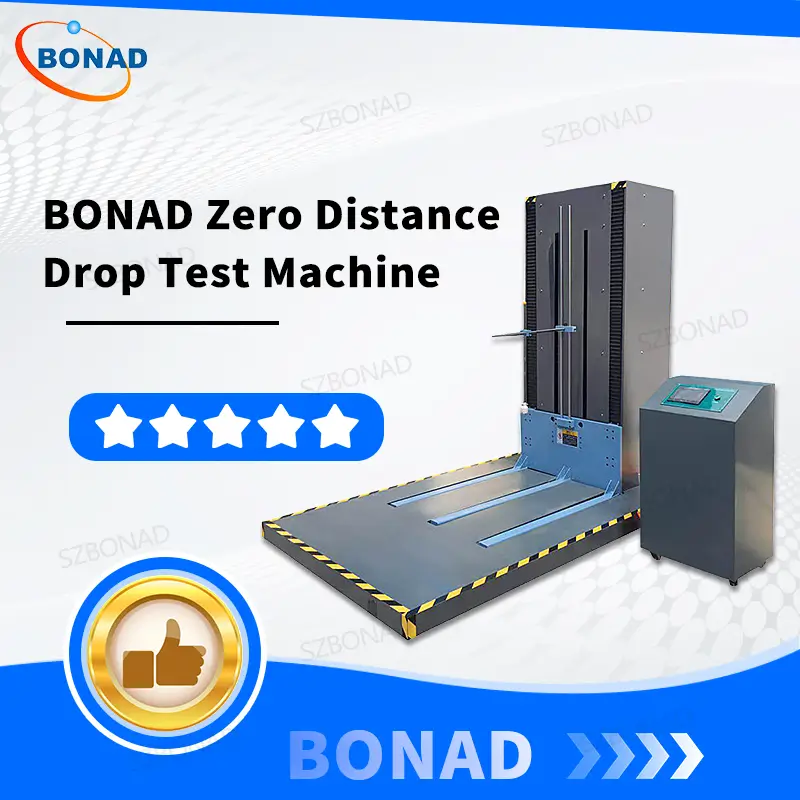
3. Simulated Packaging Zero Distance Drop Test Machine (BND-ZXD001)
Handling large or bulky packaging cartons requires specialized equipment. The BONAD BND-ZXD001 is engineered for this exact scenario.
- Functionality: It simulates the free fall of larger packaging cartons from specified heights.
- Best For: Evaluating heavy-duty packaging for industrial goods or bulk shipments.
- Key Benefit: Ensures that large-format items remain protected during transit, verifying the structural integrity of both the carton and the internal cushioning.
Why Drop Testing Matters: 5 Key Benefits
Implementing a rigorous drop testing protocol with reliable equipment like BONAD’s machines offers tangible business advantages:
- Safety: Preventing structural failure that could lead to chemical leaks, overheating, or electrical hazards.
- Durability & Functionality: Ensuring that critical devices (especially in medical or defense sectors) remain operational after impact.
- Customer Satisfaction: Avoiding dents, scratches, and cracks that negatively impact the customer’s perception of a brand.
- Cost Reduction: Avoiding over-engineering. By testing accurately, you can reduce material, shipping, and storage costs without sacrificing protection.
- Warranty Reduction: Minimizing the financial burden of replacing or repairing products damaged in the field or during shipping.
The Shift Toward Simulation: Virtual Drop Testing
While physical drop testing with machines like the BONAD BND-DLS provides undeniable proof of durability, waiting for a physical prototype can slow down the design process. This is where simulation becomes a game-changer.
Modern engineers use Finite Element Analysis (FEA) to conduct virtual drop tests long before a physical sample exists. This allows teams to perform parametric “what-if” studies—adjusting materials, thicknesses, and structures—to optimize designs for impact early in the development cycle.
BONAD recognizes the importance of this digital shift. By integrating physical testing with virtual simulation data, companies can:
- Look inside the package during the impact event.
- Analyze stresses, deformations, and energy absorption in real-time.
- Reduce the number of physical prototypes needed, saving time and money.
Best Practices for Effective Drop Testing
To get the most value from your drop testing efforts—whether physical or virtual—follow these guidelines:
- Define Clear Goals: Are you testing to meet Amazon/FedEx shipping standards, or are you optimizing the internal structure of the product? Your goals dictate the test plan.
- Adhere to Standards: Familiarize yourself with common standards like ASTM D5276, ISTA 3A, or ISO 2248. Machines like the BONAD BND-ZXD002 are built to comply with these protocols.
- Control the Environment: Temperature and humidity can drastically affect materials like cardboard. Ensure your testing environment is controlled and documented.
- Document Everything: A successful test program yields a detailed report on procedures, data, and exceptions, providing a roadmap for future design improvements.
Future Trends in Drop Testing
The industry is evolving. Engineers planning for the future must consider:
- Sustainability: There is a push to use less packaging and more sustainable materials. Drop testing ensures these eco-friendly choices still offer adequate protection.
- User Expectations: Consumers expect flawless “unboxing” experiences and products that survive drops from ever-increasing heights.
- Shelf Appeal: Aesthetics are becoming as important as protection. Simulation and precise physical testing allow designers to create visually appealing packaging that also performs under stress.
Conclusion: Partner with BONAD for Uncompromised Quality
Drop testing is a critical intersection of safety, cost, and brand reputation. By understanding the variables, utilizing the right equipment, and embracing both physical and virtual testing, you can ensure your product survives the journey from the factory to the customer’s hands.
Whether you need a Single Wing Machine (BND-DLS) for standard packaging, a Double Arm Tester (BND-ZXD002) for ISO-standard compliance, or a Zero Distance Machine (BND-ZXD001) for large cartons, BONAD provides the precision and reliability you need to validate your designs.
Contact BONAD today to learn how our drop testing solutions can help you engineer products that stand the test of gravity.