What is Environmental Testing?
Environmental testing refers to the process of evaluating how products, materials, or components perform under various environmental conditions such as temperature, humidity, vibration, and corrosion. It helps manufacturers verify reliability, durability, and safety before products are released to the market.
In modern industries, environmental testing is essential for ensuring that products can withstand real-world conditions during transportation, storage, and operation.
To simulate these conditions accurately, manufacturers widely use environmental test chambers, which create controlled and repeatable environments for testing.
Key Environmental Testing Items
Environmental testing covers a wide range of test types depending on industry requirements and product application.
1. Temperature Testing
- High temperature (heat resistance)
- Low temperature (cold resistance)
- Thermal cycling
- Thermal shock testing
Used to evaluate performance under extreme or rapidly changing temperatures.
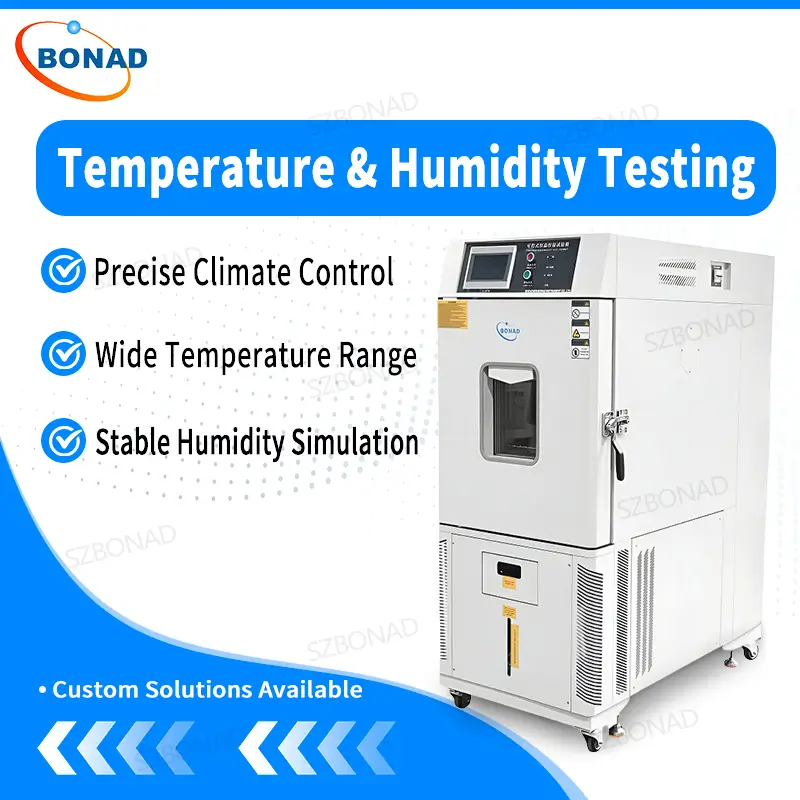
2. Humidity Testing
- Constant humidity testing
- Temperature-humidity cycling
Simulates moisture exposure to detect issues like:
- Material swelling
- Corrosion
- Electrical failure
3. Corrosion Testing
- Salt spray (salt fog) testing
- Cyclic corrosion testing
Commonly used in automotive, marine, and outdoor products to assess corrosion resistance.
4. UV & Weathering Testing
- UV aging testing
- Xenon arc testing
Simulates sunlight exposure to evaluate:
- Color fading
- Material degradation
UV testing chambers accelerate outdoor aging processes significantly.
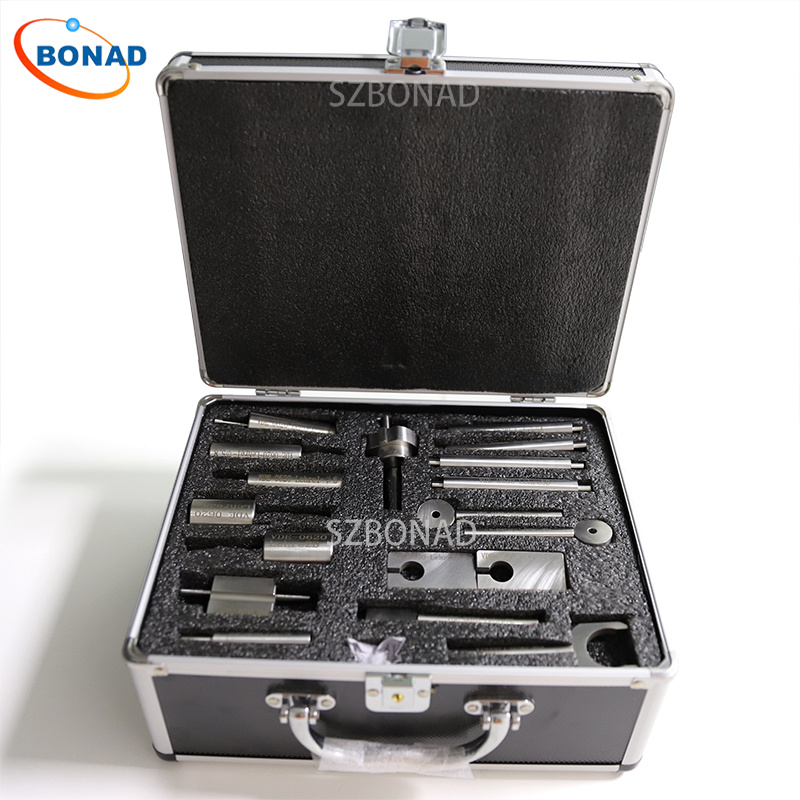
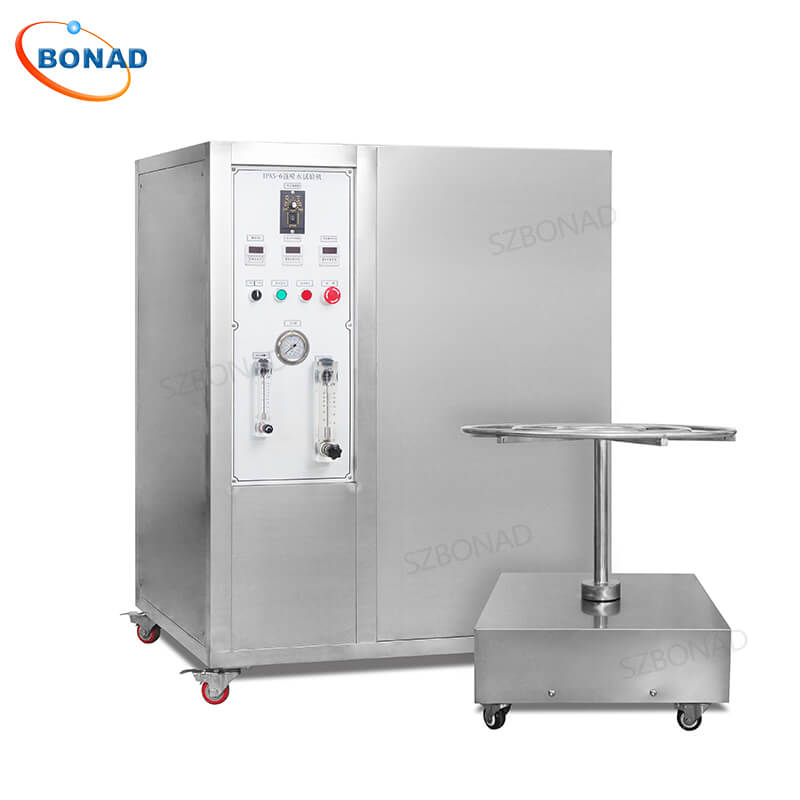
5. Dust & Water Ingress Testing (IP Testing)
- Dustproof testing
- Waterproof testing (IPX/IP ratings)
Ensures product protection against environmental particles and water intrusion.
6. Vibration & Mechanical Environmental Testing
- Random vibration
- Shock testing
Often combined with climatic testing to simulate transportation and real-use conditions.
7. Altitude & Pressure Testing
- Low pressure (high altitude)
- Pressure cycling
Critical for aerospace, automotive, and electronics applications.
Major Environmental Testing Standards
Environmental testing must comply with international standards to ensure consistency and global acceptance.
IEC Standards
- IEC 60068 – Core environmental testing standard for electronic products
- Covers tests such as:
- Cold (Test A)
- Dry heat (Test B)
- Humidity
- Vibration
ISO Standards
- ISO 16750 – Automotive environmental testing
- ISO 20653 – IP protection (water & dust ingress)
- ISO 17025 – Laboratory calibration & testing competence
Military & Aerospace Standards
- MIL-STD-810 – Environmental engineering testing
- RTCA DO-160 – Aviation environmental conditions
These standards define severe testing conditions for high-reliability industries.
Features of Environmental Testing
Environmental testing offers several critical advantages:
1. Real-World Simulation
Recreates environmental conditions such as extreme temperatures, humidity, UV exposure, and vibration.
2. Accelerated Testing
Simulates long-term environmental exposure in a short time, reducing product development cycles.
3. High Precision & Repeatability
Advanced chambers maintain tight tolerances (e.g., ±0.5°C, ±2.5% RH) for reliable results.
4. Multi-Condition Integration
Modern systems can combine:
- Temperature
- Humidity
- Vibration
to simulate complex real-world environments.
Applications of Environmental Testing
Environmental testing is widely used across multiple industries:
Electronics & Electrical
- PCB reliability
- Consumer electronics durability
Automotive Industry
- Component reliability under heat, vibration, and moisture
- IP waterproof and dustproof validation
Aerospace & Defense
- High-altitude, pressure, and vibration testing
Materials & Polymers
- UV aging
- Weather resistance evaluation
Pharmaceuticals
- Stability testing (temperature & humidity control)
Renewable Energy
- Solar panel UV and weathering testing
Environmental Test Chambers: Core Equipment
Environmental test chambers are essential for conducting accurate and repeatable tests.
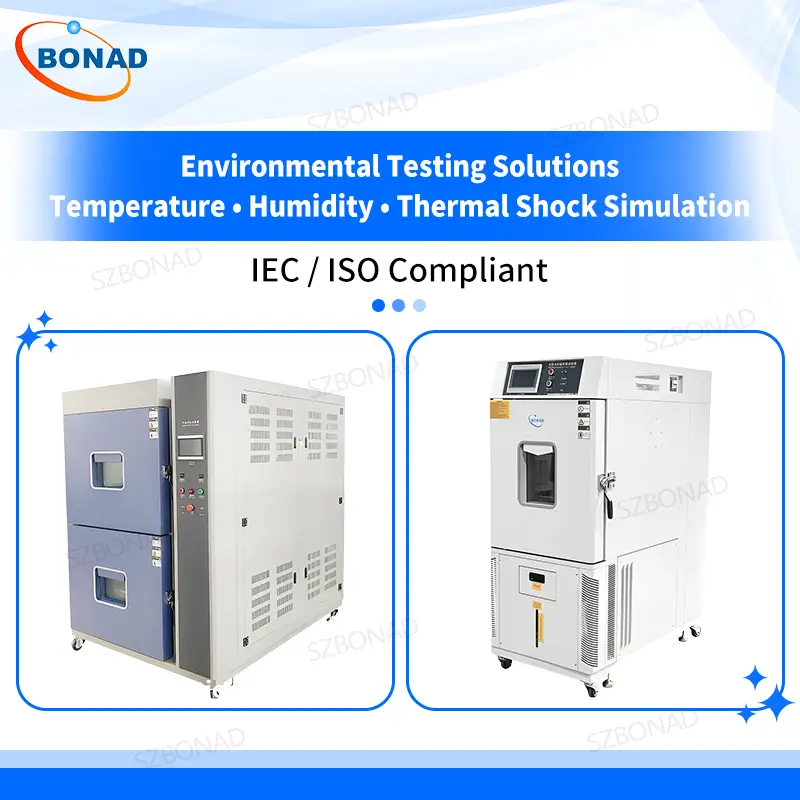
Types of Environmental Chambers
- Temperature chambers
- Temperature & humidity chambers
- Thermal shock chambers
- UV aging chambers
- Salt spray chambers
- Walk-in environmental chambers
These chambers can simulate conditions such as:
- Extreme heat or cold
- Rapid temperature changes
- Moisture and humidity
- Corrosive environments
- UV radiation
View full range:
Key Considerations When Selecting Environmental Testing Equipment
When choosing environmental testing equipment, consider:
1. Test Requirements
- Temperature range
- Humidity range
- Test duration
- Required standards
2. Accuracy & Uniformity
High precision ensures reliable and repeatable results.
3. Chamber Size & Capacity
- Sample size
- Batch testing requirements
4. Compliance with Standards
Ensure compatibility with:
- IEC
- ISO
- MIL standards
5. Control & Data Systems
- Programmable controllers
- Data logging
- Remote monitoring
6. Customization Capability
Custom solutions are often required for specialized industries.
Common Challenges & Precautions
1. Improper Test Setup
Incorrect parameters can lead to invalid results.
2. Lack of Calibration
Regular calibration is essential for maintaining accuracy.
3. Overloading the Chamber
May affect airflow and test consistency.
4. Ignoring Real-World Conditions
Test conditions must reflect actual usage environments.
Why Environmental Testing Matters
Environmental testing is critical for:
- Improving product quality and reliability
- Reducing failure rates and warranty costs
- Meeting regulatory and certification requirements
- Enhancing brand reputation
It enables manufacturers to identify potential weaknesses before products reach the market, ensuring long-term performance and customer satisfaction.
Conclusion
Environmental testing plays a vital role in modern product development by simulating real-world conditions and ensuring reliability across industries. From temperature and humidity testing to UV aging and corrosion resistance, it provides comprehensive validation of product performance.
With advanced environmental test chambers, manufacturers can achieve precise, repeatable, and standards-compliant testing—ultimately delivering safer and more durable products to global markets.
Environmental Testing FAQ:
1. What standards do your environmental test chambers comply with?
Our equipment is designed to meet major international standards such as IEC 60068, ISO, and MIL-STD. Custom configurations are available to match specific testing requirements.
2. Can the environmental test chamber be customized?
Yes. We provide fully customized solutions based on:
- Temperature range
- Chamber size
- Test conditions
3. What is the typical delivery time?
Standard models are usually delivered within 2–4 weeks, while customized systems may require additional time depending on complexity.
4. Do you provide installation and technical support?
Yes. We offer:
- Remote guidance
- Operation training
- After-sales technical support
5. Do you support overseas shipping?
Yes, we export globally and provide professional packaging and logistics solutions.