In many industries, products such as lighting fixtures, electrical enclosures, outdoor equipment, and public infrastructure must withstand mechanical impacts during operation. To evaluate the durability of product enclosures against external impacts, the IK Test is widely used.
The IK test determines how well a product enclosure can resist mechanical shock or impact without losing its protective function.
The IK rating system is defined by the international standard IEC 62262, which classifies the level of protection provided by enclosures against mechanical impacts.
This guide explains:
- What an IK test is
- The IK rating chart
- Impact testing methods
- Common IK testing equipment used in laboratories and product development
What is IK Test?
An IK Test (Impact Protection Test) evaluates the ability of an enclosure to withstand mechanical impacts from external forces such as tools, accidental drops, or vandalism.
The test simulates real-world conditions where equipment may experience physical shock.
During testing, a controlled amount of impact energy (measured in Joules) is applied to the enclosure using specialized testing devices.
If the enclosure maintains its structural integrity and functionality after impact, it meets the required IK rating.
Typical products that require IK testing include:
- LED lighting fixtures
- Outdoor electrical enclosures
- Industrial control panels
- EV charging stations
- Public transportation equipment
- Security cameras
IK Rating Chart (Impact Protection Levels)
The IK rating ranges from IK00 to IK10, representing different levels of mechanical impact resistance.
| IK Level | Impact Energy | Equivalent Impact |
|---|---|---|
| IK01 | 0.15 J | Light touch impact |
| IK02 | 0.2 J | Small object drop |
| IK03 | 0.35 J | Minor accidental impact |
| IK04 | 0.5 J | Light tool contact |
| IK05 | 0.7 J | Moderate shock |
| IK06 | 1 J | Small mechanical impact |
| IK07 | 2 J | Medium impact |
| IK08 | 5 J | Industrial impact |
| IK09 | 10 J | Heavy mechanical impact |
| IK10 | 20 J | High-energy vandal-resistant impact |
For example, IK10 corresponds to a 20 Joule impact, roughly equivalent to a 5 kg mass dropped from 40 cm.
IK Test Standards
IK testing is conducted according to internationally recognized standards.
The two most widely used standards include:
- IEC 62262 — Defines IK rating levels for enclosures
- IEC 60068-2-75 — Defines impact hammer testing methods
These standards specify:
- Impact energy levels
- Test procedures
- Impact hammer types
- Test positions and repetitions
Compliance ensures that test results are globally recognized.
Common IK Test Methods
Depending on the required impact energy level and test scenario, several testing methods are used.
1. Spring Impact Hammer Test
Spring impact hammers are commonly used for lower energy impacts and handheld testing.
They provide consistent and repeatable impact energy using a calibrated spring mechanism.
Typical energy levels include:
- 0.14 J
- 0.2 J
- 0.35 J
- 0.5 J
- 0.7 J
- 1 J
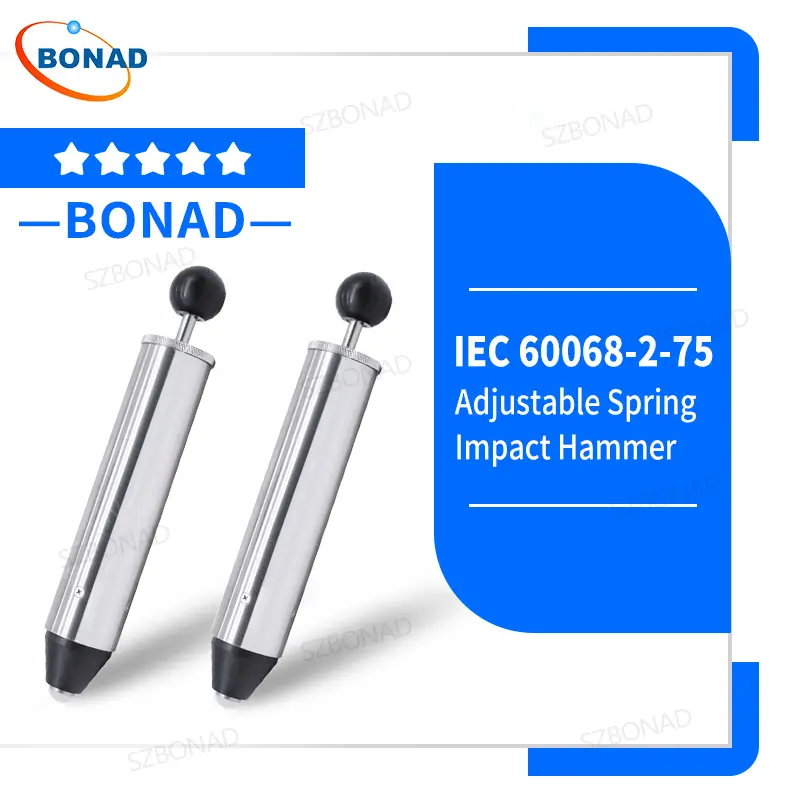
A widely used testing solution is the IEC60068-2-75 Adjustable Universal Energy Spring Impact Hammer, which allows adjustable energy levels between 0.14J and 1J to comply with IEC testing requirements.
This type of device is commonly used for testing:
- household appliances
- electrical switches
- plastic enclosures
- control panels
2. Pendulum Impact Test
Pendulum impact testers are used for medium impact energy levels.
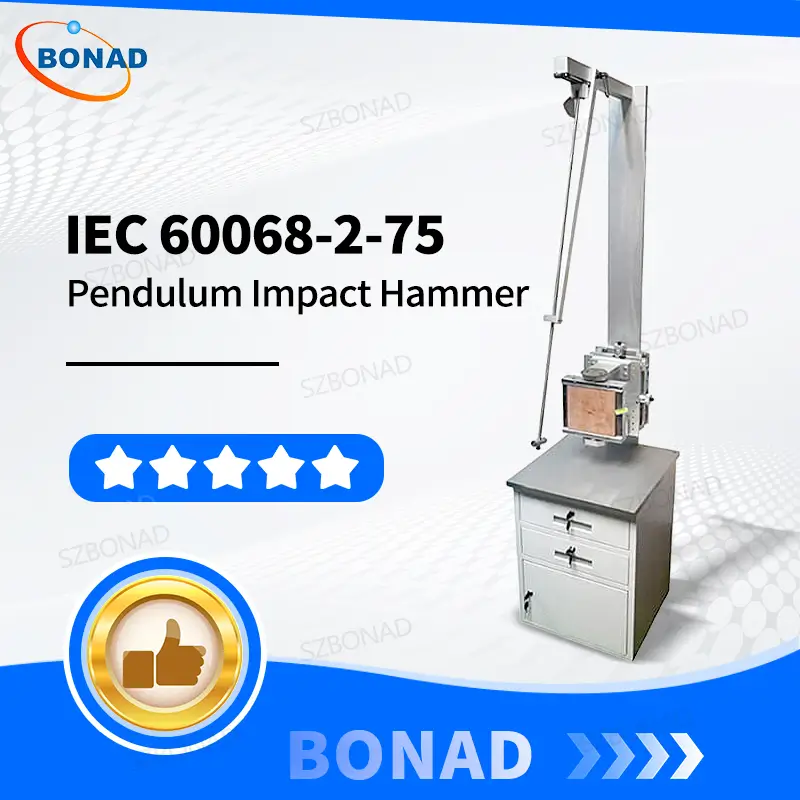
The device releases a pendulum hammer that strikes the sample with controlled energy determined by the pendulum height.
An example is the IEC60068-2-75 Pendulum Impact Hammer Test Equipment, designed to perform standardized impact tests according to IEC requirements.
Pendulum impact tests are often applied to:
- lighting products
- metal enclosures
- industrial devices
- outdoor equipment
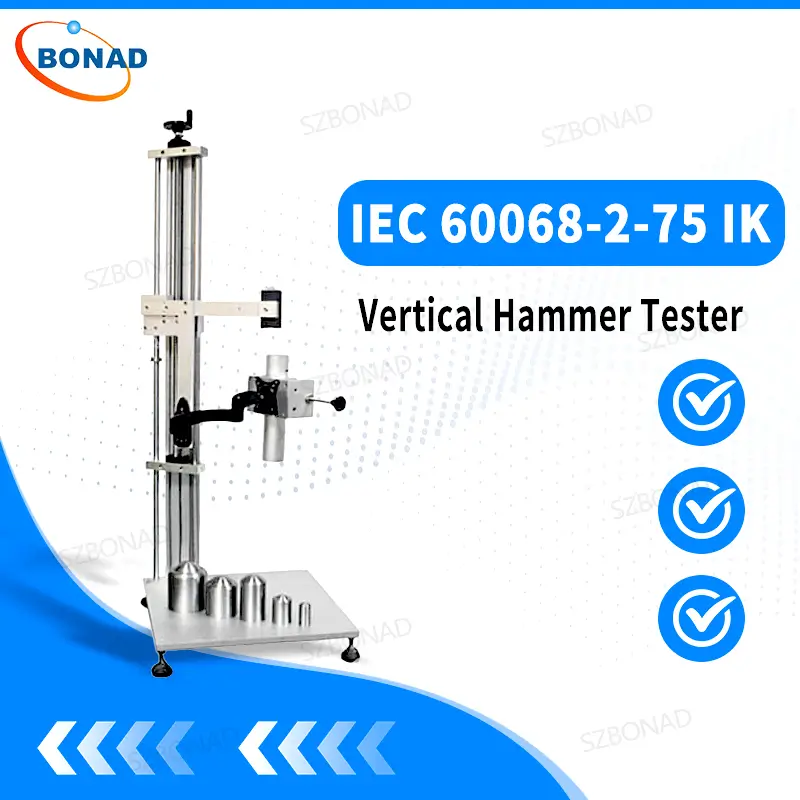
3. Vertical Impact Hammer Test
For higher energy IK tests, vertical hammer impact testers are commonly used.
These devices drop a hammer from a specified height to deliver precise impact energy levels required for IK ratings such as IK08, IK09, and IK10.
A professional testing system used in laboratories is the IEC60068-2-75 IK Vertical Hammer Impact Tester.
Vertical hammer testers provide:
- stable impact positioning
- repeatable testing conditions
- compliance with IEC standards
They are widely used in:
- lighting certification laboratories
- EV charger testing
- industrial equipment validation
IK Test vs IP Test
IK testing is often confused with IP testing, but they evaluate different types of protection.
| Test Type | Purpose | Standard |
|---|---|---|
| IK Test | Mechanical impact resistance | IEC 62262 |
| IP Test | Protection against dust and water | IEC 60529 |
For example:
- IP65 indicates protection against dust and water jets
- IK10 indicates high resistance to mechanical impact
Many outdoor devices must meet both IP and IK requirements.
Why IK Testing Is Important?
IK testing ensures product durability and safety in real-world environments.
Key benefits include:
- Improved product reliability
- Compliance with international standards
- Reduced product failure risk
- Enhanced product safety for public environments
- Increased customer confidence
Manufacturers often perform IK testing during:
- product design validation
- certification testing
- quality control inspections
Choosing the Right IK Test Equipment
Selecting the correct IK testing equipment depends on several factors:
1. Required IK Level
Different IK levels require different impact energy ranges.
2. Product Size and Application
Large enclosures may require pendulum or vertical hammer testers.
3. Testing Environment
Laboratories and certification organizations usually require fully compliant testing systems.
Many professional laboratories use multiple devices such as:
- spring impact hammers
- pendulum impact testers
- vertical hammer testers
to cover the full IK testing range.
Conclusion
IK testing plays a crucial role in evaluating the mechanical durability of product enclosures.
By following international standards such as IEC 62262 and IEC 60068-2-75, manufacturers can ensure their products meet global safety and performance requirements.
Professional IK testing equipment, including spring impact hammers, pendulum testers, and vertical hammer systems, enables accurate and repeatable impact testing for a wide range of applications.
For manufacturers and laboratories working with electrical equipment, lighting systems, or industrial products, implementing reliable IK testing procedures is essential for product safety and certification.
FAQ
What is IK Test?
IK Test is a mechanical impact protection test used to evaluate how well an enclosure resists external physical impacts. The test determines the enclosure’s IK rating according to the international standard IEC 62262.
What is the difference between IK rating and IP rating?
IK rating measures the mechanical impact resistance of an enclosure, while IP rating measures protection against dust and water ingress according to IEC 60529.
In simple terms:
- IK rating → impact resistance
- IP rating → dust and water protection
Many outdoor products must meet both IP and IK requirements.
What standard is used for IK testing?
IK testing is mainly based on two international standards:
- IEC 62262 — defines IK protection levels
- IEC 60068-2-75 — defines testing methods and equipment
These standards ensure globally consistent testing procedures.
What equipment is used for IK testing?
Common IK test equipment includes:
- spring impact hammer
- pendulum impact tester
- vertical hammer impact tester
These devices generate controlled impact energy levels to simulate real-world mechanical shocks on product enclosures.
What does IK10 mean?
IK10 is the highest commonly used IK rating and represents 20 Joules of impact energy.
This level of protection is typically required for products used in:
- public infrastructure
- outdoor lighting
- transportation equipment
- industrial environments
IK10 products are designed to withstand strong mechanical impacts without losing their protective function.