What Is Vibration Testing?
Vibration testing is essential to determine a product’s ability to withstand real-world conditions during its lifecycle. By simulating operational and transit environments, this testing helps identify potential issues before they occur, ensuring product durability and reliability across numerous industries. Without it, everyday products—from car seats and airplanes to consumer electronics—could suffer from premature failure, increased maintenance costs, and safety risks.
Types of Vibration Testing
There are two primary types of vibration testing: random and sine. Each method serves a unique purpose and offers specific benefits depending on the product and industry requirements.
1. Random Vibration Testing
Random vibration testing applies multiple frequencies simultaneously, closely mimicking real-world conditions such as transportation, operational stress, or seismic events. This method is highly efficient for identifying resonant frequencies and potential failure points in a short period. By exposing products to realistic vibration profiles, manufacturers can reduce the need for repairs, minimize recalls, and extend product life.
2. Sine Vibration Testing
Sine vibration testing, also known as sinusoidal sweep testing, evaluates a product’s response to one frequency at a time. This method helps identify resonant frequencies that cause significant product responses. One common application is the Sine Dwell Vibration Test, which maintains vibration at the product’s resonant frequency to accelerate fatigue and validate durability. Sine testing is also used to calibrate shakers and fixtures, ensuring they perform accurately within specified frequency ranges.
3. Mixed-Mode Vibration Testing
Mixed-mode vibration testing combines random and sine profiles to replicate complex real-world scenarios. For example, Sine on Random Vibration Testing introduces intense sinusoidal vibrations onto a random vibration base, simulating events like gunfire or missile launches on a helicopter. This type of testing is critical for industries where products face combined vibration stresses, though it is not required for all applications.
Industries That Rely on Vibration Testing
Vibration testing plays a crucial role in multiple sectors, ensuring products meet safety, performance, and regulatory standards.
Aerospace Vibration Testing
Aerospace components endure extreme conditions during launch, reentry, and landing, with vibrations reaching up to 20 g’s. Standards like RTCA-DO-160, MIL-STD-202, and MIL-STD-810 define testing protocols to validate the reliability of systems and components, ensuring mission success and safety.
Transportation Vibration Testing
In the automotive industry, vibration testing simulates road conditions, potholes, braking, and even door closures. Squeak and rattle tests are specifically designed to identify and eliminate noise issues, enhancing passenger comfort and vehicle quality.
Consumer Products Vibration Testing
Consumer products must withstand vibrations during transportation and daily use. Compliance with standards like IEC 60068-2-64 is often required for certifications such as the CE Mark, ensuring products and their packaging meet durability and safety expectations.
Military Vibration Testing
Military equipment, whether on land, sea, or in the air, faces intense vibrations from operations and combat events. MIL-STD-810 is a widely adopted standard that addresses not only vibration but also combined environmental factors like temperature, humidity, and altitude.
Professional Vibration Testing Equipment
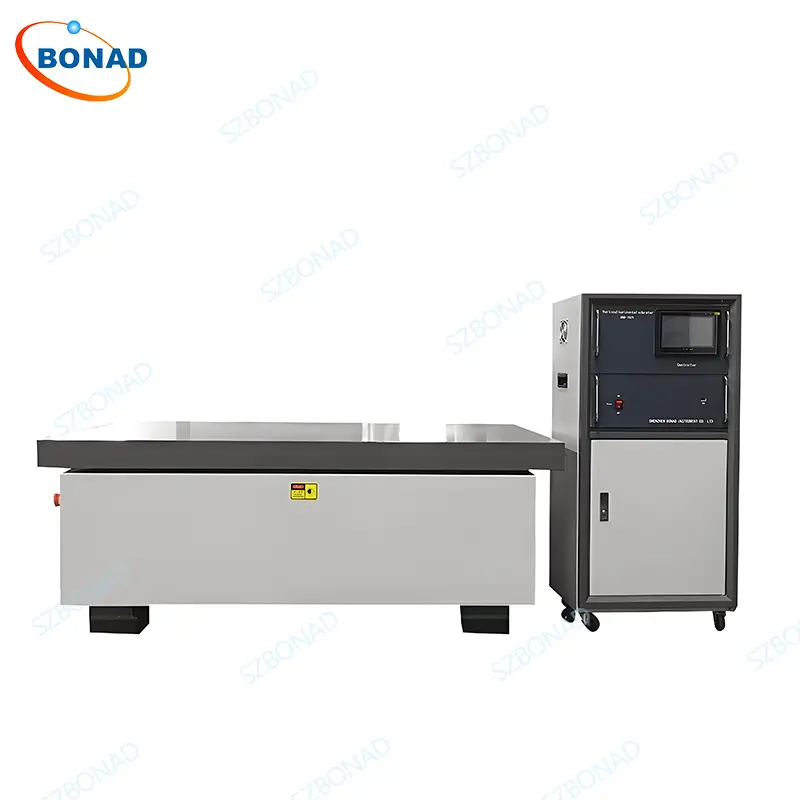
Selecting the right vibration test equipment is critical to achieving accurate and reliable results. BONAD is a leading manufacturer of vibration testing systems, offering customized solutions tailored to specific testing needs. Our advanced vibration controllers and test systems feature resonance tracking, automatic response limiting, and compliance with international standards such as ISO, IEC, and ASTM.
In addition to vibration testing equipment, BONAD provides a comprehensive range of testing instruments, including:
- Environmental Test Chambers
- Battery Test Equipment
- Flammability Test Chambers
- Mechanical Testing Machines
- Safety Testing Equipment
All products adhere to global standards and come with certifications like CE, ISO17025, and CNAS. Custom solutions are available to meet unique testing requirements.
Conclusion
Vibration testing is a vital process for ensuring product reliability, safety, and compliance across industries. By understanding the different testing methods and their applications, manufacturers can optimize product design, reduce costs, and enhance customer satisfaction. Partnering with an experienced testing equipment provider like BONAD ensures access to cutting-edge technology and tailored solutions for all vibration testing needs.