Modern products must perform reliably under multiple environmental stresses. This is essential in industries such as aerospace, automotive, defense, and consumer electronics. Temperature over vibration testing, also known as combined temperature and vibration testing, replicates real-world conditions by subjecting products to simultaneous mechanical and thermal stresses. This combined approach provides a far more accurate measure of durability and compliance than single-condition testing.
What Is Temperature Over Vibration Testing?
Temperature over vibration testing is a combined environmental stress screening (ESS) method that exposes components or systems to both thermal cycling and mechanical vibration simultaneously. This simulates the complex conditions products experience in real-world use, such as during shipping, installation, or operation.
By combining stresses, engineers can uncover compound failure modes—cracks, fatigue, or material deformation—that isolated tests might overlook. The result is a more realistic and complete assessment of product reliability and performance.
Why Combine Temperature and Vibration Testing?
Many product failures occur only when multiple stressors interact. For example, a solder joint might withstand thermal cycling alone or vibration alone, but fail when both are applied together due to thermal expansion and mechanical fatigue working in tandem.
Combined testing helps identify these hidden vulnerabilities early in the design process. This reduces development costs, shortens project timelines, and minimizes the risk of recalls or late-stage design changes. Ultimately, it ensures that products are robust, compliant, and field-ready.
Products That Require Combined Testing
Temperature over vibration testing is vital for products operating in challenging or variable environments, including:
- Automotive control units and sensors
- Aerospace avionics and structural assemblies
- Printed circuit boards (PCBs)
- Consumer electronics (e.g., smartphones, wearables)
- Medical and laboratory devices
- Electric vehicle batteries and power systems
Key Testing Standards
BONAD conducts temperature and vibration testing in accordance with internationally recognized standards, ensuring full compliance and repeatability:
- MIL-STD-810 Method 527 – Combined environment testing for military applications
- IEC 60068-2-53 – Temperature and vibration combined testing procedures
- ISO 16750 – Environmental testing for automotive components
Our engineers collaborate with your compliance teams to ensure every test meets regulatory and performance requirements.
Equipment and Testing Process
1. Test Planning
Engineers begin by reviewing product specifications, environmental conditions, and relevant compliance standards. The most suitable testing protocol is then designed.
2. Test Execution
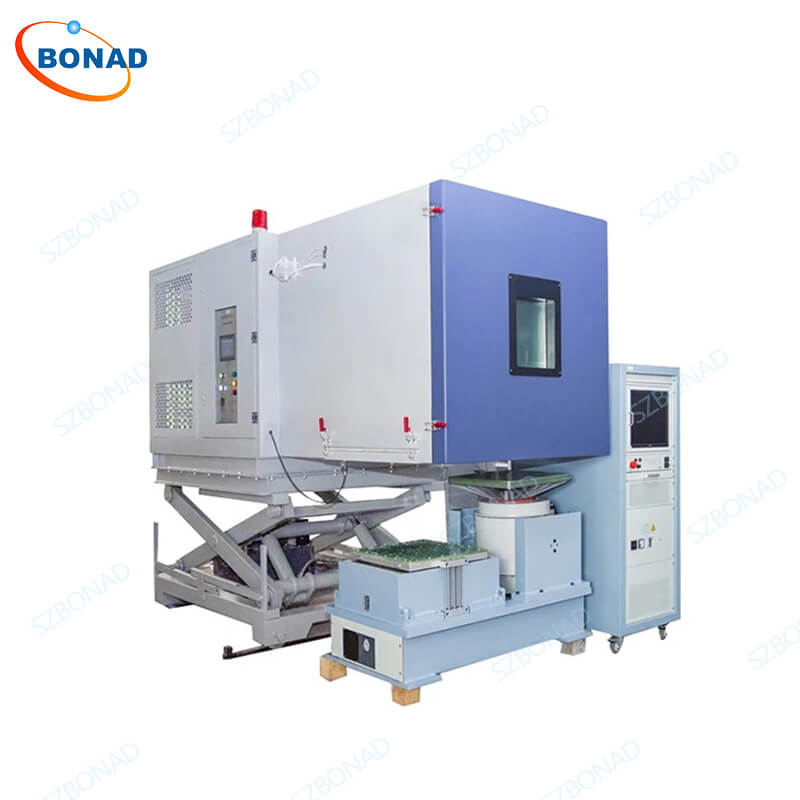
The product is placed inside a combined temperature and vibration chamber, capable of:
- Temperature cycling between -70°C to +180°C
- Vibration profiles from 5 Hz to 2,000 Hz
- Acceleration levels up to 100 g
This process accelerates real-world stresses to identify weaknesses early.
3. Reporting and Analysis
After testing, BONAD provides a complete report including:
- Test parameters and profiles
- Failure time and mode (if applicable)
- Visual and microscopic inspections
- Root cause and design feedback
These insights help optimize product design for enhanced performance and lifespan.
Industry Applications
Automotive
Simulates under-the-hood temperature fluctuations and road-induced vibrations. Ensures durability of control units, sensors, and electronic assemblies.
Aerospace and Defense
Validates avionics and structural components against extreme conditions using standards such as MIL-STD-810 and RTCA DO-160.
Consumer Electronics
Tests smartphones, GPS devices, and portable electronics for resistance to transport shocks and thermal variation.
Medical Devices
Ensures reliability of sensitive field and portable devices, maintaining safety and regulatory compliance.
Why Choose BONAD
BONAD specializes in comprehensive environmental and reliability testing equipment, including:
- Environmental Test Chambers
- Waterproof and Flammability Test Equipment
- Battery and Mechanical Test Systems
- Electrical Appliance Testers and Safety Probes
- Go/No-Go Gauges and Vehicle Testing Devices
All equipment complies with ISO, IEC, ASTM, DIN, EN, GB, BS, JIS, ANSI, UL, and CSA standards and is certified with CE, ISO17025, and CNAS.
Start Your Combined Temperature and Vibration Testing Today
Whether developing a new product or preparing for certification, temperature over vibration testing is critical for ensuring durability and compliance.
Contact BONAD to request a quote and discover why hundreds of global manufacturers trust our expertise each year to accelerate product qualification and bring safer, more reliable products to market.